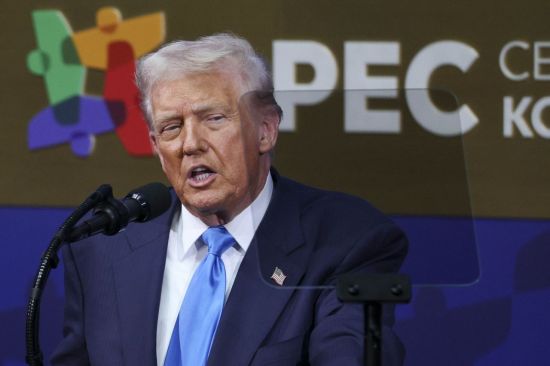
The Trump administration is pursuing pro-growth policies ahead of the midterms—extending income and corporate tax cuts that the White House says will boost the average American tax refund by about $800 this year—while pushing deregulation, a Fed chair nomination (Kevin Warsh) and calls for benchmark rate cuts. Officials also cite productivity gains from wider AI adoption as a way to grow supply without stoking large inflation, and have floated a $2,000 per-person tariff-funded dividend as further stimulus. Private-sector analysts broadly see solid growth and low recession risk but warn the net stimulus effect may be muted by immigration and tariff headwinds and may not shift voter sentiment in time for November.
Market structure: Fiscal stimulus (avg. ~$800 refund) + targeted tax cuts and deregulation favors high-multiple tech and capital-goods firms that benefit from accelerated AI capex (NVIDIA, MSFT, AVGO, CAT). Tariffs and immigration restrictions create winners in domestic manufacturing and tariff-collection beneficiaries but directly hurt exporters, global supply chains and import-dependent retailers; expect relative price power to shift toward large integrated platform players and domestic industrials over SMEs.
Risk assessment: Tail risks include a renewed inflation spike (CPI >4% y/y) forcing the Fed to resist cuts, retaliatory trade measures from partners, or a legal/legislative reversal of tariff-funded dividends; these could materialize in 3–12 months. Near-term (days–weeks) market moves will be driven by Fed comments and CPI/PCE prints; medium-term (3–9 months) by Q3 capex orders and AI semiconductor bookings; long-term (12–36 months) by realized productivity gains and labor-market effects.
Trade implications: Favor long high-conviction AI/semiconductor exposure and select industrial capex names, hedge inflation and policy risk with TIPS or commodity exposure, and be short financially sensitive small/regional banks and import-reliant retailers. Use options to express asymmetric views—buy-call spreads on leaders, buy-put spreads on regionals—and scale into positions over 4–8 weeks around CPI/Fed milestones.
Contrarian: Consensus assumes AI will quickly offset inflation; that’s likely underdone—AI-driven productivity is multi-year and concentration risk in a few stocks is high. History (2017 tax cut) shows front-loaded equity re-rating with fade; if tariffs blunt consumer real incomes, small-cap and retail rallies are overdone. A confirmation of a dovish Fed chair is the key binary catalyst that could re-rate bonds and growth stocks in opposite directions.
AI-powered research, real-time alerts, and portfolio analytics for institutional investors.
Request DemoOverall Sentiment
mildly positive
Sentiment Score
0.25
