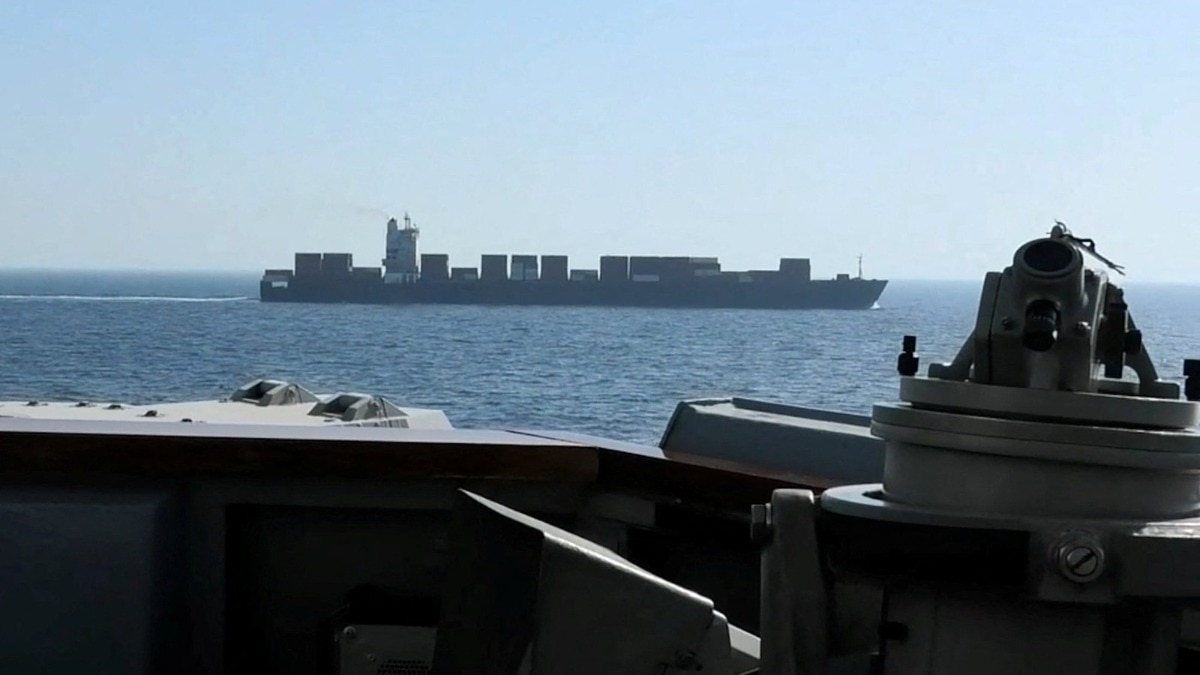
US Marines seized the Iranian-flagged cargo ship Touska in the Arabian Sea after it ignored warnings for six hours, with USS Spruance disabling its propulsion before boarding. The incident follows a US blockade announcement tied to the Strait of Hormuz and prompted Iranian retaliation threats, raising the risk of further disruption to Gulf shipping and oil flows. Market impact is high because the confrontation centers on a critical energy chokepoint and could affect tanker traffic, freight rates, and crude prices.
This is less about one vessel and more about the market repricing the probability of a sustained maritime containment regime in the Gulf. The first-order hit is obvious: freight, insurance, and war-risk premia should gap higher immediately, but the second-order effect is tighter physical optionality for Gulf exporters and Asian importers that rely on just-in-time routing through nearby chokepoints. Even a modest rise in voyage times and escort requirements can ripple into inventory hoarding, higher working-capital needs, and a temporary bid for floating storage. The energy market reaction should be asymmetric because traders will focus on the tail risk of a broader export interruption, not the spot barrels currently displaced. That tends to steepen prompt backwardation and lift implied vol in crude and product options; the more important catalyst is whether Iran answers with deniable harassment rather than an overt military move, because the former can persist for weeks without triggering a diplomatic off-ramp. In that scenario, tanker and port-sensitive equities underperform even if oil is only modestly higher, since margin compression comes from insurance, rerouting, and schedule uncertainty rather than commodity price alone. The biggest underappreciated loser is not necessarily the obvious shipping universe but downstream users with thin inventories and high energy intensity: airlines, chemicals, and industrials that cannot fully pass through fuel costs for one or two quarters. Conversely, US midstream, offshore services, and defense names gain from a regime where governments prioritize flow security over efficiency, but the move is not one-way—if the blockade proves narrow and no broader pipeline or terminal sabotage follows, risk premium can bleed out quickly. The market is likely overestimating duration but underestimating operational friction; that usually favors options over outright equity bets.
AI-powered research, real-time alerts, and portfolio analytics for institutional investors.
Overall Sentiment
strongly negative
Sentiment Score
-0.80
