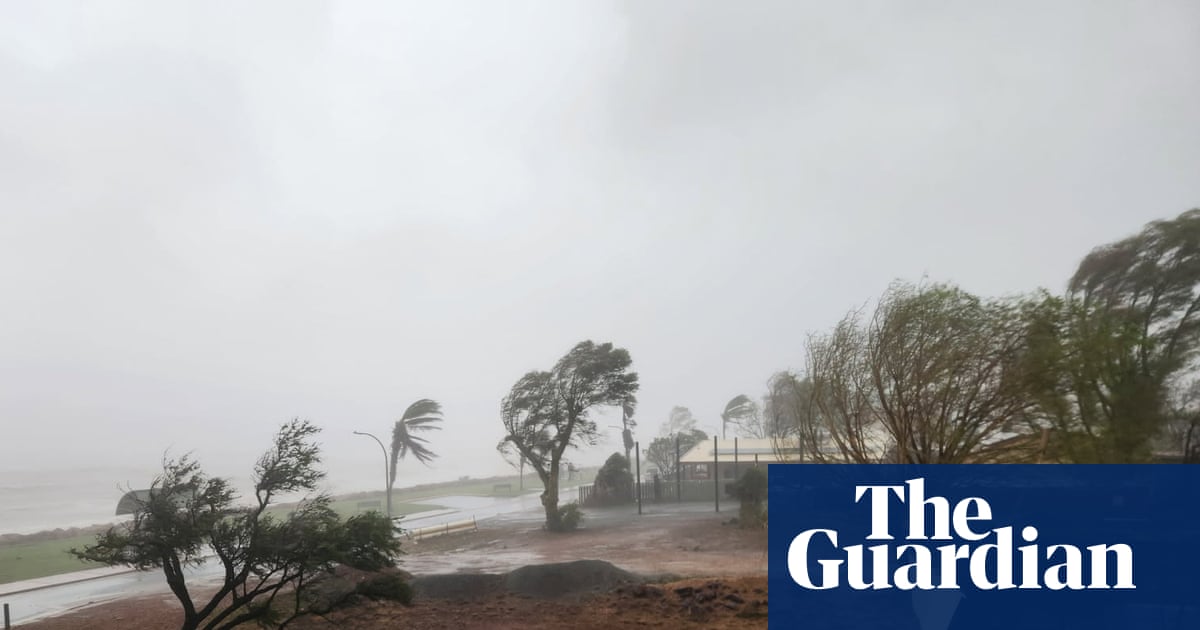
Ex-Tropical Cyclone Narelle was downgraded to a tropical low after making landfall in Western Australia, with peak gusts reported up to 250km/h in Exmouth (overnight gusts 133km/h at Carnarvon airport, 122km/h at Gascoyne Junction) and widespread rainfall totals of 70–100mm across the Gascoyne; an estimated ~2,000 homes remained without power. Emergency warnings were partly downgraded but isolated 'watch and act' alerts and evacuation centres remain open; federal government says it "stands ready to assist" as authorities assess significant damage to roofs, infrastructure and local services.
This event is a concentrated shock whose economic footprint will be asymmetric: direct insured losses create a short, sharp hit to local balance sheets while creating a predictable multi-month pipeline of repair and resilience spending that benefits contractors, building suppliers and specialist outage crews. Expect a two-stage revenue cadence — emergency services and temporary repairs in the first 0–3 months, followed by structured remediation, roof and infrastructure contracts over 3–12 months — which favors firms with heavy regional field capacity and flexible crews over purely design/engineering firms that book work later.
Reinsurance and pricing dynamics are the key second-order lever. A localized catastrophe of this scale will pressure primary insurers’ near-term claims ratios but tends to accelerate premium resets at both primary and reinsurance renewals within the next 6–18 months, improving underwriting economics thereafter. That process creates a window where reinsurers and insurers with diversified portfolios can reprice risk; conversely, undercapitalized regional players or those with elevated coastal exposure face balance-sheet strain and potential capital raises.
Near-term operational risks include lost production for regional supply chains (marine, tourism-season revenues, and small-scale mining/service contractors) and concentrated outage exposure for utilities. Politically, federal/state recovery spending is probable and typically fast-tracked, which supports an above-consensus trough-to-peak revenue recovery for on-the-ground contractors; the main bear case is a muted fiscal response or extended insurance disputes, which would stretch cashflow pressure beyond 6 months.
AI-powered research, real-time alerts, and portfolio analytics for institutional investors.
Request DemoOverall Sentiment
moderately negative
Sentiment Score
-0.60
