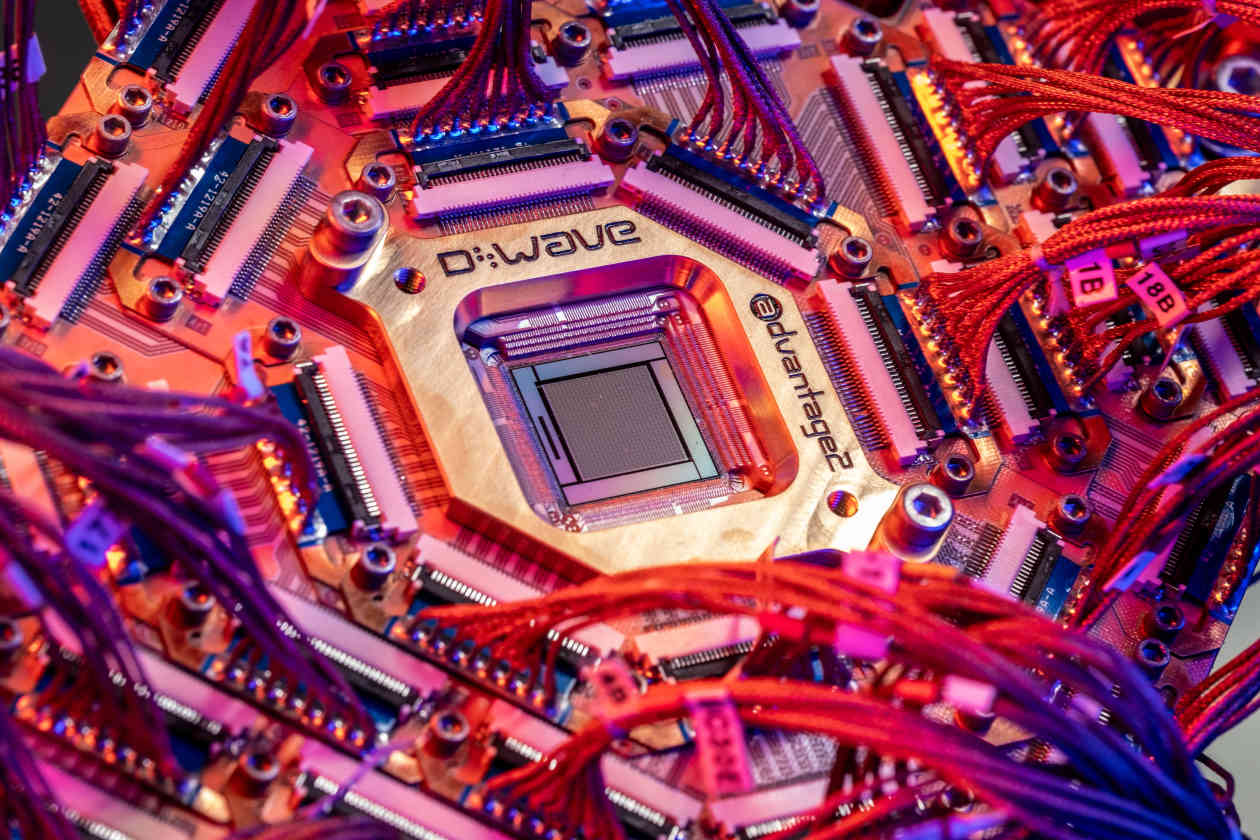
The Trump administration is reportedly considering acquiring stakes in several quantum-computing companies, including D-Wave, IonQ, and Rigetti, a development that has already spurred significant stock rallies for these firms. This potential government investment aims to secure U.S. leadership in a technology deemed critical for national security and economic advantage, aligning with a broader trend of investing in strategically important sectors. While quantum computing companies currently face profitability challenges and the technology still has practical roadblocks, recent breakthroughs like Google's verifiable quantum advantage signal ongoing progress and the strategic importance of the sector.
The Trump administration is reportedly considering acquiring stakes in quantum-computing companies like D-Wave Quantum Inc., IonQ Inc., and Rigetti Computing Inc., signaling a potential expansion of government investment into strategically critical technologies. This news immediately spurred significant market reactions, with D-Wave shares rising 20%, IonQ and Rigetti up 13%, and Quantum Computing up 9% on Thursday morning. This initiative positions quantum computing as a federal research priority alongside AI and nuclear energy, aiming to secure U.S. leadership in emerging technologies.
Quantum computing is recognized for its potential to accelerate drug discovery, chemical development, and enhance national security. BofA analysts describe it as potentially "the biggest revolution for humanity since discovering fire," highlighting the geopolitical and economic advantages for the nation that wins the "quantum race," with global government funding already exceeding $42 billion.
Despite this strategic importance, the sector faces practical roadblocks and profitability challenges; D-Wave is projected to generate less than $25 million in revenue against a $230 million net loss this year. Nvidia CEO Jensen Huang has expressed skepticism about near-term practical applications, yet Google Quantum AI's Willow chip recently achieved verifiable quantum advantage, demonstrating ongoing technological progress.
This potential government investment aligns with a broader trend of the Trump administration taking stakes in companies deemed vital for national security, as seen with Intel Corp. and MP Materials Corp. While the deals are not finalized, the market's immediate positive response reflects perceived validation and potential capital infusion for these speculative plays.
AI-powered research, real-time alerts, and portfolio analytics for institutional investors.
Request DemoOverall Sentiment
moderately positive
Sentiment Score
0.50
Ticker Sentiment
