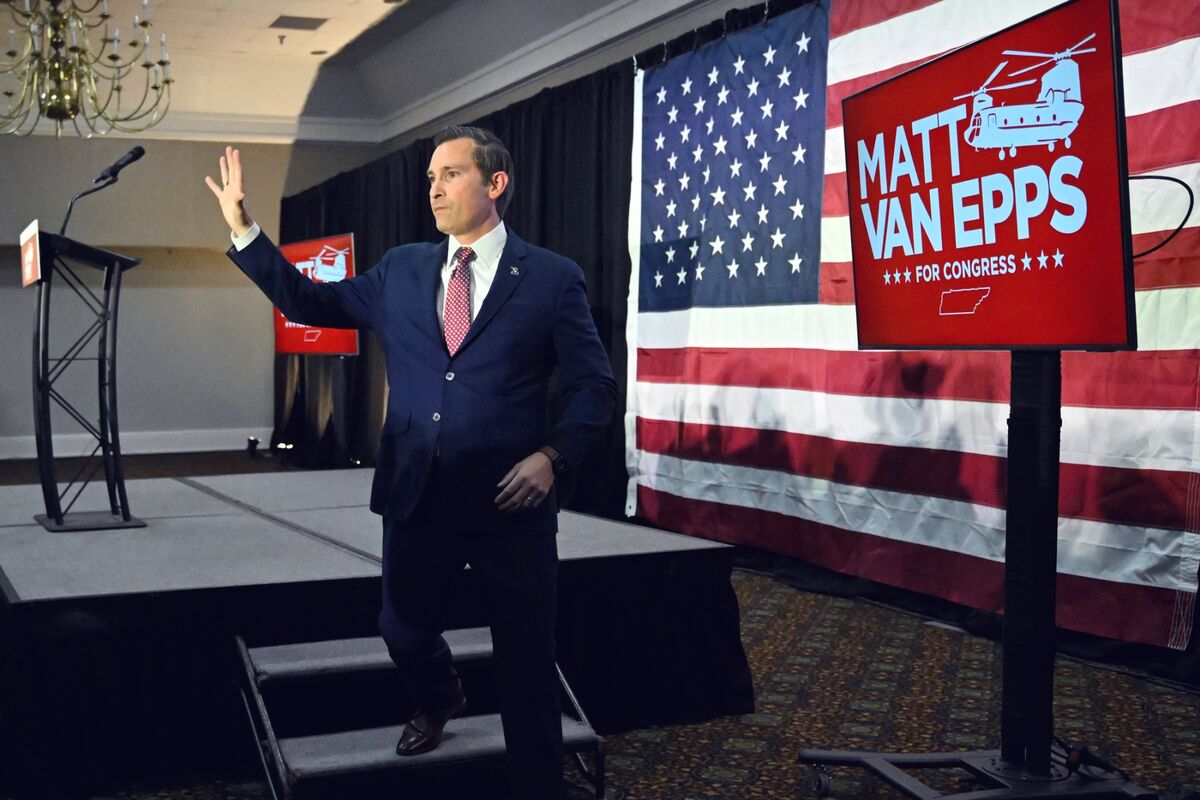
Republicans narrowly held a Tennessee U.S. House seat as Trump-backed Matt Van Epps was projected the winner by AP, NBC News and Decision Desk HQ; President Trump praised the result and Van Epps declared victory. The tight margin reduces the immediate risk of an upset that could have altered midterm expectations for Republican control, but the close outcome underscores persistent electoral uncertainty and is unlikely to have material near-term market impact.
Market-structure: A narrow GOP hold in a Tennessee House race is a small, incremental political risk reduction for pro-business sectors — defense (LMT, RTX), energy (XOM, CVX) and regional banks (KRE) are marginal winners while progressive regulatory beneficiaries (renewables ETFs like ICLN/TAN) see a small headwind. Expect market reaction to be muted: equity moves <1%, S&P directional effect negligible, UST 10y move likely <10bps and USD moves <0.5% in the immediate 24–72h window.
Risk assessment: Tail risks include a contested/counting challenge or a sequence of similar narrow losses that shift midterm expectations; these are low probability but >$100bn fiscal/market-impact events if they cascade. Time horizons differ: immediate (days) = volatility quiescence; short-term (weeks–months) = positioning into midterms and debt-ceiling calendar; long-term (quarters) = policy direction that affects capex, defense budgets and sector regulation.
Trade implications: Tilt toward cyclical/reflation-sensitive names: small tactical overweight to KRE and defense names for 1–12 months, with tight stop-losses; prefer defined-risk option structures (3-month call spreads on LMT/RTX) rather than naked exposure. Avoid large directional macro bets — implied vol compression after a non-event makes selling short-dated vol (credit-sized) attractive but risky around catalysts (polls, Fed, debt ceiling).
Contrarian angles: The consensus understates fragility — a string of similar narrow GOP holds could paradoxically increase legislative paralysis and raise policy uncertainty, hurting small-caps and discretionary. Reaction is likely underdone in volatility terms (IV falls faster than fundamentals), creating short-term opportunities to sell premium but longer-term risks for crowded cyclical trades if polls shift: treat all positions as event-sensitive with explicit stop thresholds.
AI-powered research, real-time alerts, and portfolio analytics for institutional investors.
Request DemoOverall Sentiment
neutral
Sentiment Score
0.00
