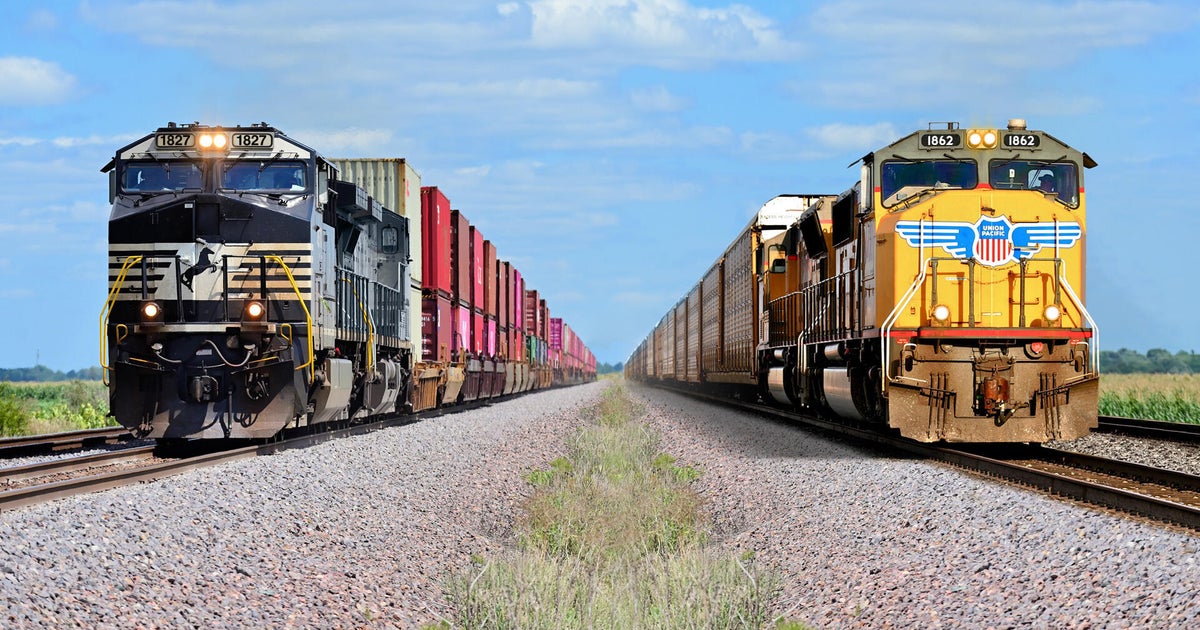
Two major unions—the Brotherhood of Locomotive Engineers and Trainmen and the Brotherhood of Maintenance of Way Employes Division, representing more than half of Union Pacific and Norfolk Southern workers—have withdrawn support for the proposed $85 billion merger, citing safety risks, potential service disruptions and higher shipping and consumer prices; their opposition follows concerns about Norfolk Southern’s post‑East Palestine progress and doubts that job‑protection promises are sufficiently detailed. The deal, which garnered over 99% shareholder approval and backing from the nation’s largest rail union and President Trump, faces organized opposition from BNSF, the American Chemistry Council and some shippers and will be reviewed by the Surface Transportation Board under a stringent public‑interest standard once the formal application is filed later this week. If approved, a merged Union Pacific would likely control more than 40% of U.S. freight, a level of concentration that could reshape competitive dynamics, invite regulatory scrutiny and pressure rates and service patterns—making regulatory outcomes and operational commitments the key near‑term risk factors for investors.
The proposed $85 billion merger of Union Pacific (UNP) and Norfolk Southern (NSC) has lost support from two major unions—the Brotherhood of Locomotive Engineers and Trainmen and the Brotherhood of Maintenance of Way Employes Division—that together represent more than half of employees; they cite increased safety risk, potential service disruptions, higher shipping rates and insufficiently detailed job‑protection promises. Their opposition adds to concerns from the American Chemistry Council, agricultural groups and rival BNSF, even as over 99% of shareholders of both railroads voted in favor and the nation’s largest rail union and President Trump have voiced support.
The Surface Transportation Board (STB) will review the formal application expected later this week under the stricter public‑interest standard adopted after 1990s merger failures; a merged Union Pacific would likely control more than 40% of U.S. freight, creating a novel concentration that the STB must judge against competition and service outcomes. Transportation experts warn the scope is unprecedented and could trigger further consolidation or regulatory remedies such as divestitures or service commitments.
Near term, the principal catalysts are the STB filing details—including specific commitments on jobs, safety protocols, routed line divestitures and customer protections—and public testimony from unions, shippers and competitors. Market signals are moderately negative for UNP and NSC, reflecting elevated regulatory, operational and reputational risk that could prolong approval uncertainty and affect revenue and pricing trajectories if remedies are required.
AI-powered research, real-time alerts, and portfolio analytics for institutional investors.
Request DemoOverall Sentiment
moderately negative
Sentiment Score
-0.45
Ticker Sentiment
