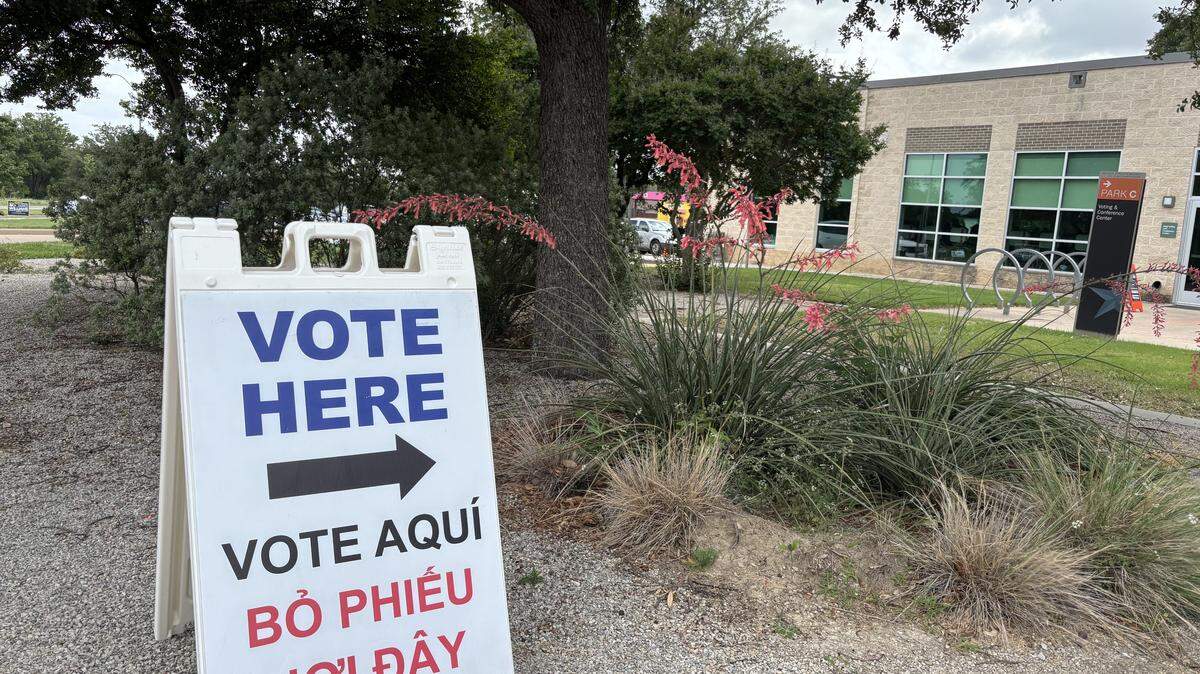
Texas voters are deciding runoff nominees for attorney general, with Mayes Middleton leading Chip Roy 48% to 39% in a recent UH Hobby School poll; no Democratic runoff polling was provided. The seat is open for the first time since 2015 as Ken Paxton runs for the U.S. Senate, and the article outlines each candidate’s law-enforcement, border-security, and government-accountability priorities. The piece is primarily political coverage with limited direct market impact.
The market angle here is not the office itself but the signaling value of the runoff: a shift toward a more explicitly partisan, enforcement-first Texas AG would raise the probability of headline litigation around immigration, elections, ESG, utility rates, and consumer protection. That matters less for direct economics than for settlement leverage and regulatory drag, especially for utilities, financials, telecom, and firms with Texas exposure that are already targets in politically charged suits. The near-term winner is the side whose base is more likely to show up in a low-turnout runoff; the medium-term winner is whichever candidate can credibly frame the AG as an anti-corruption or anti-crime platform rather than a pure culture-war office.
Second-order effects are asymmetric. A more activist AG increases the odds of multi-year litigation over election administration and agency authority, which tends to lift legal spend, extend deal timelines, and keep politically sensitive names trading at a governance discount. If a hard-right candidate wins, expect more frequent state-led actions against federal programs and public-company practices; if the Democrat wins, the office likely shifts toward antitrust, consumer protection, and utility oversight, which is still negative for regulated monopolies but less disruptive to capital markets than partisan lawfare.
The contrarian point is that investors may be overestimating immediate policy implementation. Most of the office’s impact is mediated through staffing, injunction speed, and court appetite, so the P&L hit is usually not a day-one shock but a slow burn over quarters. The real catalyst window is the post-runoff fundraising and endorsement narrative: it will reveal whether the eventual nominee can convert ideological positioning into institutional control, which is what determines how aggressively the office can pursue litigation once in power.
AI-powered research, real-time alerts, and portfolio analytics for institutional investors.
Request DemoOverall Sentiment
neutral
Sentiment Score
0.00
