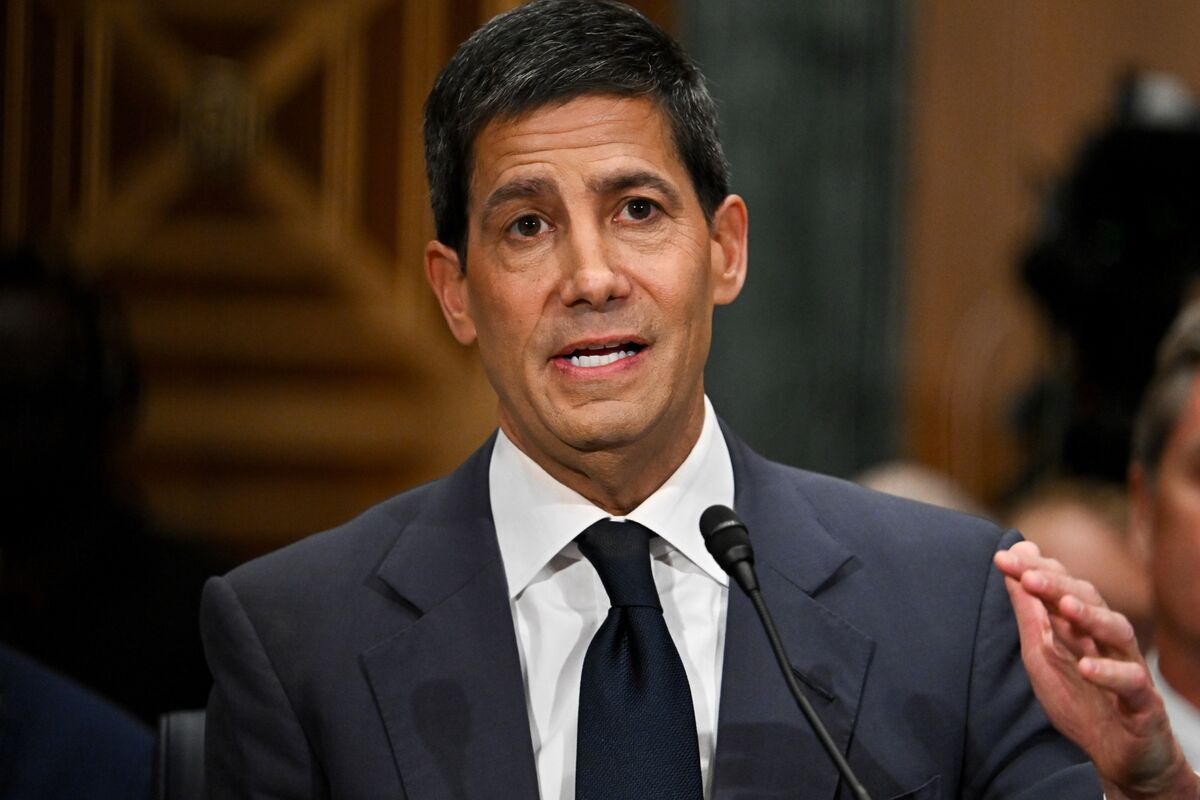
Kevin Warsh’s Senate Banking Committee hearing centered on Fed independence, with the Fed chair nominee rejecting suggestions he would act as a "sock puppet" for Trump. The hearing also covered his personal finances and economic policy views, but the article provides no policy outcome or market-moving decision. The tone is largely procedural and political rather than economically consequential.
The market’s real exposure here is not to the nominee himself but to the probability distribution of future policy errors. A visibly politicized Fed would steepen the front end-to-long end curve, widen term premium, and raise volatility across rates, FX, and credit even before any policy shift is enacted. The first-order beneficiaries are assets with embedded inflation protection or strong pricing power; the second-order losers are long-duration equities and levered credit that depend on stable real yields.
The bigger mispricing is that investors tend to treat Fed independence as a binary institutional issue, but markets reprice it in stages: hearing rhetoric, nomination odds, committee posture, then staffing and communication style. That means the near-term catalyst path is calendar-driven over days to weeks, while the macro impact only compounds over months if confidence in reaction-function credibility erodes. If the market begins to price a higher probability of fiscal dominance, the move will show up first in breakevens, swap spreads, and USD weakness rather than outright inflation prints.
Consensus is probably underestimating how asymmetrically this affects the long end versus the policy rate path. Even if the front end stays anchored by weak growth, a credibility discount can lift 10Y/30Y yields and punish rate-sensitive growth equities without any change in realized data. That argues for viewing this as a volatility and curve-structure event, not a simple directional macro call.
The contrarian angle: the hearing may be noise relative to the Fed’s institutional inertia. Central banks can absorb political pressure for long periods unless staffing, communication, and balance-sheet policy all shift together, so the market may be overpricing an immediate regime break. If confirmation odds wobble but the eventual chair behaves conventionally, risk assets could mean-revert quickly after the headline cycle fades.
AI-powered research, real-time alerts, and portfolio analytics for institutional investors.
Request TrialOverall Sentiment
neutral
Sentiment Score
0.00
