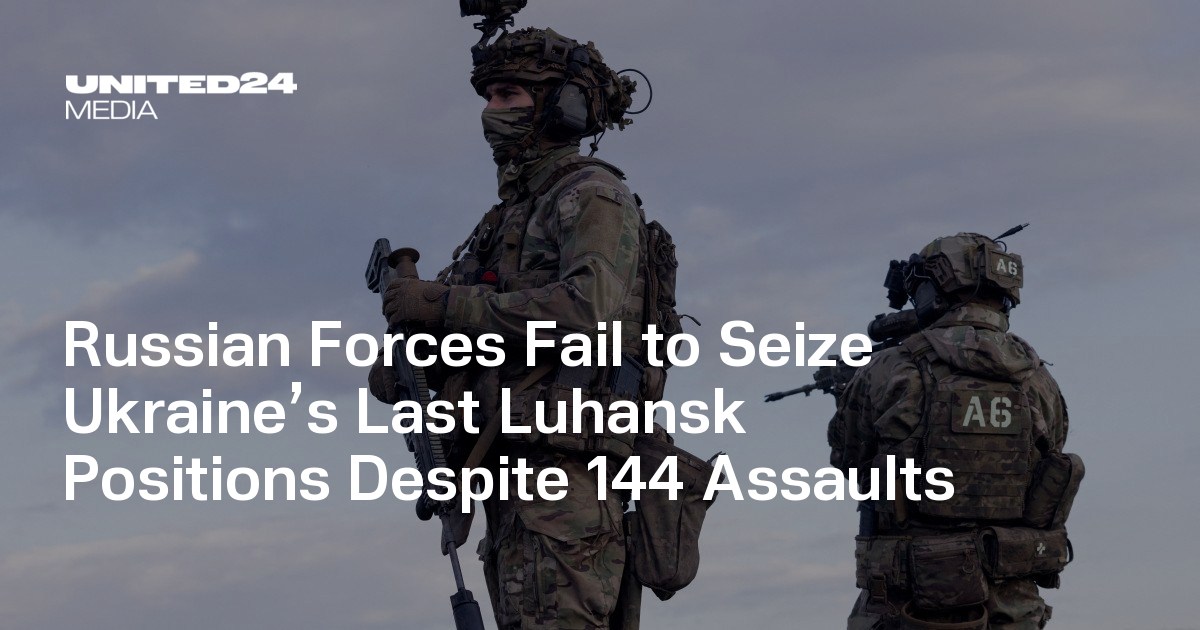
144 Russian assault attempts were reported over six months near Nadiia and Novoiehorivka, with the Ukrainian Third Assault Brigade saying it still holds positions in Nadiia, Novoiehorivka and Hrekivka. The brigade reported Russian attacker strength of >360 troops and 19 motorized vehicles, and claimed Russian losses up to ~260 killed and >80 wounded. Moscow’s April 1 claim of full capture of Luhansk was denied and framed by Kyiv as part of a broader Russian push to extract political concessions; expect continued operational uncertainty in Donbas with upside risk to defense-risk premia and regional risk sentiment.
A sustained, attritional frontline favors durable demand for artillery, precision-guided munitions, air-defence and the discrete supply-chain inputs that enable them (high-end optics, GaN/RF semiconductors, composites). Over the next 3–12 months this should compress lead times and push procurement cycles toward suppliers with spare production capacity, not merely large primes that already trade rich multiples.
Second-order winners will be niche suppliers of sensors, power electronics and specialized contract manufacturers: these businesses can see 2–3x revenue growth off small base if Western aid is speeded up, creating outsized equity returns even as large primes deliver steady but slower EPS upside. Conversely, European civilian contractors and discretionary cyclicals risk margin pressure as governments reallocate capex to defense over fiscal years (12–24 months), and insurers/reinsurers remain exposed to underwriting losses on war-related commodity/logistics shocks.
Key catalysts to watch are tranche timings for US/EU aid (weeks–months), spring/summer offensive season dynamics (3–6 months), and any rapid escalation or mobilization event that would shock energy/commodity markets (days–weeks). Tail risks — direct NATO involvement, WMD use, or a sudden cutoff of Black Sea grain shipments — would force a swift risk-off repricing; conversely, an unexpected diplomatic breakthrough would unwind much of the defense re-rating and leave cyclicals to snap back quickly within 1–3 months.
AI-powered research, real-time alerts, and portfolio analytics for institutional investors.
Overall Sentiment
moderately negative
Sentiment Score
-0.45
