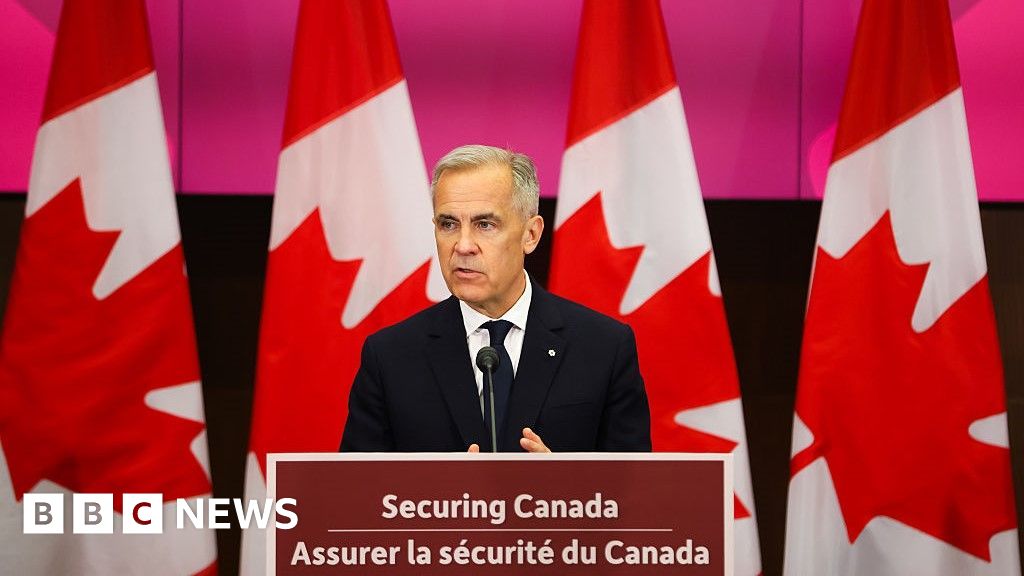
Canada's Prime Minister Mark Carney announced the country will meet NATO's 2% of GDP defense spending target by March of next year, significantly ahead of previous pledges, with an immediate C$9.3bn (US$6.5bn) cash increase for this fiscal year; this decision is driven by escalating global threats, a need to reduce reliance on the U.S. for defense, and critical deficiencies in Canada's current military readiness, including aging equipment and limited operational capacity.
Canada, under Prime Minister Mark Carney, has announced a significant acceleration in its defence spending, committing to reach the NATO target of 2% of GDP by March of the next year, a substantial shift from previous timelines which aimed for 2030 or 2032. This decision is underpinned by an immediate C$9.3 billion (US$6.5 billion) cash injection for the current fiscal year, driven by what Carney described as "multiplying" threats from hostile governments, terrorist entities, and cyber criminals, alongside an aggressive Russia and China, and threats to Arctic security. The move also reflects Canada's desire to reduce its defence reliance on the United States, which Carney noted is "reducing its relative contribution to our collective security" and allegedly looking to "monetise its hegemony." Canada's current defence expenditure stands at 1.4% of GDP, and its military preparedness has been hindered by aged equipment, with critical deficiencies such as only one of four submarines being seaworthy and less than half the maritime fleet and land vehicles in good working order. The new strategy encompasses four pillars: increased investment in personnel and equipment (including new submarines, aircraft, ships, armoured vehicles, artillery, drones, and Arctic sensors), capability expansion, strengthening the domestic defence industry, and diversifying defence partnerships. A new defence procurement agency will be established to expedite decision-making and bolster domestic capacity, addressing long-standing criticisms of the current slow and inefficient procurement process. This announcement, made a week before Canada hosts the G7 Summit, positions Canada more aligned with NATO expectations, where the 2% target is increasingly viewed as a minimum, and NATO Secretary General Mark Rutte is advocating for a new 3.5% target and has highlighted the need for a substantial increase in air and missile defence capabilities across the alliance.
AI-powered research, real-time alerts, and portfolio analytics for institutional investors.
Request DemoOverall Sentiment
moderately positive
Sentiment Score
0.45
