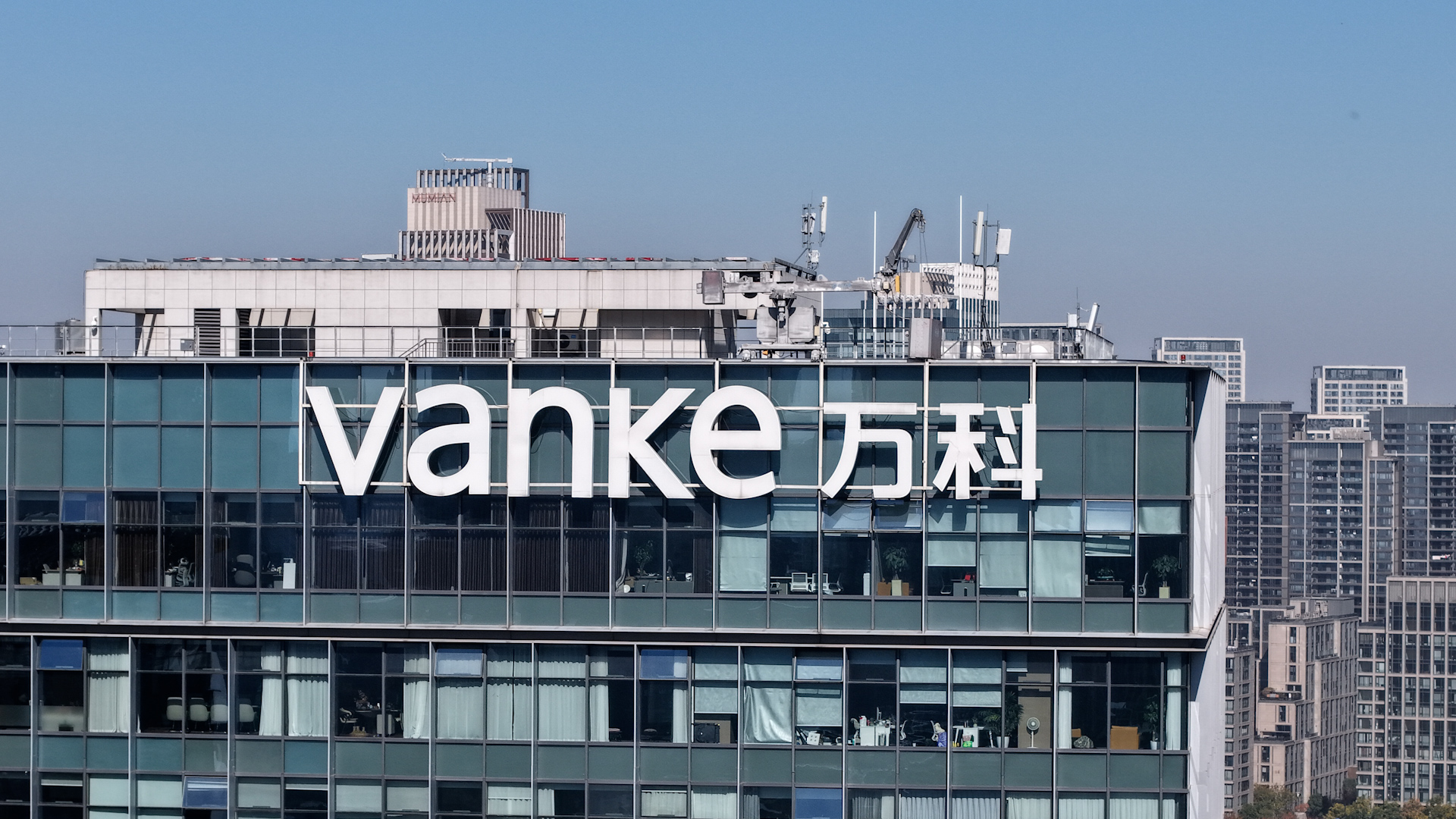
A state-backed Chinese developer (largest shareholder Shenzhen Metro) has sought a one-year delay on bond payments, creating acute liquidity concerns as over ¥3 billion comes due in late December and more than ¥30 billion is due by next June; offshore holders face roughly $1.3 billion of note exposure. The move—coming alongside government intervention to withhold private home‑sales data—threatens to erode confidence in state‑owned developers, intensify contagion to the already weak private developer sector (sales down ~29% Y/Y vs state-owned -9%), and compounds steep home‑sales declines (November ~36% Y/Y), leaving limited policy ammunition to stabilize markets.
Market structure: The immediate winners are cash-rich distressed debt buyers, global safe-havens (U.S. Treasuries, gold) and short sellers; losers are private developers, sub-investment-grade USD/HK property bondholders and mortgage-linked domestic banks. Presales down ~30–36% YoY signals a collapse in forward demand — completions/supply chains will slow, pushing near-term construction stoppages and elevated NPL risk for regional banks with property exposure (quantify: >¥30bn maturities into next June creates concentrated rollover risk).
Risk assessment: Tail scenarios include a state-support refusal triggering cross-defaults across offshore USD issuance, a CNH devaluation >5% in 30 days, or provincial fiscal stress forcing LGFV fire-sales. Immediate (days): liquidity flight and credit spread widening; short-term (weeks–months): restructurings and distressed trading; long-term (quarters–years): weaker household demand and repriced land values. Hidden dependencies: bondholder vote thresholds, withheld sales data (information risk), and linkage between state-owned developer perception and retail presales.
Trade implications: Favor short/direct-protection on China property exposure and move to duration/FX hedges: buy 6–12m puts on EWH 10–15% OTM (size 1–2% portfolio) and establish targeted shorts in HK-listed private developers (e.g., 2007.HK, 1918.HK) at 1–3% each for 3–9 months; increase U.S. Treasury allocation by 3–5% (TLT or direct) for 1–3 months; buy USD/CNH forwards or call options (1–2% notional) as FX hedge.
Contrarian angles: The market may over-penalize state-backed SOEs — selective long in onshore state-owned developer bonds or bank equities (post-volatility) could outperform once clarity on support arrives. If a policy response (targeted liquidity + explicit guarantee of certain bond classes) occurs within 30–60 days, expect 30–60% recovery in distressed SOE credit and sharp snapback in related equities; conversely, absence of support implies deeper haircuts and wider contagion.
AI-powered research, real-time alerts, and portfolio analytics for institutional investors.
Request DemoOverall Sentiment
strongly negative
Sentiment Score
-0.60
