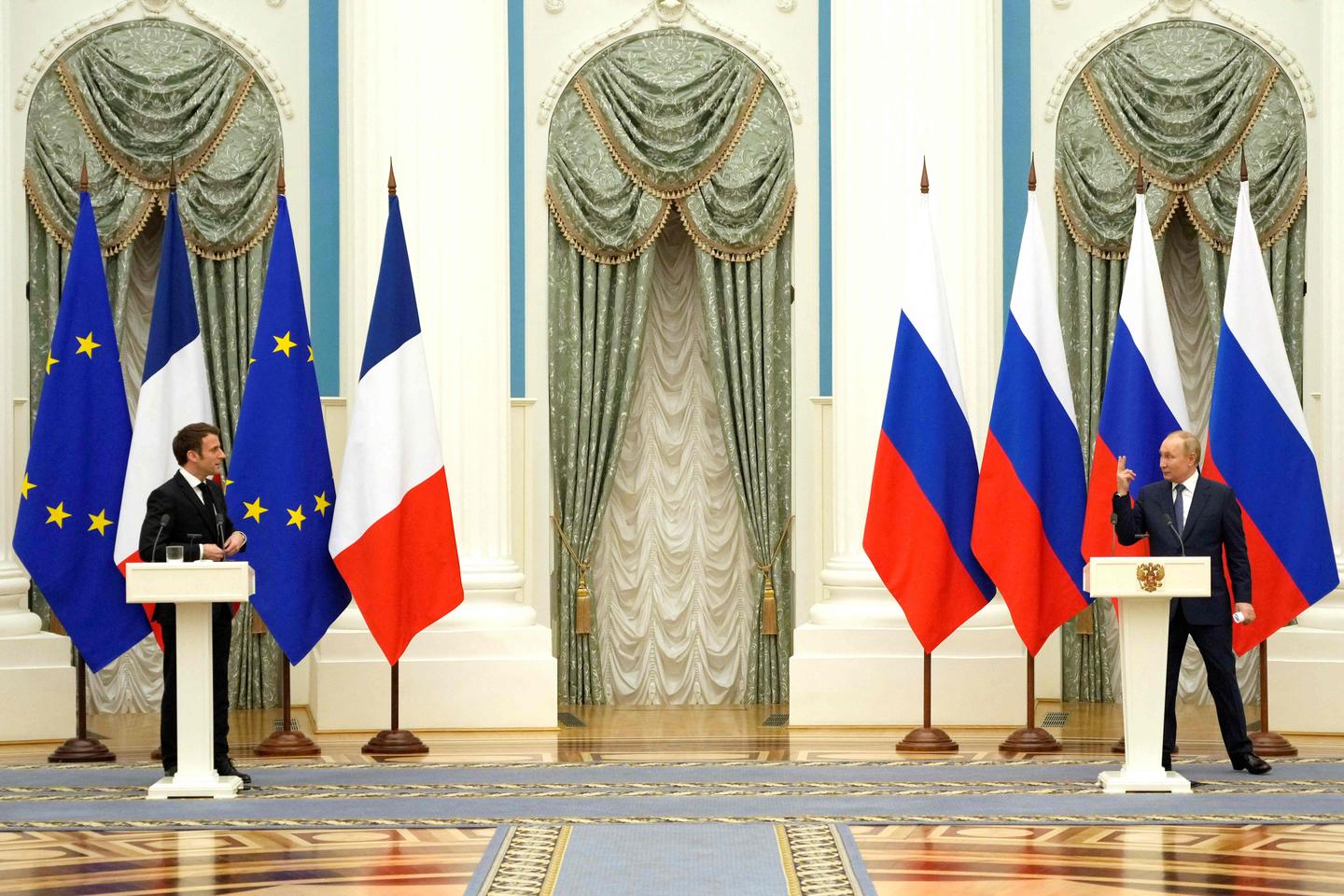
French President Emmanuel Macron said Europe should re-engage with Vladimir Putin and the Élysée welcomed Kremlin comments that Putin is ready to speak with Macron, while insisting any talks be conducted in full transparency with President Zelensky and European allies. The Kremlin confirmed Putin's readiness to engage, but denied plans for three-way face-to-face talks with the US and Ukraine; separately the US is hosting negotiations in Florida mediated by Steve Witkoff and Jared Kushner with Russian envoy Kirill Dmitriev attending. For investors, the development signals a potentially de-escalatory diplomatic channel that could reduce tail-risk if it advances, but details remain vague and progress is uncertain.
Market structure: Renewed signals that Putin is willing to talk and Macron pushing European-led diplomacy raise the near-term probability of de-escalation (implied move: 20–40% higher chance of ceasefire within 0–3 months). Direct winners if talks gain traction: European cyclicals and travel (autos, industrials, airlines) via lower risk premia; losers: defense contractors and oil producers if commodity risk premium compresses. Pricing power could shift from defense/energy to industrial exporters as risk premia on supply-chain and sanctions fade, pressuring margins for defense names by an estimated -5–10% forward revenue multiple compression over 3–6 months in a peace scenario.
Risk assessment: Tail risks include a negotiated pause that unravels (low-probability but high-impact for markets), a surprise escalation tied to failed talks, or sanctions re-tightening that keeps energy prices elevated. Immediate risks (days) center on headlines from Florida talks; short-term (weeks–months) on formal ceasefire signals and commodity inventory moves; long-term (quarters) on reconstruction flows and shifting defense budgets. Hidden dependencies: European bank credit exposure to regional sovereigns and FX (RUB/EUR) volatility could transmit second-order shocks to credit markets.
Trade implications: Tactical plays favor reducing defense/energy cyclicality exposure and rotating into Europe and recovery-sensitive sectors if momentum confirms (look for >3% drop in Brent over 10 trading days or a confirmed trilateral meeting). Use pair trades to express view (long MSCI Europe ETF VGK vs short SPY) and use options to define risk (buy put spreads on XLE to hedge oil rollback; sell covered calls on LMT to monetize premium). Time entries around two catalysts: outcome of Florida talks (0–7 days) and official Franco-Russian/Moscow-Kyiv meeting announcements (0–30 days).
AI-powered research, real-time alerts, and portfolio analytics for institutional investors.
Request DemoOverall Sentiment
neutral
Sentiment Score
0.10
Contrarian angles: Consensus assumes talks either fail or have muted market effect; markets may underprice a sustainable de-risking path that cuts Brent by 10–20% and narrows EUR sovereign spreads by 25–75bp within 3 months. Overreaction risk: defense names could be oversold on initial peace optimism; consider staged re-entry if headline-driven volatility pushes prices >10% from current levels. Historical parallels (post-Cold War localized ceasefires) show initial risk-on followed by consolidation—avoid full rotation until two consecutive weekly confirmations of flow reversal.
