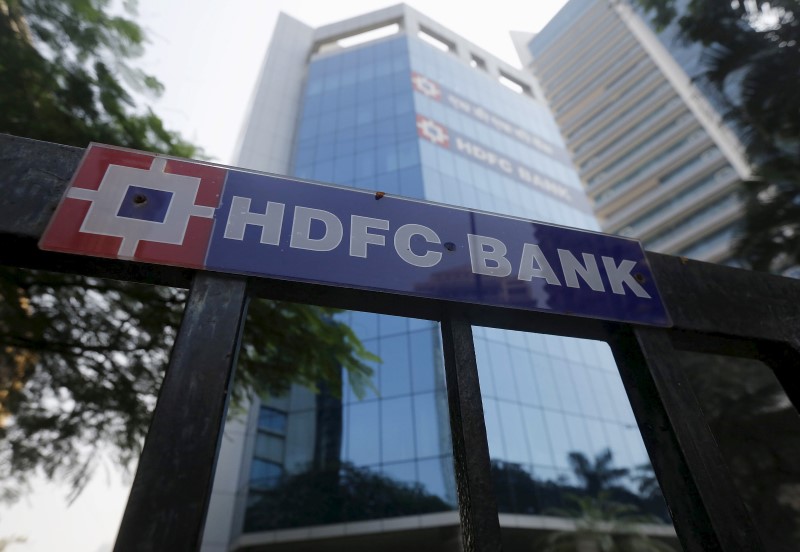
JPMorgan upgraded HDFC Bank to Overweight and cut its price target to INR1,010 from INR1,090, while revising FY26 and FY28 EPS by -0.2% and -1.7% (JPM estimates remain 2-3% below Bloomberg). The stock is down 33% YTD, trading at $24.35 (near a $24.30 52-week low) and at a 1.5x FY28 P/B (a 16-year low) and ~17% discount to ICICI on 12-month forward P/B. Q3 2025 EPS met at $0.4004 but revenue missed at $5.05B vs $5.10B expected; market reaction was neutral. JPM cited expected recovery in system credit growth and ROA improvement as reasons for the upgrade but noted NIM pressure and a lower subsidiary valuation (Rs94 vs Rs129) as drivers of the lower PT; technical indicators (RSI) and InvestingPro fair value analysis point to potential undervaluation.
Valuation-driven repositioning in a large private bank creates asymmetric outcomes across the Indian banking complex: incumbents with deep liability franchises can convert a deposit-cost advantage into faster-than-expected ROA recovery, forcing higher-cost lenders and NBFCs to chase funding via term issuance or higher retail pricing. That dynamic compresses margins for smaller banks and non-bank lenders over the next 6–18 months as competition for granular deposits intensifies, while advantaged banks can harvest spread as expensive wholesale stock winds down.
Market reaction has priced forward a slow recovery in system credit and placed disproportionate weight on short-term revenue noise, leaving optionality unreflected — specifically subsidiary valuation uplifts, share buybacks, or targeted capital returns that can re-rate a parent faster than core NIM recovery. Major reversal triggers are clear: an abrupt macro slowdown or regulatory curbs on dividend/subsidiary transfers would re-open downside within weeks, whereas a clean pick-up in retail loan volumes and stable deposit costs would deliver mean reversion over 3–12 months.
For risk allocation, prefer directional exposure that isolates re-rating from macro beta. Use pair strategies to capture relative valuation convergence and employ calendar/vertical option structures to limit downside against idiosyncratic event risk. Monitor flows (FII/FPIs), local liquidity (RBI operations), and 3–6 month deposit competition data as primary indicators to add or trim positions.
AI-powered research, real-time alerts, and portfolio analytics for institutional investors.
Request DemoOverall Sentiment
mixed
Sentiment Score
0.05
Ticker Sentiment
