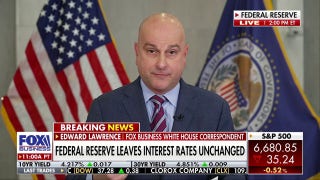
Average U.S. regular gasoline price is $3.84/gal, up $0.92 (+31%) from $2.92 a month ago (AAA), driven by recent U.S. and Israeli actions against Iran. VP JD Vance called the increase a 'temporary blow,' said the administration has coordinated releases of 'hundreds of millions of barrels' from petroleum reserves to blunt prices, and expects prices to fall once military operations conclude. Expect continued near-term energy-market volatility and higher consumer fuel costs, with policy actions aimed at limiting sectoral impact.
The immediate market response is being driven more by risk premia and liquidity positioning than by a permanent change to physical supply — front-month crude and refined-product spreads look prone to rapid compression once tactical policy responses (additional SPR releases, diplomatic de-escalation) arrive. That makes short-dated volatility the primary trader’s arena for the next 2–8 weeks, while capital allocation for producers and midstream should be evaluated on a 3–12 month basis when production responses and refinery turnarounds play out. Second-order winners are firms that can flexibly re-route product and monetize refining cracks (regional refiners, quality-constrained storage owners) and service companies that get paid on utilization rather than hydrocarbon price. Obvious losers are high fixed-cost transport and leisure businesses whose margins are squeezed by a fuel-driven demand shock; that margin squeeze can cascade into consumer discretionary inventories and credit performance in stressed regions over a 1–2 quarter horizon. Key catalysts and risks are asymmetric: a targeted de-escalation or another coordinated SPR tranche will likely erase most of the front-month premium inside 2–6 weeks; conversely, an escalation that threatens chokepoints (tankers, terminals) or triggers broader sanctions would create a non-linear price jump and liquidity squeeze that could last months. Positioning risk is elevated because public messaging aimed at calming voters increases the probability of policy interventions that depress prices faster than physical market fundamentals would alone. The consensus framing of this as purely “temporary” understates two opposite-but-plausible outcomes — rapid mean reversion of front-month premiums (favoring calendar/option structures) or persistent midstream bottlenecks if damage to export logistics is underestimated. An asymmetric, options-based approach buys protection against the tail while allowing capture of reversion in the front end of the curve.
AI-powered research, real-time alerts, and portfolio analytics for institutional investors.
Request DemoOverall Sentiment
neutral
Sentiment Score
0.00
