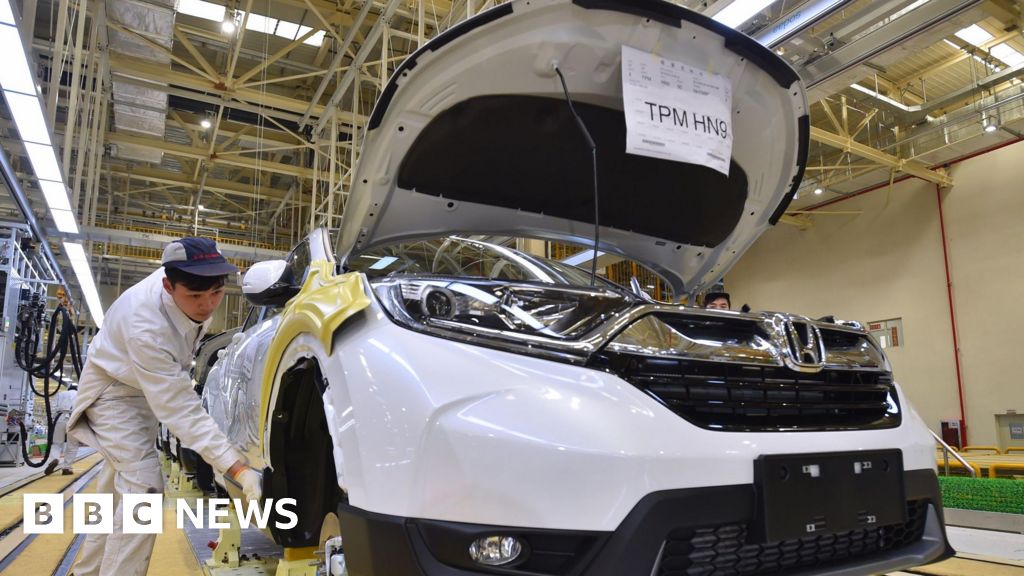
Honda reported its first annual loss in 70 years, with a ¥423bn operating loss for the year ending March 2026 as weaker-than-expected EV demand, US tariff costs, and the removal of US EV tax credits hit profitability. The company is scrapping some EV production targets, suspending EV and battery plans in Canada, and now expects ¥512bn in EV-related losses in the next fiscal year ending March 2027. Honda is shifting focus toward motorcycles, financial services, and hybrids, but the setback signals broader strain across legacy automakers in the EV transition.
This is less a single-company miss than a reset of the capital-allocation regime across the Japanese and global auto stack. When a legacy OEM publicly abandons electrification milestones, the near-term winners are not the pure EV leaders but hybrid supply chains, ICE-adjacent component makers, and low-cost Asian parts vendors that can absorb incremental sourcing as Western OEMs chase margin repair. The second-order effect is a slower-than-consensus EV mix shift, which should support residual values and pricing power in hybrids while delaying the volume breakout needed to justify current battery capex across the sector. The real bearish signal is not Honda’s loss; it is the implied write-down of the whole “EV adoption will outrun policy volatility” thesis. Removal of consumer incentives plus tariffs creates a double hit: weaker demand at the same time as higher landed cost, which is toxic for mass-market EV affordability and especially punitive for OEMs with thin pricing power. Over the next 6-18 months, expect a broader industry repricing toward hybrids, with suppliers exposed to power electronics, battery capacity, and dedicated EV platforms likely to face order deferrals and lower utilization. There is a contrarian angle: the market may be over-penalizing the medium-term strategic value of flexibility. OEMs that can pivot to hybrids and motorcycles/financial services preserve cash flow and optionality, while overcommitted EV players may end up with stranded capex and excess capacity. If gasoline prices stay elevated or tariffs ease, the pendulum could swing back quickly, but the catalyst needs to be sustained for quarters, not weeks, to change planning behavior. Near term, the cleaner trade is against companies dependent on aggressive EV penetration assumptions rather than against autos broadly.
AI-powered research, real-time alerts, and portfolio analytics for institutional investors.
Overall Sentiment
strongly negative
Sentiment Score
-0.78
