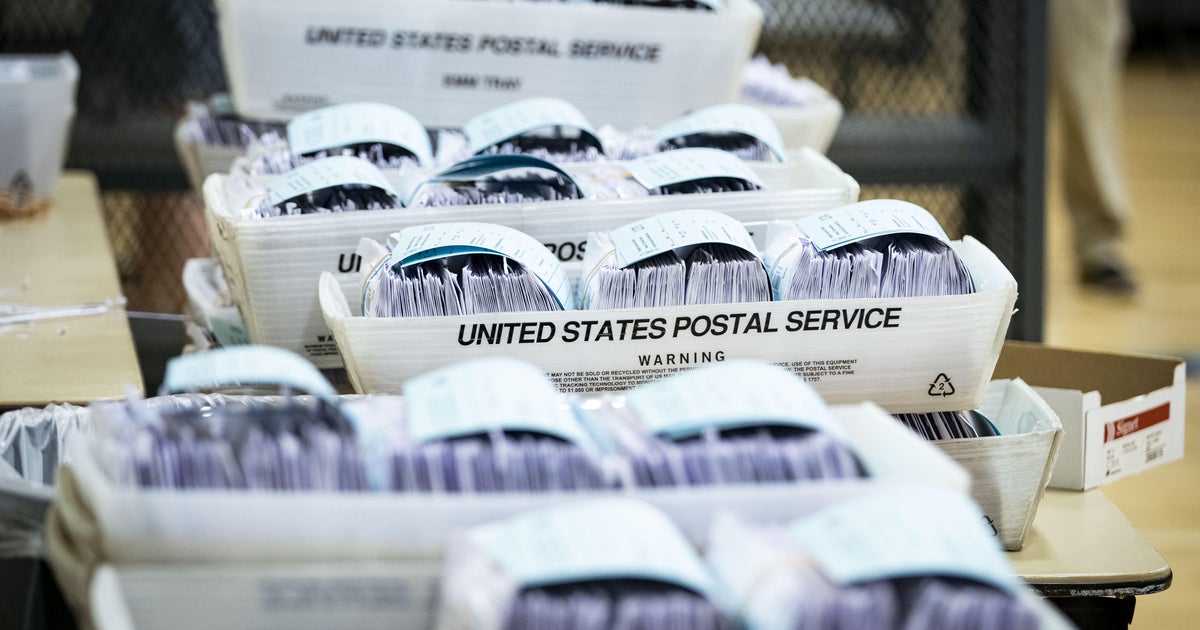
Maryland said more than 500,000 voters requested mail-in ballots, but the error involved some voters receiving the wrong party ballot, not 500,000 fake ballots. The state board says impacted voters will receive replacement ballots and that voters who print ballots at home are not affected. The article also highlights the SAVE America Act, which would require proof of U.S. citizenship and photo ID for federal voting.
The market implication is not the ballot-printing error itself; it is the political optionality it creates for federal voting-legislation rhetoric. Episodes like this increase the odds of headline-driven escalation around election integrity, which tends to help vendors and consultants exposed to registration, identity verification, and election administration software, while pressuring names tied to generic mail logistics and broad election-night operational services. The second-order effect is that even a localized administrative error can be weaponized into a national policy narrative, extending the life of the issue well beyond the June primary window.
The key risk is timing: near term, the catalyst is not legislative passage but repeated media amplification into the next few weeks, which can push state-level procurement and compliance reviews higher. Over a 3-12 month horizon, the bigger driver is whether this translates into actual federal or state tightening on voter ID, documentary proof, and ballot-processing controls. If that happens, the beneficiaries are likely to be software, KYC-style identity verification, and voter-registration workflow vendors; the losers are lower-margin incumbents that rely on frictionless mail-in and paper-heavy processes.
The consensus may be underestimating how little needs to happen legislatively for the trade to matter. Even without passage, the debate can accelerate local funding for auditability, chain-of-custody, and ID verification tools. That makes this a “soft catalyst” theme: lower conviction than a policy mandate, but with a better asymmetry because budgets can move before statutes do, especially in swing-state procurement cycles.
I would not fade the headline by shorting the broad political-media complex; the cleaner expression is to lean into secular compliance beneficiaries on weakness and avoid crowded, event-driven names that depend on a single bill becoming law. The trade should be sized as a probabilistic policy-option, not a base case.
AI-powered research, real-time alerts, and portfolio analytics for institutional investors.
Request DemoOverall Sentiment
neutral
Sentiment Score
-0.05
