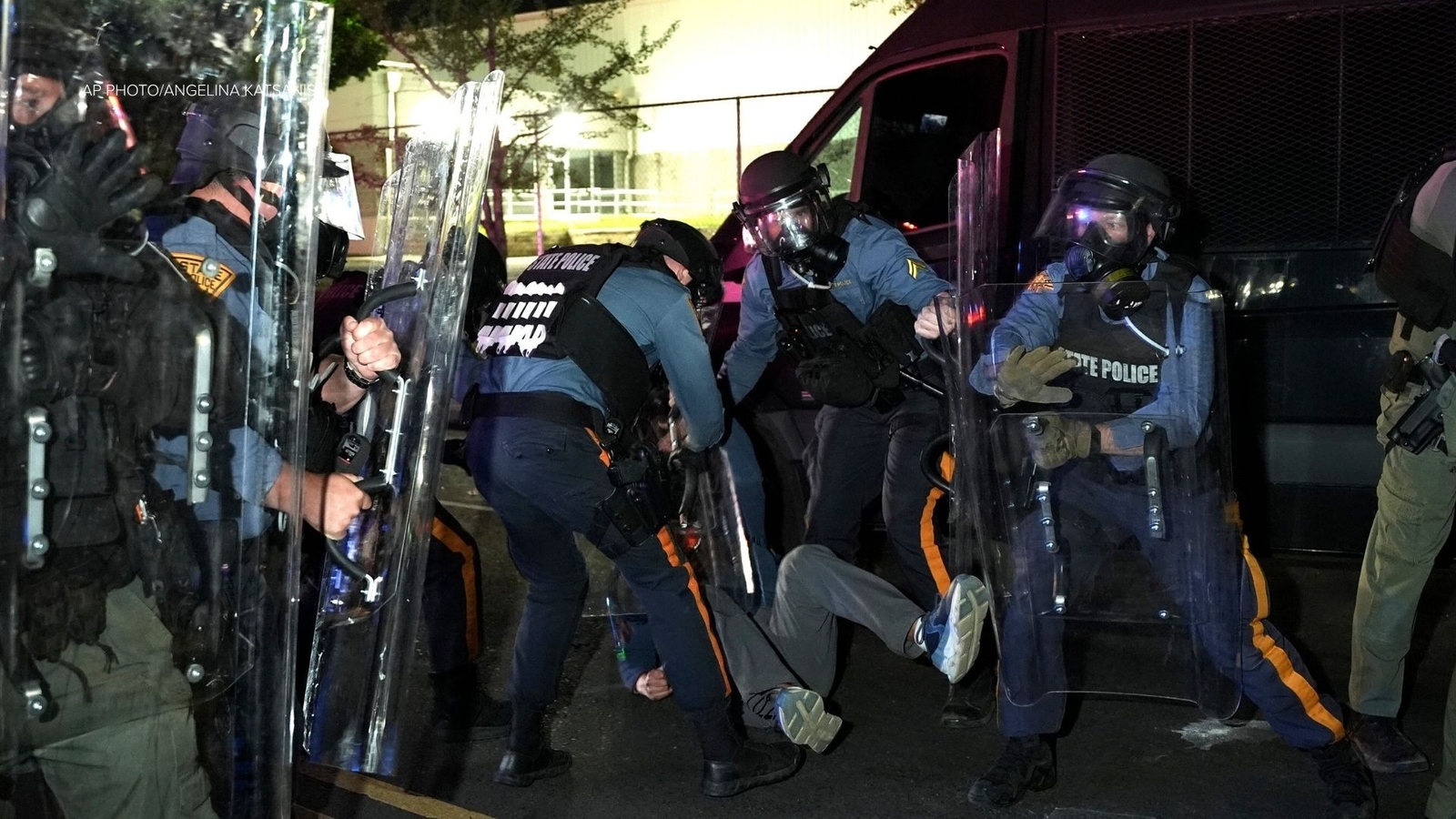
Newark imposed a mandatory overnight curfew around the 1,000-bed Delaney Hall ICE facility after escalating protests, arrests, and claims of unsafe conditions. State police took over crowd control as detainees reportedly continued a hunger strike and lawmakers pushed for better conditions or closure of the site. The article is primarily a political and civil-disturbance update with limited direct market impact.
This is less a one-off public-order story than an early signal that the immigration enforcement trade is moving from federal administrative execution to state-level operational interference. That matters because once a private detention facility becomes a political flashpoint, the base case shifts toward recurring legal, staffing, and security friction rather than smooth utilization. The second-order effect is not just headline risk for operators tied to detention capacity; it is potential delay in contract renewals, higher compliance costs, and a lower probability of fast-track expansion in jurisdictions with hostile governors and mayors.
The immediate winner is the state and local political class, which can now claim they are restoring order while avoiding the optics of fully siding with either protesters or ICE. The loser is any private-services ecosystem that monetizes detainee throughput: security contractors, food-service vendors, transport providers, and facility managers all face a higher probability of operating under escort, curfews, or court-imposed restraints. If protests spread to other facilities, the more important variable becomes labor and insurance cost inflation across the detention network, not just the political theater around one site.
The market is likely underpricing the tail risk that a single incident escalates into a broader detention-capacity bottleneck. In the near term, that can pressure federal contractors via margin compression and delayed invoicing; over months, it can force a re-rating of companies dependent on government custodial assets if utilization becomes politically unstable. Conversely, if state police maintain control and violence stays contained for several weeks, the trade fades quickly because the federal government has incentives to normalize operations and avoid a precedent of state obstruction.
The contrarian angle is that this may be more headline-negative than economically material unless it triggers contract cancellations or judicial injunctions. The bigger medium-term catalyst is litigation: if detainee-condition claims gain traction, the legal overhang could extend far beyond New Jersey and create a template for challenges at other facilities. That would make this a policy/regulatory problem with years-long implications rather than a local security issue with a few days of noise.
AI-powered research, real-time alerts, and portfolio analytics for institutional investors.
Request TrialOverall Sentiment
moderately negative
Sentiment Score
-0.20
