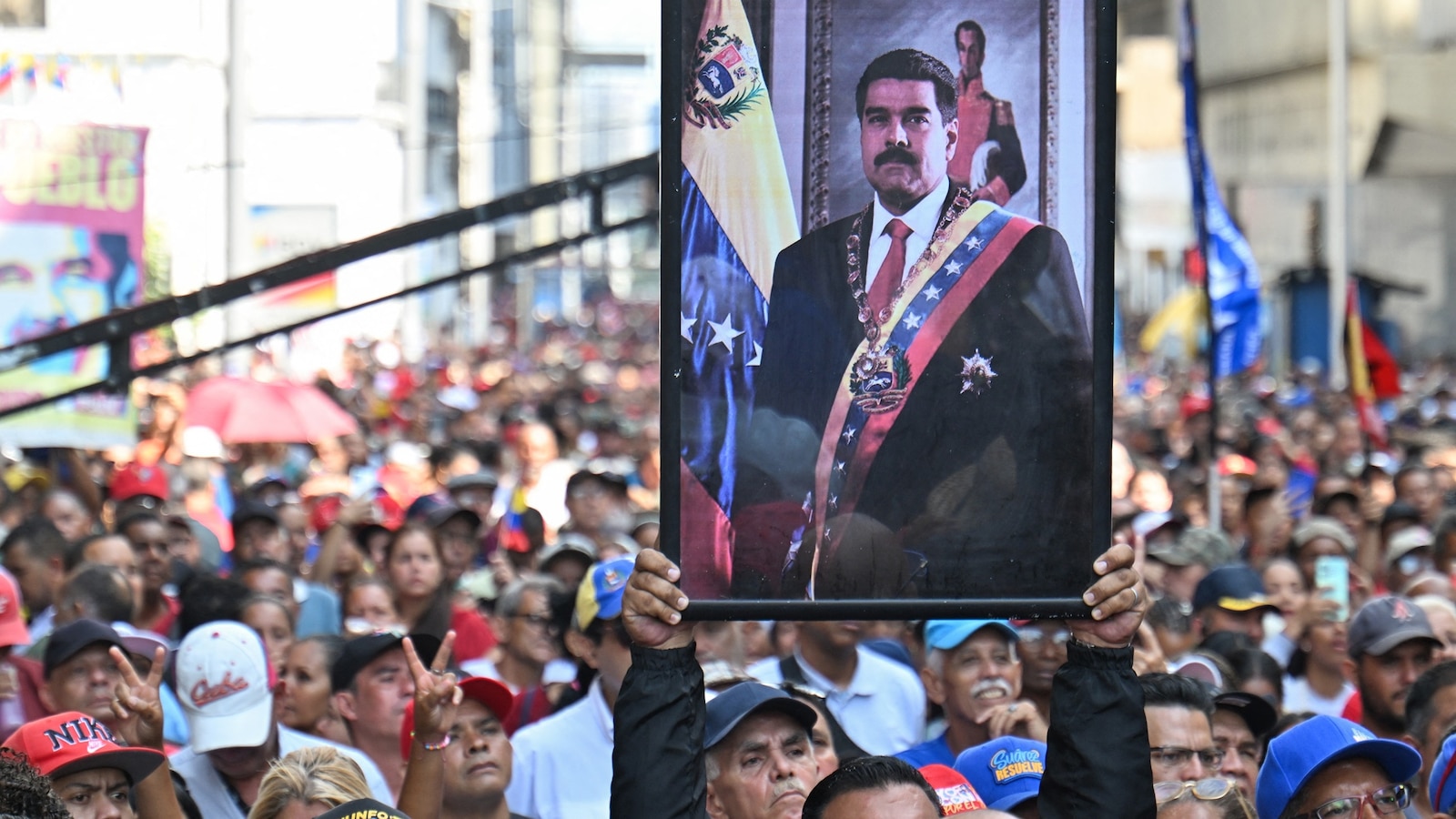
Venezuelan President Nicolás Maduro and his wife Cilia Flores pleaded not guilty to U.S. federal narco‑terrorism/drug trafficking charges in the Southern District of New York, with their arraignment overseen by senior Judge Alvin Hellerstein and the next court date set for March 17. Maduro has hired high‑profile defense counsel — including Barry Pollack (who negotiated Julian Assange's 2024 plea) and constitutional expert Bruce Fein — while Flores is represented by former federal prosecutor Mark Donnelly; Pollack signaled potential foreign‑sovereign immunity arguments, making the case a politically sensitive matter with international legal and geopolitical risk to monitor.
Market structure: The arraignment raises geopolitical tail-risk that asymmetrically benefits liquid, low-cost energy producers (XOM, CVX, XLE) and traditional safe havens (GLD, TLT) while pressuring EM credit and frontier assets tied to Venezuela and regional trade finance. Immediate supply disruption is low probability (<15% over 3 months) but a 1-2% shock to Brent would re-rate energy stocks and energy-sector ETFs relative to broader markets; EM FX and sovereign spreads would widen quickly (200–500bp). Cross-asset impact: expect short-term spikes in oil and gold volatility, widening in EMBI/individual CDS, and USD appreciation against LATAM FX.
Risk assessment: Tail scenarios include US sanctions escalation or interdiction of PDVSA exports that could remove 200–500kbpd from markets for weeks—high impact, low probability. Time horizons: days (volatility spikes around court milestones), weeks–months (sanctions, shipping disruptions), quarters (credit restructuring and asset seizures); hidden dependencies include Russia/Cuba backing and shipping/insurance network changes that delay market repricing. Catalysts to watch: March 17 court date, DOJ filings, US sanction announcements, weekly PDVSA tanker data and Venezuelan CDS moves.
Trade implications: Tactical plays favor 1–2% directional energy exposure and 1–3% safe-haven/hedge allocations alongside targeted EM hedges. Use options to cap cost: buy 3-month XLE call spreads to capture a >10% oil move and buy 3-month VWO put spreads to protect EM exposure; pair long XOM vs short VWO for relative value. Entry: initiate hedges immediately; add energy longs only if Brent >+5% in 7 days or Venezuela CDS wideens >500bp.
Contrarian angles: The market currently underprices the contagion pathway from legal/ sanctions action to shipping insurance and buyer reluctance—this non-linear transmission (insurance pullback) could amplify supply shocks. Historical parallel: 2012–2013 Iran sanctions showed small supply cuts can trigger outsized oil spikes; if PDVSA exports fall 300kbpd, energy equities could rally 10–25% in 1–3 months. Unintended consequence: aggressive US measures could push Venezuela deeper into Russian/Iranian alignment, prolonging uncertainty and keeping premia high—favor flexible, liquid hedges over concentrated positions.
AI-powered research, real-time alerts, and portfolio analytics for institutional investors.
Request DemoOverall Sentiment
neutral
Sentiment Score
0.00
