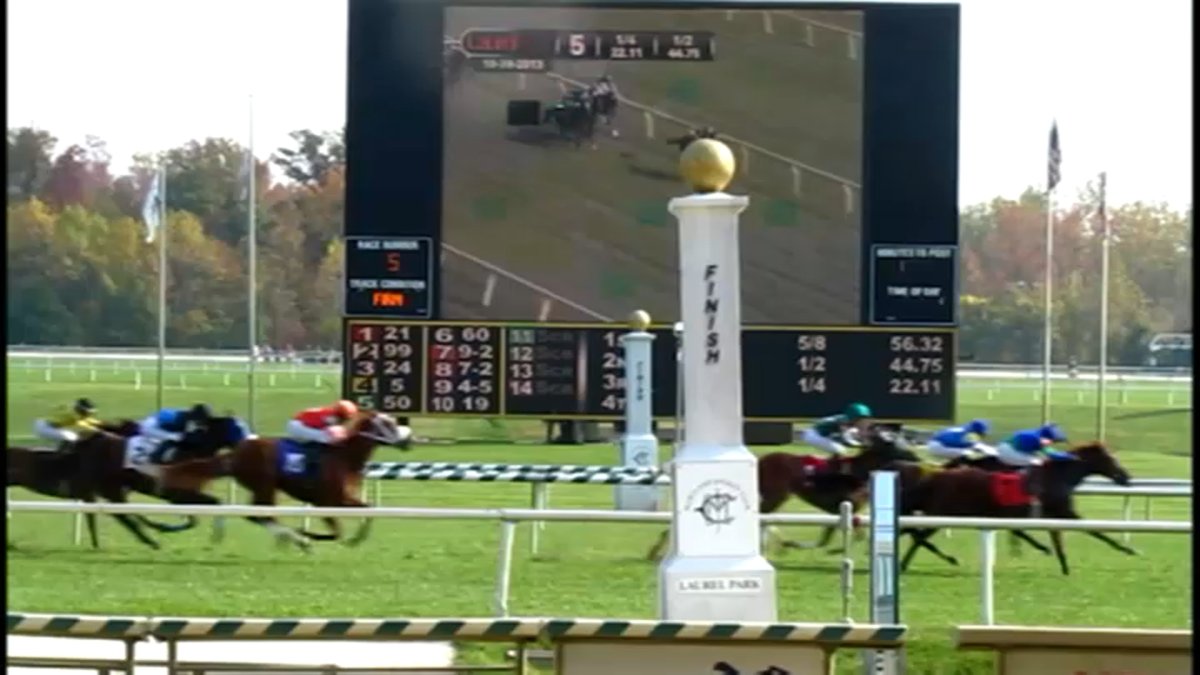
Laurel Park is set to host the Preakness Stakes for the first and likely final time before racing at the 1911 track ends next year and the property is converted into a training facility. Attendance has collapsed to a capped 4,800 for this year’s event versus more than 46,000 at last year’s Preakness weekend at Pimlico, underscoring the broader contraction in U.S. horse racing. Maryland’s $400 million Pimlico redevelopment and $48.5 million Laurel acquisition remain subject to legislative review, leaving the sport’s local future uncertain.
The key second-order effect is not the one-off relocation of a marquee race, but the acceleration of a structurally unprofitable asset class into a state-managed, lower-capex “utilities” model. That is usually good for the surviving venue and bad for the ecosystem around the legacy track: fewer casual attendees, less weekend traffic, and a smaller spend base for local hospitality, staffing, and off-track wagering partners. The market should think in terms of a gradual liquidity drain over 12-24 months rather than a binary shutdown event. From a capital-allocation lens, the state’s willingness to subsidize redevelopment while constraining attendance implies politicians still see optionality in the brand, but not in the legacy operating model. That makes the near-term catalyst less about racing demand and more about legislative process risk: any delay to ownership transfer or redevelopment extends the cash burn and keeps uncertainty over the eventual mix of training, racing, and adjacent real estate use. If the review process lengthens, contractors and local service vendors could see a short-lived bump, but equity value is likely capped because the end state remains lower monetization per acre. The contrarian read is that “horse racing is dying” is probably too simplistic. The sport is shrinking as a live entertainment format, but premium event days still draw disproportionate media and sponsorship attention, and that creates a long tail for select venues with political protection. The winner is not the old track itself but the replacement capital stack: construction, facilities management, and potentially state-linked redevelopment entities. The loser is any business model dependent on recurring foot traffic and betting handle at a deteriorating physical venue. Near term, the best trade expression is to fade names exposed to regional live-event decline and support assets that benefit from redevelopment spend or state-backed capex. The risk to that view is a policy reversal or a surprise public commitment to preserve racing longer than expected, which would delay but not eliminate the operating pressure. Over 3-6 months, the headline catalyst will be regulatory review; over 12-24 months, the main driver is whether the property becomes an economically viable training hub rather than a dead-footprint liability.
AI-powered research, real-time alerts, and portfolio analytics for institutional investors.
Request DemoOverall Sentiment
mildly negative
Sentiment Score
-0.20
