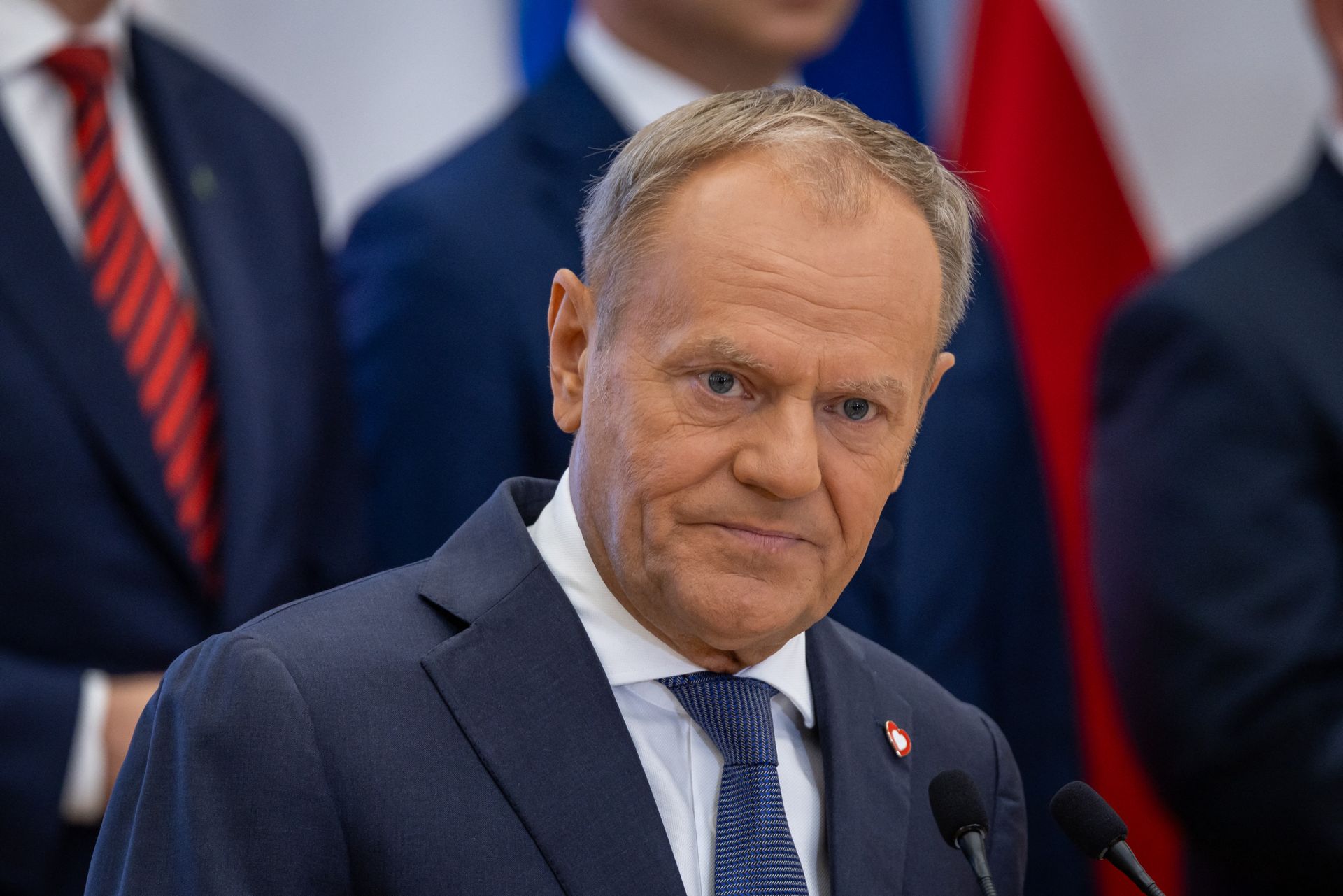
Polish Prime Minister Donald Tusk said the key question is whether the U.S. will remain loyal to NATO Article 5, warning that Russia could attack the alliance within months. His remarks reflect rising concern over Washington's commitment after President Trump floated leaving NATO and threatened allies over Iran, Greenland, and defense obligations. The article highlights heightened security anxiety on Europe’s eastern flank, especially for Poland as it expands defense spending and land forces.
The market implication is not an immediate macro shock but a gradual repricing of European security premia: the longer Washington’s commitment looks conditional, the more capital migrates from U.S.-anchored deterrence to self-funded continental defense. That benefits European defense primes, ammunition, air defense, EW, drones, cyber, and border-surveillance vendors first; second-order winners are industrials with capacity in armored vehicles, sensors, and power systems, because procurement will favor scalable, fast-to-deliver kit over bespoke platforms.
The underappreciated second-order effect is fiscal: countries closest to the eastern flank will likely accelerate multi-year procurement even if it means crowding out civilian capex. That creates a favorable demand backdrop for suppliers with backlog conversion and domestic production footprints, while penalizing firms dependent on transatlantic export flows or slow permitting. It also increases the odds of “buy European” procurement bias, which could matter more than headline NATO funding targets.
Risk is asymmetric over months, not days. The near-term catalyst is any fresh U.S. signaling that security guarantees are conditional; the medium-term catalyst is a concrete incident on NATO territory that forces an Article 5 stress test. The reversal case is equally real: if Washington walks back rhetoric and Europe settles on a credible rearmament roadmap, the premium migrates from political headlines to order flow, which is more durable and less volatile than the current tape implies.
Consensus may be over-focusing on headline rhetoric and underestimating budget inertia. Even if diplomacy stabilizes, procurement cycles now in motion are hard to unwind, so the real trade is not “war/no war” but “higher Europe defense spend for 3-5 years.” That argues for owning the beneficiaries of rearmament rather than trading the newsflow itself.
AI-powered research, real-time alerts, and portfolio analytics for institutional investors.
Request TrialOverall Sentiment
moderately negative
Sentiment Score
-0.35
