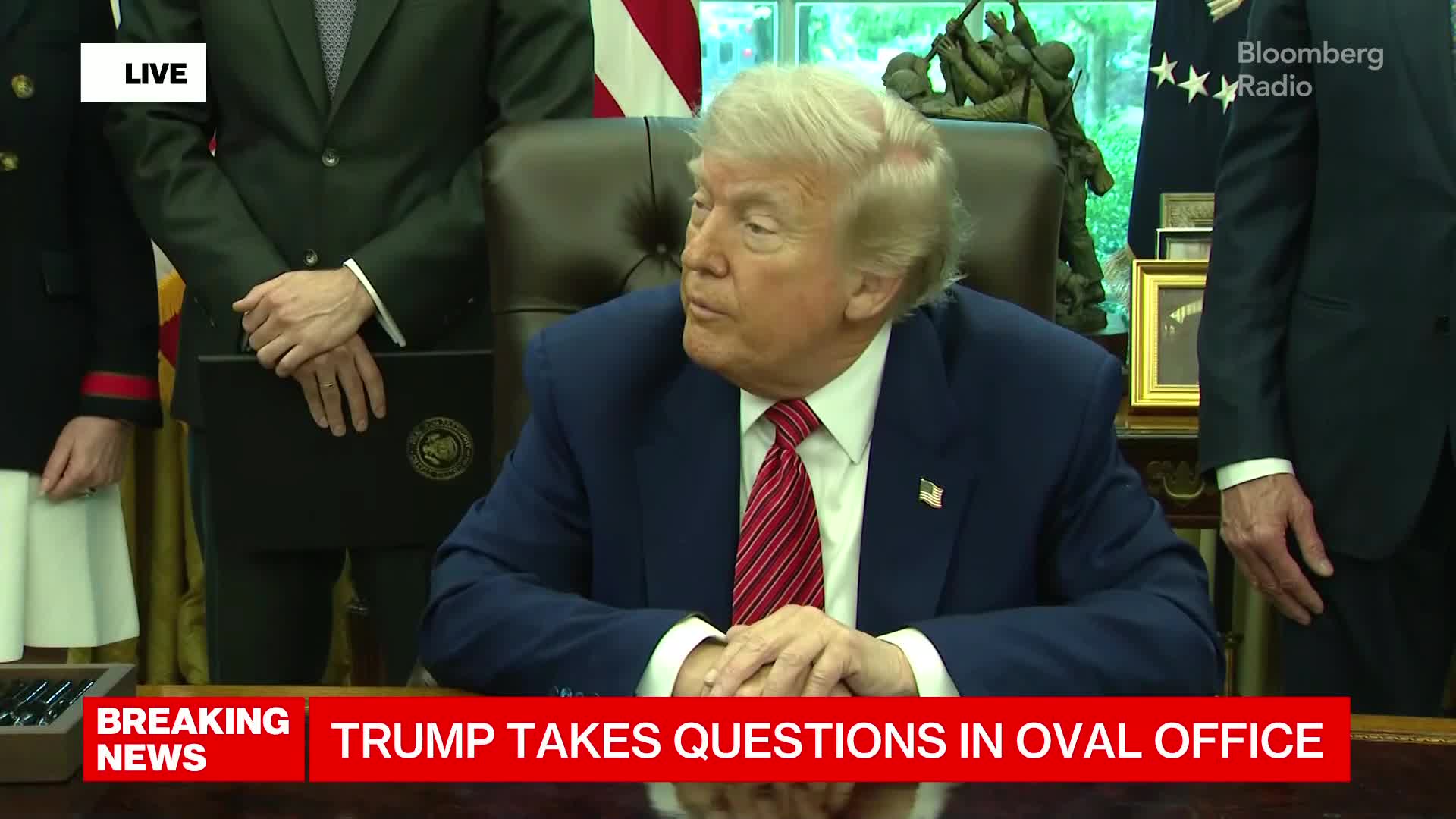
President Trump stated he is "not looking for a deal" regarding a potential 50% tariff on European Union goods, signaling a potentially hardened stance on trade negotiations with the EU. This statement, made during the signing of an executive order on nuclear power, suggests a possible escalation in trade tensions between the U.S. and Europe.
President Trump's statement indicating he is "not looking for a deal" regarding a potential 50% tariff on European Union goods signals a significant hardening of the U.S. administration's stance on transatlantic trade negotiations. This pronouncement, characterized by a "hawkish" tone and a "strongly negative" sentiment score of -0.7, points towards a potential escalation in trade tensions between the U.S. and the EU, with a corresponding market impact score of 0.7 suggesting a notable potential for market disruption. The context of the statement, made during the signing of an executive order on reviving nuclear power, is secondary to its primary implication for international trade policy, reinforcing themes of "Tax & Tariffs" and "Trade Policy & Supply Chain" and highlighting ongoing political risk factors.
AI-powered research, real-time alerts, and portfolio analytics for institutional investors.
Request DemoOverall Sentiment
strongly negative
Sentiment Score
-0.70
