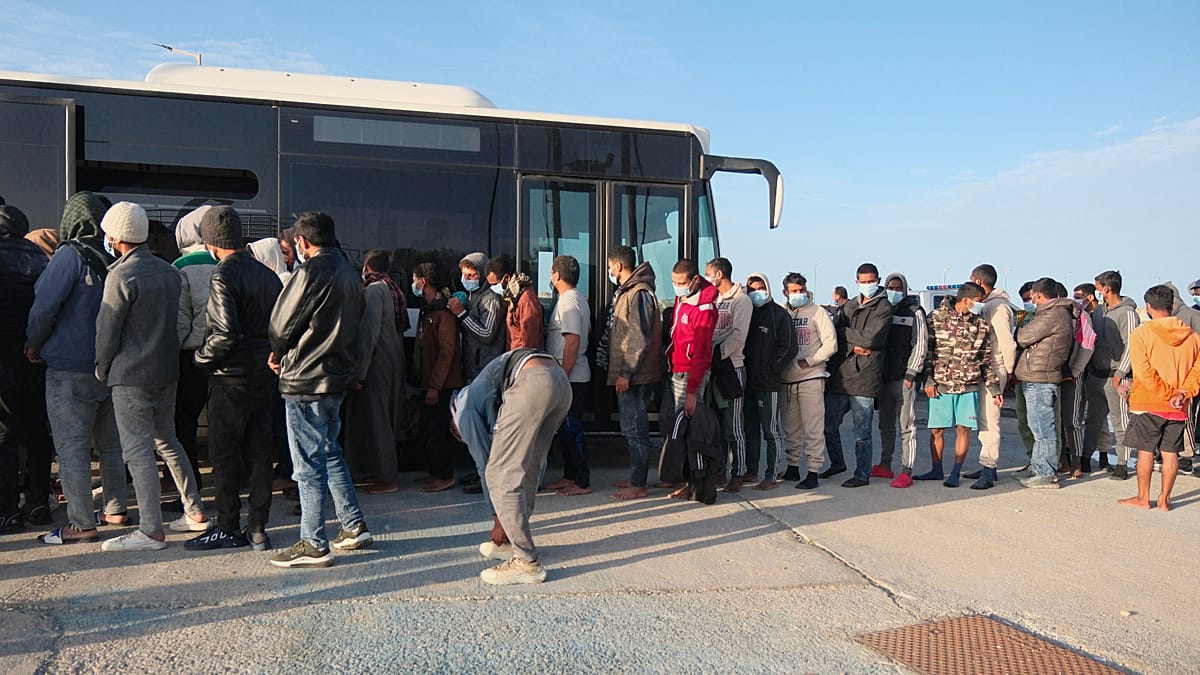
Over a 24‑hour period more than 600 migrants arrived on Crete — Greek authorities and Frontex rescued 545 off Gavdos and separately located boats carrying 27 and 35 people — contributing to over 1,000 arrivals on Crete in December. Official figures show Greece recorded 39,495 illegal crossings by end‑October (an 18% decline year‑on‑year), while Italy and Spain report mixed changes, and authorities say smugglers are redirecting routes from Libya to Crete because of better weather and proximity, increasing enforcement and reception pressures with potential fiscal and security implications for EU states.
Market structure: This route shift concentrates near-term demand for maritime surveillance, search-and-rescue, detention logistics and emergency health services around Crete/Gavdos, favoring defense/surveillance OEMs and contract logistics firms while creating reputational and operational headwinds for local tourism and regional ferry operators. Pricing power will tilt to suppliers of patrol vessels, drones, maritime radars and ITC solutions as EU/Frоntex procurement cycles accelerate; expect a measurable uptick in tender activity within 3–12 months (low hundreds of millions EUR range). Cross-asset: modest upward pressure on European defense equities, potential 10–50bp widening in peripheral sovereign spreads if tensions or political backlash rise, and small EUR downside risk versus safe-haven currencies on escalation.
Risk assessment: Tail risks include a large, sustained influx (>3k/month concentrated on Crete) triggering Greek political instability and >100bp widening in Greek 10Y spreads, or an EU funding stalemate that delays contracts (low-probability, high-impact). Immediate (days) sensitivity is headline-driven; weeks–months see procurement notices and budget reallocations; quarters–years determine infrastructure build-out and reception-centre spending. Hidden dependencies: Libyan instability, weather windows, EU internal politics, and UNHCR/legal pushbacks can rapidly reverse routes or redirect funds.
Trade implications: Tactical exposure to EU border-security beneficiaries is preferred over tourism names: prioritize liquid defense/technology names and ETFs while hedging FX/sovereign tail risk. Use option structures to buy asymmetry (call spreads on defense stocks, put protection on EUR or Greek sovereign proxies). Reduce concentrated exposure to Greek small-cap tourism/ferry operators until arrivals normalize (defined below) and size positions to event triggers (procurement awards, Frontex funding announcements) within 30–90 days.
Contrarian angles: The market may overreact with blanket short-Greece positioning; historically (2015) EU-level funding and multiyear contracts followed crises, rewarding infrastructure and defense suppliers rather than long-term tourism collapse. Conversely, defense valuations may already price in higher budgets — require contract-confirmation before levering. Unintended consequence: accelerated EU burden-sharing could funnel construction and IT contracts to EU integrators and local prime contractors, creating second-order winners among regional engineering firms.
AI-powered research, real-time alerts, and portfolio analytics for institutional investors.
Request DemoOverall Sentiment
mildly negative
Sentiment Score
-0.30
