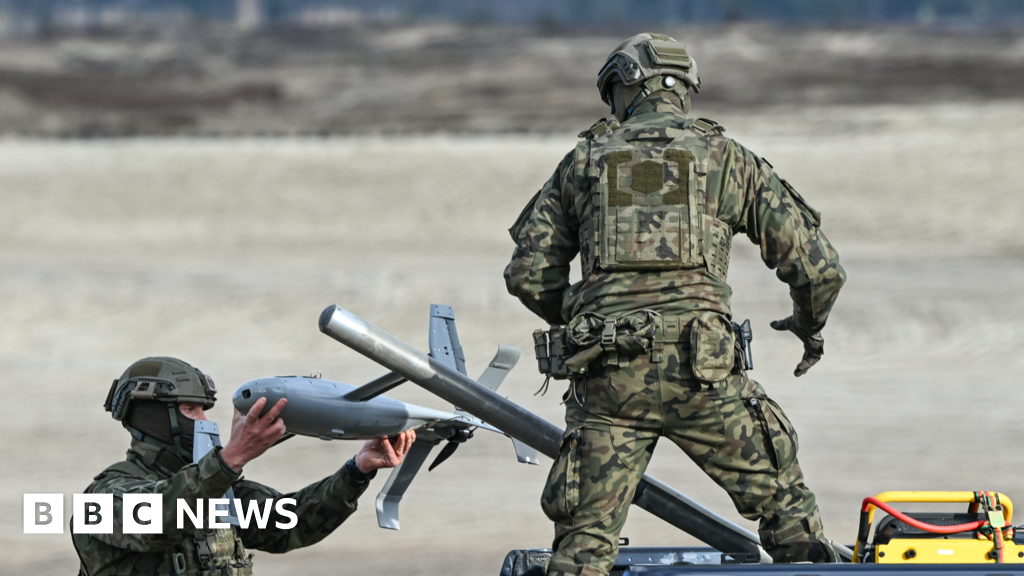
The UK and four European allies (Germany, France, Italy and Poland) agreed in Krakow to fast-track a collaborative programme to develop low-cost surface-to-air missiles and autonomous drones, with the first lightweight system targeted for delivery by next year and each country committing 'multimillion' pound/euro funding. The initiative, driven by lessons from Ukraine’s mass drone use and a shift toward more permissive rules for autonomous systems, strengthens UK–European defence cooperation outside the EU’s €150bn fund and creates near-term procurement and R&D opportunities for defence and tech suppliers, although overall budget details remain unconfirmed.
Market structure: The E5 plan favors nimble drone, sensor and low-cost SAM suppliers over large legacy interceptor platforms; expect relative revenue reallocation of 5–15% within European defence OEM revenues over 12–24 months. Demand shock will be highest for components (gimbals, EO/IR, RF seekers, power systems, low-end propulsion) and for AI software, tightening lead times for specialty semiconductors and composites and putting modest upward pressure on prices in those supply chains. Cross-asset: stronger defence cashflows should support defense equities and credit spreads (–10–30bp) while raising marginal funding needs for some European sovereigns; commodities (aluminum, rare-earth magnet demand) and chip supply chains are the practical winners.
Risks & timing: Tail risks include regulatory backlash on autonomous weapons, export-control fragmentation, or procurement failure leading to sunk costs; any of these could wipe out early gains (low probability, high impact) within 6–18 months. Immediate (days) reaction will be sentiment-driven; short-term (3–12 months) driven by contract awards and budget confirmations; long-term (2–5 years) by production scale and supply-chain localisation. Hidden dependencies: Taiwan/US chip supply, UK–EU political deals, and industrial offsets; catalysts: Ukraine escalation, EU fund reopenings, or major procurement announcements.
Trade implications: Direct long bias to specialist European names and select US primes for tech IP exposure; prefer 12-month conviction positions sized 1–3% of portfolio with 10–15% stop-losses. Use pair trades to go long sensors/drone specialists versus short systems integrators that rely on high-margin big-ticket interceptors. Options: buy 9–12 month call spreads to cap premium while targeting 15–30% upside; hedge with short-dated puts around political/event risks.
Contrarian view: The market underestimates execution risk and supply-chain constraints — opening penetration for niche suppliers may be slower than headlines imply, so avoid paying full valuation premiums now. Historical parallel: post-2014 Ukraine pushed components and UAV specialists higher but many faded until scalable production arrived; unintended consequence could be accelerated export controls and nationalisation of critical supply, creating idiosyncratic winners rather than broad-based gains.
AI-powered research, real-time alerts, and portfolio analytics for institutional investors.
Request DemoOverall Sentiment
mildly positive
Sentiment Score
0.15
