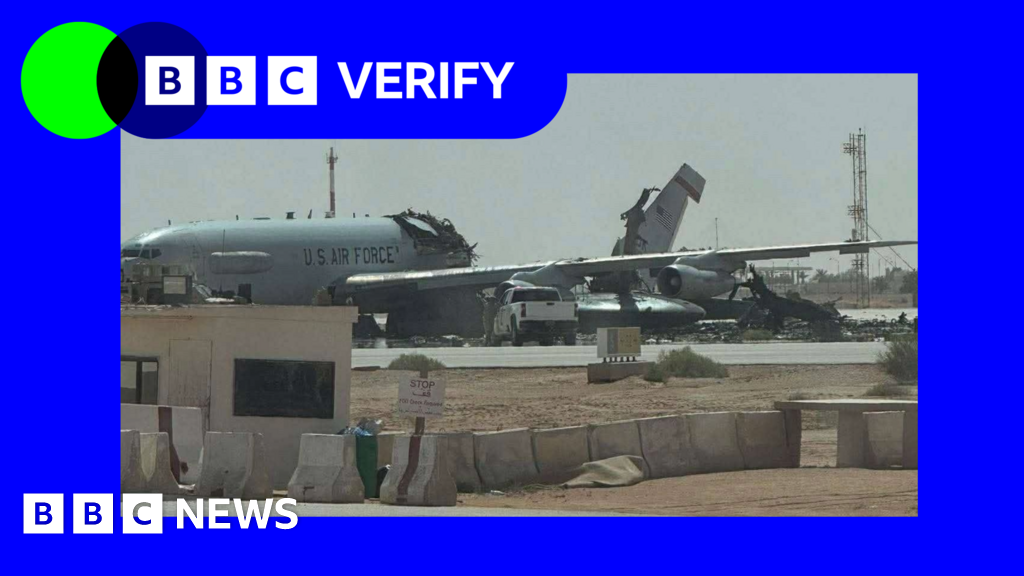
12 US personnel were wounded (two seriously) and a US E-3 Sentry AWACS appears destroyed at Prince Sultan air base (~100km SE of Riyadh); The Wall Street Journal reports at least two US refuelling aircraft were also damaged. Iran-linked media claims a Shahed drone strike while US Central Command has not commented — the incident raises regional geopolitical risk and could pressure defence stocks and oil market sentiment.
The immediate operational effect is to shift higher the marginal value of airborne C2, persistent ISR, and organic tanker lift across the Gulf for the next 2–12 months; expect existing assets to see higher sortie rates and accelerated spare parts consumption, creating disproportionate near-term aftermarket revenue for sustainment contractors. Insurance and logistics-cost externalities will raise operating costs for MENA air traffic and tankers, tightening freight spreads and raising short-term crude volatility; logistics providers with flexible lift capacity will capture outsized pricing power for weeks to quarters.
On procurement and capex, a shock to high-value legacy platforms increases political tailwinds for both depot modernization and expedited procurement of next-gen AEW/C2 and survivability upgrades — the procurement lead-times mean meaningful budget reflows to primes arrive inside a 6–24 month window, not instantly. Conversely, contractors exposed to prolonged sortie tempo but with concentrated single-site MRO capacity face delivery bottlenecks and margin squeezes in the next 3–9 months.
Market pricing likely discounts two second-order effects: (1) insurers and reinsurers will reprice Middle East basing risk, lifting premiums for carriers and oil logistics, and (2) parts/avionics suppliers with dual-use commercial inventory will enjoy a >20% uptick in order cadence vs. their baseline for 3–9 months. Both effects favor liquid defense primes with integrated MRO and avionics exposure while penalizing regional airlines and shippers operating through narrow Gulf chokepoints.
The main downside catalyst is rapid de-escalation via diplomacy or demonstrable force protection fixes (hardened aprons, dispersed basing) which can re-normalize sortie patterns within 30–90 days; an opposite tail—broader campaign targeting logistics hubs—would extend elevated margins and political budget support for years. Monitor three near-term proxies: sortie-rate telemetry where available, reinsurance premium filings, and tender awards for depot sustainment and avionics upgrades over the next two quarters.
AI-powered research, real-time alerts, and portfolio analytics for institutional investors.
Request DemoOverall Sentiment
strongly negative
Sentiment Score
-0.60
Ticker Sentiment
