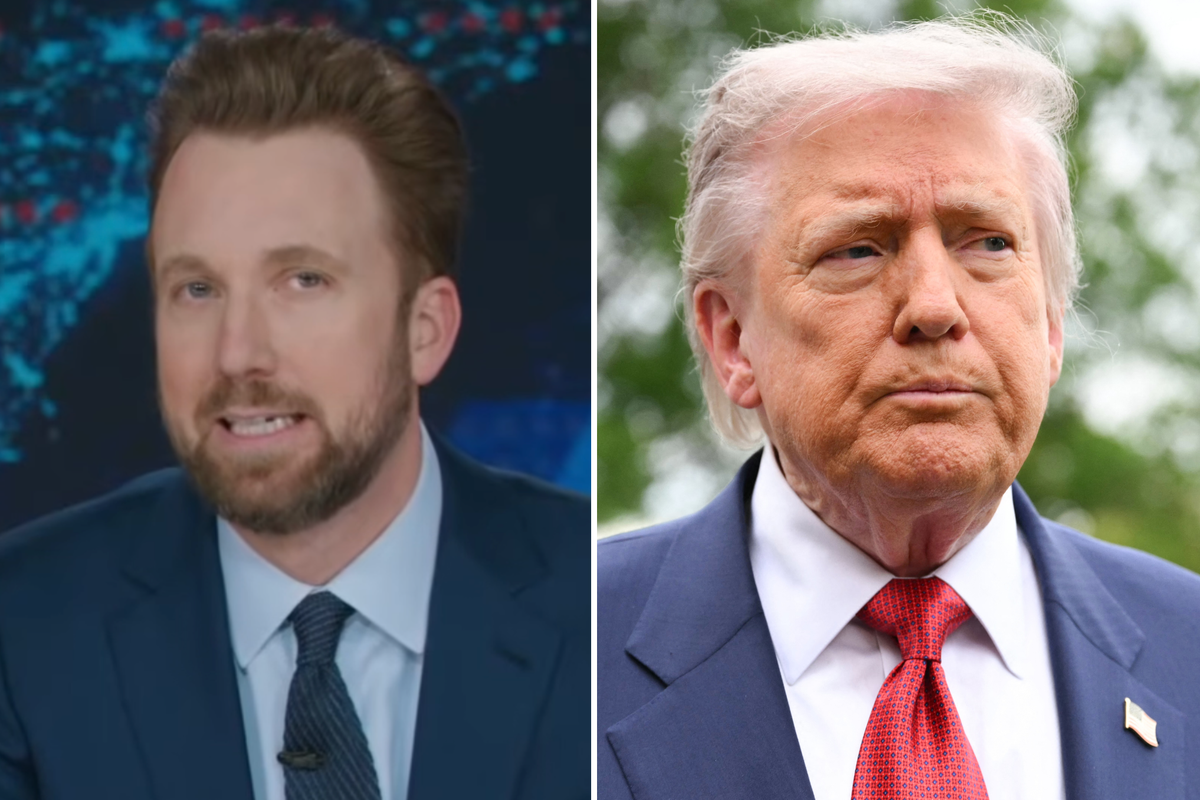
Trump traveled to Beijing for a three-day state visit with Xi Jinping to discuss trade, technology, and regional security involving Iran and Taiwan, accompanied by CEOs Elon Musk, Tim Cook, and Jensen Huang. The piece is primarily a political satire segment from The Daily Show rather than a market-moving business update. No direct corporate, earnings, or policy changes were announced.
The market implication is not the satire; it is the optics of corporate concentration around one political channel. When a handful of mega-cap tech leaders are seen as close to Washington and Beijing at the same time, it raises the probability of policy asymmetry: larger firms can shape exemptions, licensing cadence, and export interpretation, while smaller peers absorb the full force of controls and retaliation. That tends to widen the gap between platform incumbents and second-tier suppliers over the next 1-3 quarters. For NVDA, the main second-order effect is not a near-term revenue boost from diplomatic theater but the probability of a more managed, slower-moving regime around advanced chip access. That can be mildly supportive for headline sentiment, yet it also increases regulatory optionality risk because any perception of “special treatment” invites pushback in Washington if geopolitical conditions deteriorate. A similar dynamic applies to AAPL: the company benefits if trade friction is eased, but its China dependence means even small policy shifts can swing gross margin and channel inventory by 100-200 bps over multiple quarters. TSLA is the most reflexive name here. The signaling value of executive proximity can matter more than fundamentals in the short run, but the real catalyst is whether policy dialogue translates into tariff stability or supply-chain continuity for batteries, components, and EV incentives. If nothing substantive comes from the trip, the market may fade the narrative quickly; if there is even a modest de-escalation, the names with the most China revenue exposure usually re-rate first, while suppliers lag because investors still discount execution risk. The contrarian view is that this is less a bullish China story than a reminder that mega-cap tech has become quasi-sovereign. That favors relative-value positioning over outright longs: the winners are the firms with enough scale to get a seat at the table, not necessarily the ones with the best end demand. Over the next 30-60 days, any unwind in the optics could actually help smaller domestic AI and industrial beneficiaries if capital rotates away from the crowded Washington/Beijing policy winners.
AI-powered research, real-time alerts, and portfolio analytics for institutional investors.
Request DemoOverall Sentiment
neutral
Sentiment Score
-0.05
Ticker Sentiment
