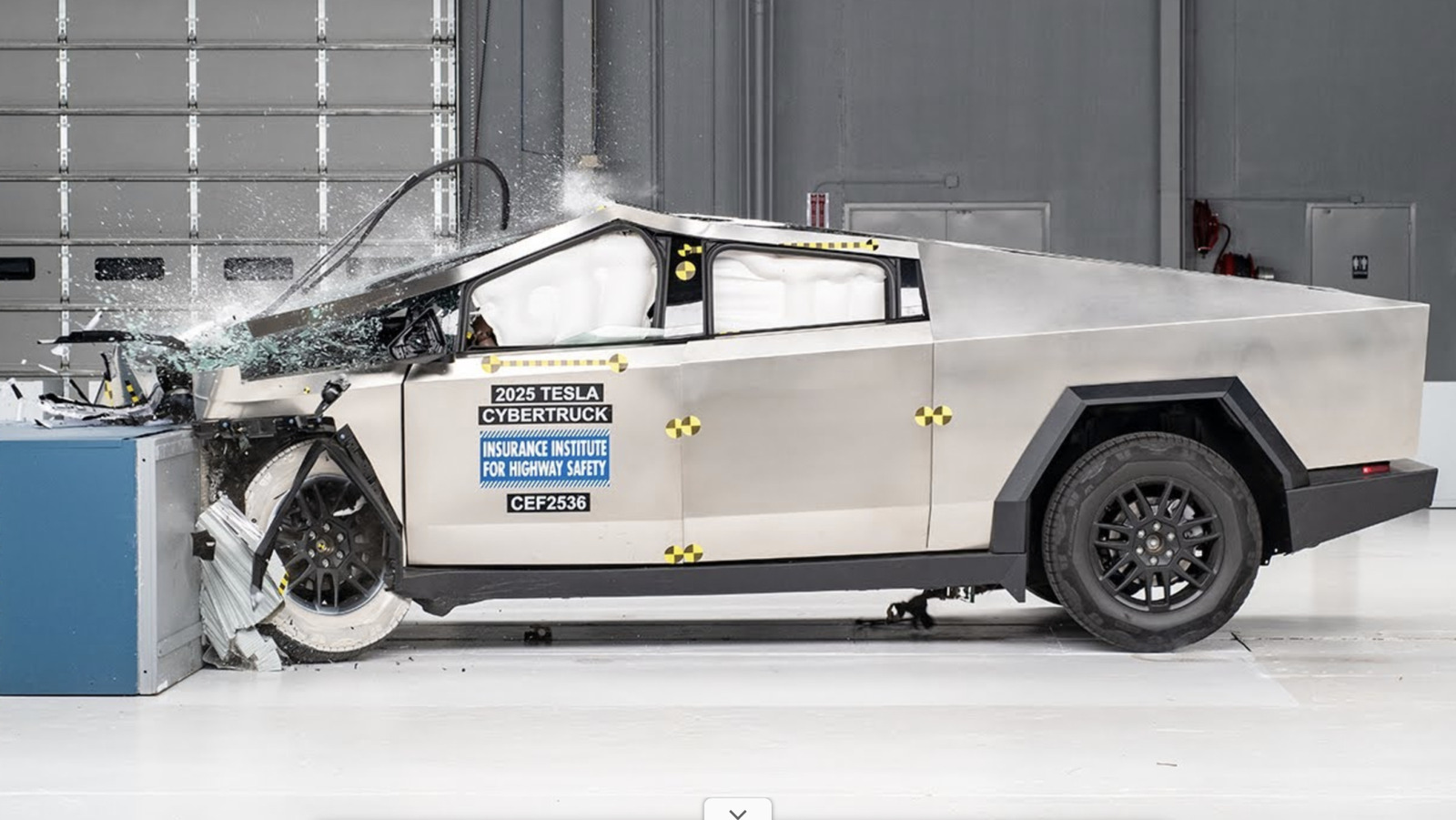
Tesla's Cybertruck saw U.S. retail sales plunge from roughly 39,000 units in 2024 to 20,200 in 2025, a 48.1% decline and the largest absolute drop among EVs, missing CEO Elon Musk's stated 250,000 annual production ambition. While Tesla's Model Y still sold an estimated 357,500 units, the Cybertruck's steep fall—attributed to the termination of its cheapest trim, weak repeat demand, and polarizing product perception—left it narrowly ahead of other EV pickups aside from the Ford F-150 Lightning (27,307). The result signals cooling consumer demand for this high-profile product and raises concerns about product positioning and near-term volume guidance for Tesla's truck program.
Market structure: The Cybertruck collapse (39k → 20.2k, −48.1%) reallocates EV pickup share toward incumbents with conventional designs (Chevy Silverado EV, Sierra EV +51.8%/+347% from tiny base). Tesla's volume concentration in Model Y (≈357,500 in 2025) means the brand is bifurcating — mass-market crossovers hold pricing power while niche halo products may face steep markdowns and lower utilization of dedicated stainless-steel/unique supply chains.
Risk assessment: Immediate (days) risk = headline-driven IV spikes in TSLA; short-term (weeks–months) risk = inventory build/forced discounting if Tesla sticks to lower Cybertruck demand; long-term (quarters–years) risk = brand/headline damage, margin compression and capital reallocation away from niche projects. Hidden dependencies include residual-value weakness in used EV trucks that can depress new order rates and captive-finance losses that impair OEM margins.
Trade implications: Favor targeted downside on Tesla’s equity/volatility rather than broad thesis — a focused 3–6 month put-spread to capture a 15–35% drawdown around next delivery/price announcements; rotate into select legacy OEM exposure (Ford/GM) and parts suppliers that can redeploy capacity. Play pair trades (short TSLA exposure, long F or GM cyclicals) and avoid commodity long positions tied to stainless steel or truck-specific content until utilization stabilizes.
Contrarian angles: Consensus underestimates Tesla’s ability to restore demand via price or trim re-introduction — a rapid price restoration or re-launch of a base Cybertruck could snap volumes back but at the expense of ASPs and margins. History (early EV rollouts) shows volatile mid-cycle corrections; the mispricing is likely concentrated in TSLA EV-truck optics and related supplier names rather than Tesla’s total enterprise value.
AI-powered research, real-time alerts, and portfolio analytics for institutional investors.
Request DemoOverall Sentiment
strongly negative
Sentiment Score
-0.60
Ticker Sentiment
