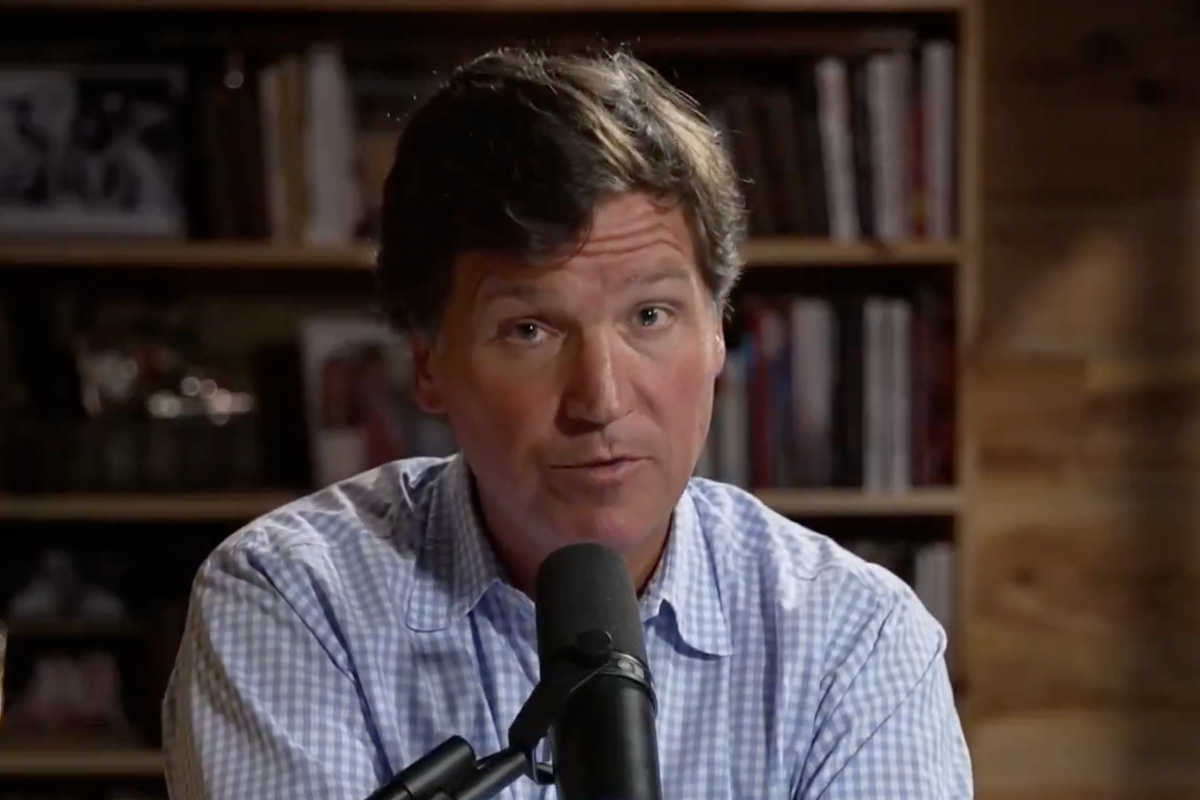
President Trump issued an expletive-laden threat with a late-Tuesday deadline for Iran to reopen the Strait of Hormuz, warning US strikes on bridges, power plants and other civilian infrastructure. The rhetoric raises the risk of a supply shock to global oil markets and higher energy price volatility; domestic political backlash from conservative figures (e.g., Tucker Carlson, Marjorie Taylor Greene) signals Republican splits that could complicate policy execution. Monitor Brent/WTI moves, defense sector flows, and safe-haven assets for elevated volatility in the near term.
The salient market effect isn't the rhetoric itself but the political fracture it exposes inside the pro-establishment right — that fracture raises policy incoherence risk and increases the probability of miscommunication-driven escalation. That elevates near-term tail risk priced into oil and insurance markets even if substantive kinetic escalation remains a low-probability outcome; markets hate ambiguous command-and-control.
Logistics and second-order supply effects amplify any price move: a temporary reroute around the Gulf adds ~5-7 days to transit for VLCCs/aframaxes, lifts freight and bunker demand, and technically tightens refined product supply in Europe/Asia within 2–6 weeks. Higher war-risk premiums for tankers and raised Lloyd’s syndicate capital charges will raise landed crude costs by a few dollars/bbl even without physical export cuts.
Market positioning is asymmetric — long energy and defense exposure is the crowded trade priced by headline sensitivity, while short-dated volatility and hedges (VIX, gold, short oil call protection) are underbought. The natural cap is diplomatic/strategic risk management (allies re-opening lanes, incremental SPR releases, or non-Iran producers adding cargoes) which could reverse price moves within 30–90 days, making short-dated option strategies attractive.
Time horizons: expect headline-driven moves over days, logistical/insurance impacts over weeks, and structural budget/defense spending effects over 6–24 months. Key reversers: credible de-escalatory diplomacy, surprise increasable exports from Saudi/US, or a sharp macro growth shock that collapses oil demand expectations.
AI-powered research, real-time alerts, and portfolio analytics for institutional investors.
Request DemoOverall Sentiment
strongly negative
Sentiment Score
-0.60
