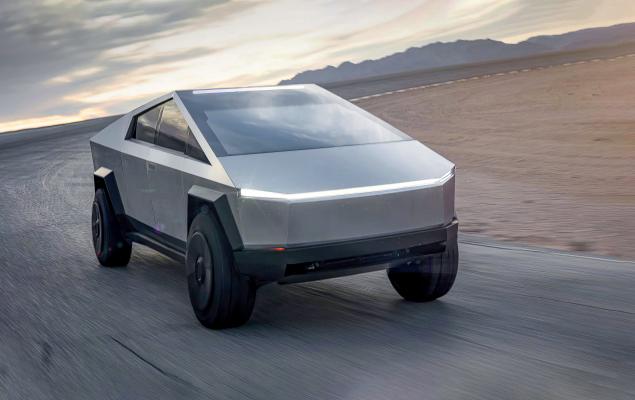
Tesla's Cybertruck sales collapsed by 62.6% year-over-year to just 5,385 units in Q3, significantly underperforming a broader U.S. EV market that grew nearly 30%. This sharp decline is attributed to high pricing (now over $60,000 for entry-level), persistent quality issues, limited practicality, and production delays, leading to inventory accumulation and even purchases by Elon Musk's other companies. The Cybertruck's struggles underscore execution challenges for Tesla's ambitious projects, particularly as competitors like Ford, GM, and Rivian reported strong electric pickup sales during the same period.
Tesla's Cybertruck experienced a significant commercial setback in Q3 2025, with sales plummeting 62.6% year-over-year to just 5,385 units. This sharp decline occurred despite the broader U.S. EV market recording its strongest quarter ever, with sales surging nearly 30% to approximately 438,000 units, highlighting a specific product underperformance within a growing sector. Year-to-date, Cybertruck sales stand at around 16,000 units, a 38% decrease from the previous year and substantially below Elon Musk's initial target of 250,000 units annually.
The Cybertruck's struggles are attributed to several factors, including its high current entry-level price exceeding $60,000, a significant increase from the initially promised $39,990. Persistent quality issues, such as falling body panels, disappointing range, and underwhelming towing capacity, coupled with limited everyday practicality due to its bold design, have dampened consumer enthusiasm. The accumulation of inventory and reports of Musk's private ventures, SpaceX and xAI, purchasing unsold trucks further underscore the demand challenges.
In stark contrast, competitors in the electric pickup segment demonstrated robust growth in Q3, with Ford's F-150 Lightning sales climbing over 10,000 units (+40%), GMC Hummer EV sales up 22%, and Rivian R1T deliveries increasing by 13.1%. Despite these product-specific issues, Tesla's overall shares gained 8% year-to-date, outperforming the industry, yet its forward price-to-sales ratio of 13.82 remains significantly higher than peers like GM (0.3), Ford (0.28), and Rivian (2.31), suggesting a premium valuation amidst execution risks.
AI-powered research, real-time alerts, and portfolio analytics for institutional investors.
Overall Sentiment
moderately negative
Sentiment Score
-0.65
Ticker Sentiment
