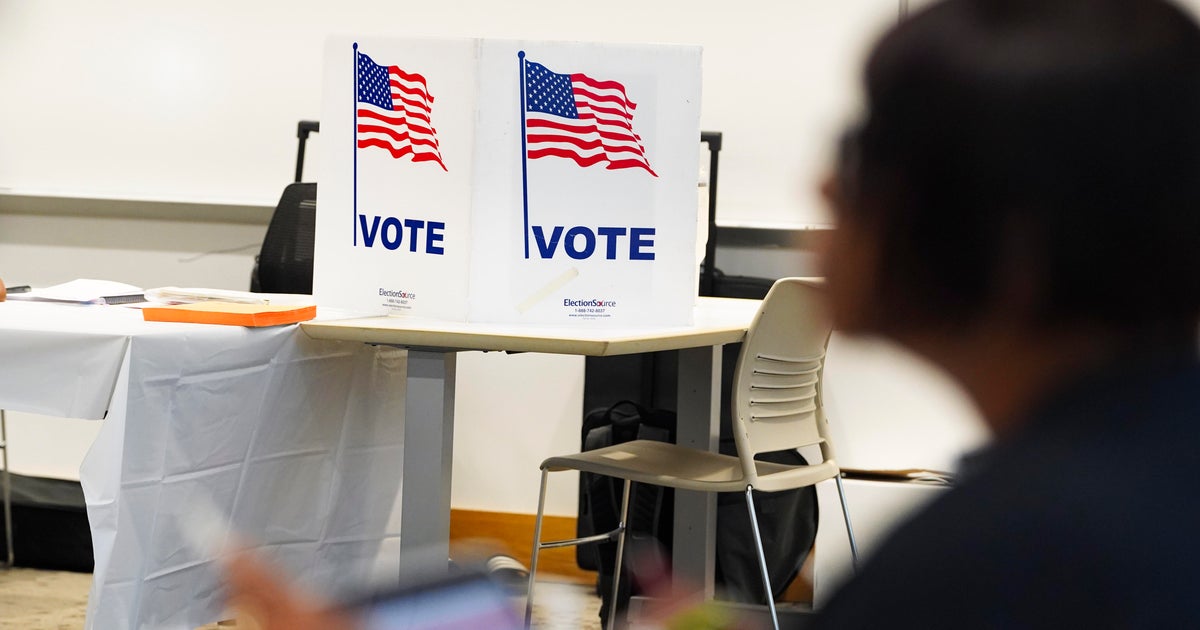
Tuesday primaries advanced or settled several key races across Georgia, Pennsylvania, Kentucky and Alabama, with major takeaways including Thomas Massie losing the Kentucky 4th District primary to Ed Gallrein and Georgia's gubernatorial GOP race heading to a runoff between Burt Jones and Rick Jackson. In Pennsylvania, Democrats nominated Bob Brooks, Janelle Stelson, Paige Cognetti and Bob Harvie in targeted House districts, while Georgia Democrats selected Keisha Lance Bottoms for governor. The article is largely a political roundup with limited direct market impact, though it highlights contested House and Senate dynamics that could matter for control of Congress.
The immediate market read is not about who won individual primaries; it is about how much larger, more donor-driven and more loyalty-tested the 2026 cycle is becoming. That matters because a legislature populated by candidates who are effectively pre-vetted for ideological compliance tends to raise the odds of sharper policy discontinuities on defense, antitrust, fiscal, and regulatory issues, while reducing the probability of bipartisan friction that often suppresses extreme outcomes. In the near term, the clearest beneficiary is the political-advertising complex: TV, digital, data, and field vendors should see a sustained funding overhang into late summer as runoff dynamics and open-seat contests force repeated spend resets.
The bigger second-order effect is on governance quality in Washington. If the House Republican coalition becomes more reliably aligned but also more brittle, expect less room for negotiation on must-pass bills, which increases shutdown and continuing-resolution risk over the next 3-6 months. That is usually bullish for defense primes and border/security contractors on a relative basis, but negative for broader domestically oriented cyclicals that rely on clean appropriations and stable fiscal policy; it also raises volatility in rates through fiscal premium repricing if market participants start assigning a higher probability to delayed budgets and noisier deficit politics.
Pennsylvania is the cleaner strategic signal because it reinforces the value of incumbent state-level machines and localized candidate quality over national branding. If the Democratic apparatus can translate suburban softening into down-ballot gains, it strengthens the case that 2026 House control remains genuinely contestable despite the national environment. The contrarian takeaway is that markets may be underpricing the downside for Republicans in swing-suburban districts: once local school, tax, and cultural issues dominate, national-trumpified candidates can become liabilities, and that dynamic can travel to similar counties in Wisconsin, Michigan, and North Carolina over the next 12-18 months.
For investors, the right framing is not directional political beta but dispersion: winners will be firms selling to government attention and campaign spend, losers will be companies exposed to fiscal gridlock or policy whiplash. The best trades are likely in relative value and event-driven structures rather than outright macro positioning, because the catalyst path is staggered across runoff calendars, summer maps, and Q4 budget negotiations.
AI-powered research, real-time alerts, and portfolio analytics for institutional investors.
Request DemoOverall Sentiment
neutral
Sentiment Score
0.00
