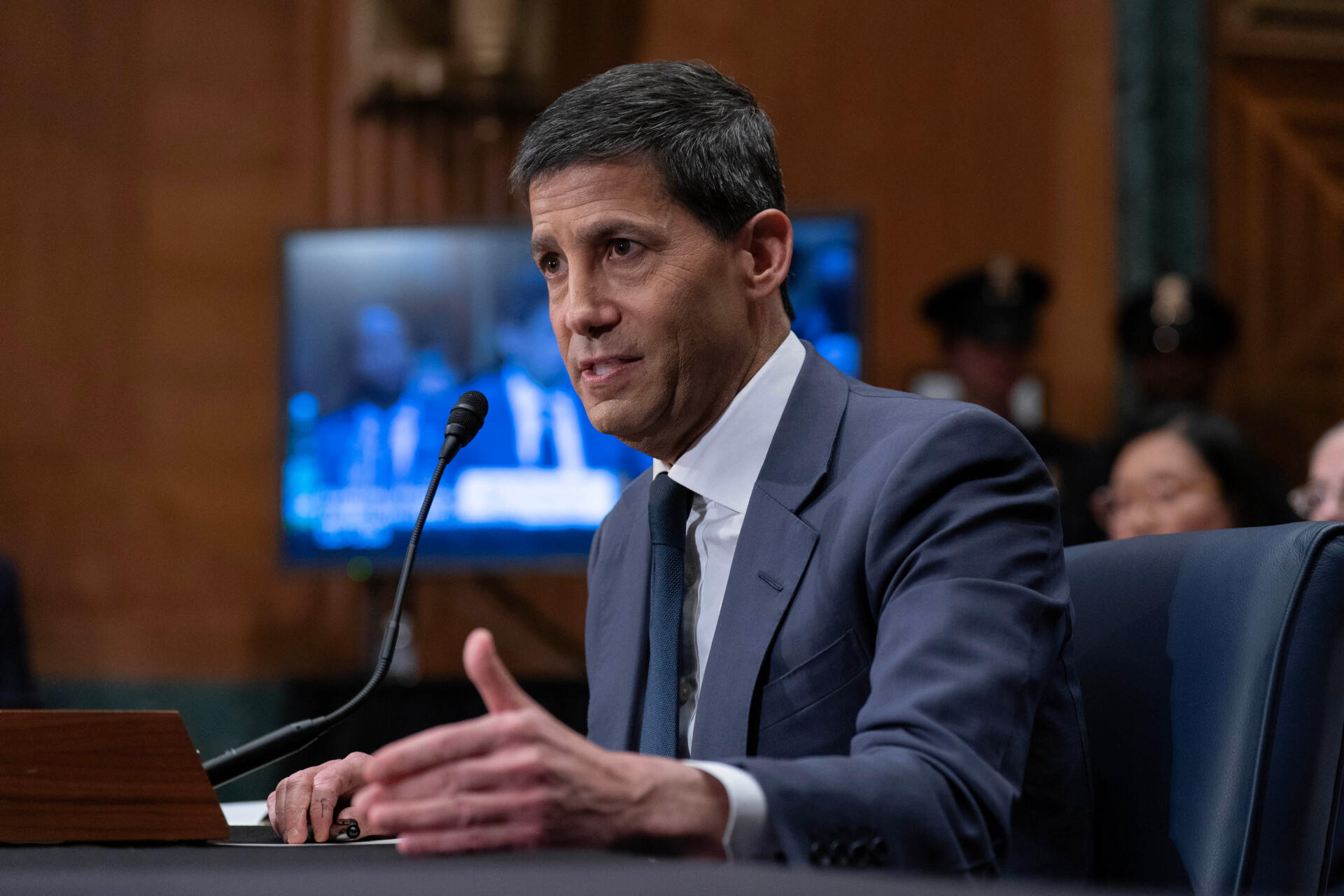
Kevin Warsh is described as becoming the 17th Fed chair amid rising inflation and an uncertain economy, with the article centering on the Federal Reserve and the political pressure that predecessor Jay Powell faced to cut rates. The piece is largely a discussion segment rather than a policy announcement, but it touches on a market-critical issue: the direction of U.S. monetary policy under new leadership. No specific rate decision or economic figure is provided.
The market implication is less about the personality of the new chair and more about the regime shift in the reaction function. If the Fed is perceived as more tolerant of inflation to preserve labor-market stability or political cover, the front end of the curve should cheapen first, but the larger move may be in term premium as investors demand compensation for policy uncertainty. That matters because higher term premium can tighten financial conditions even without an explicit hike, pressuring duration-sensitive assets and small-cap credit across the next 3-12 months. The second-order beneficiaries are not obvious rate proxies, but businesses with pricing power, low refinancing needs, and short operating leverage to real rates. Financials can initially benefit from a steeper curve, but only if credit quality holds; if inflation stays sticky, loan growth may slow faster than net interest margin expands, making regional banks a false positive. The more fragile losers are levered consumers, housing, and long-duration growth equities, where even a 50-75 bps backup in real yields can compress multiples meaningfully without any change in earnings. The key tail risk is that an inflation-sensitive Fed and an inflation-aware market can both be right: policy may stay restrictive longer, but growth may also roll over, creating an ugly stagflation mix. In that scenario, rate cuts would not be a bullish catalyst for cyclical risk; they would arrive because credit spreads and unemployment are already deteriorating. Over the next 1-6 months, watch breakevens, 2s/10s curve shape, and senior loan officer data for confirmation that tighter real financial conditions are beginning to bite. Consensus may be underestimating how much of this is already priced into rates, but underestimating the convexity in equities and credit if political pressure reduces Fed communication credibility. A smaller shift in expected policy can cause a disproportionately larger move in longer-duration assets than in the policy rate itself. That argues for positioning around volatility rather than outright directional beta where the distribution of outcomes is wider than the headline suggests.
AI-powered research, real-time alerts, and portfolio analytics for institutional investors.
Request DemoOverall Sentiment
neutral
Sentiment Score
-0.05
