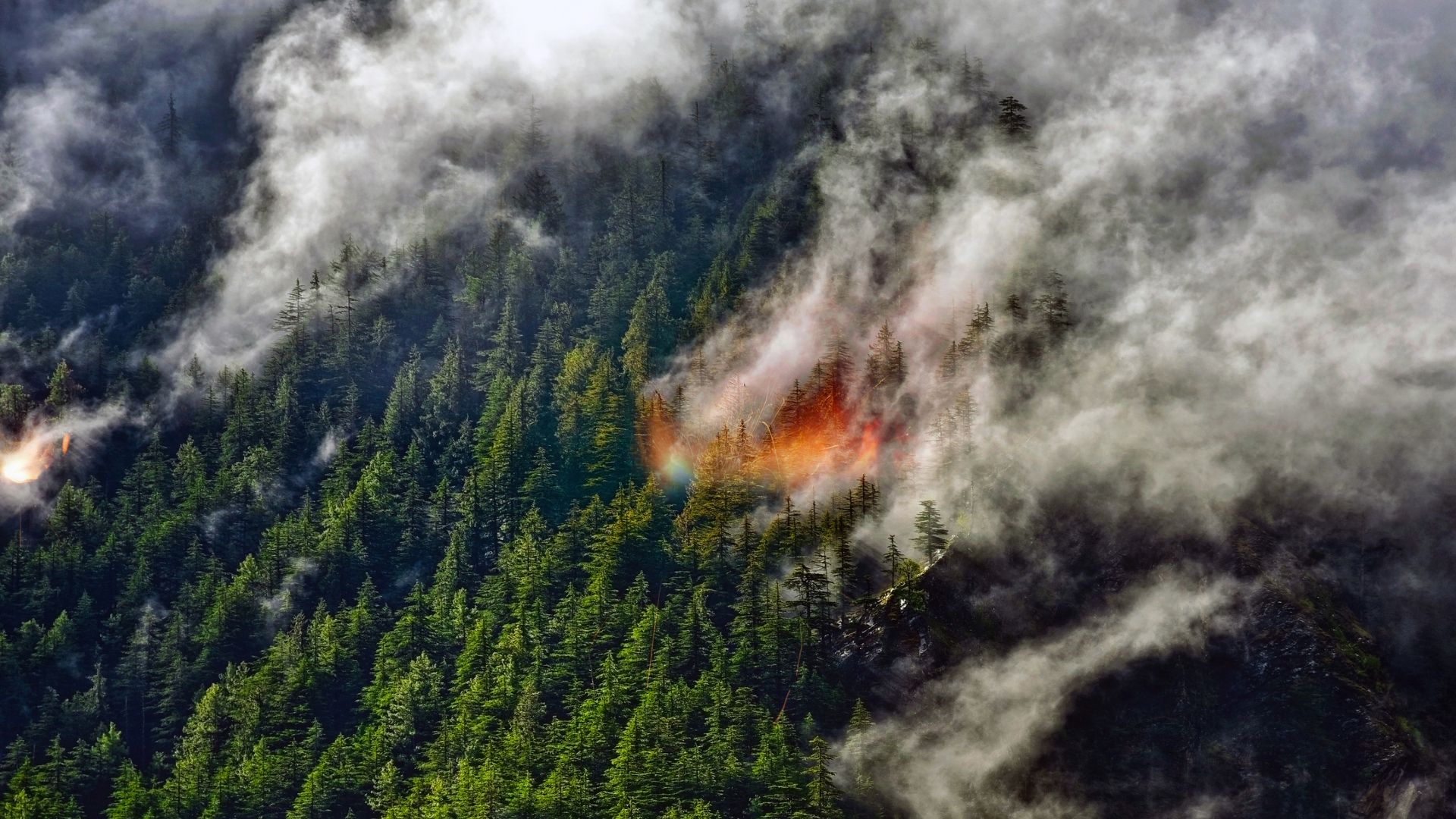
Researchers flying a NASA ER-2 into a New Mexico wildfire plume in June 2022 made the first direct measurements of five-day-old high-altitude smoke at about 14.5 km, finding unusually large aerosols (~500 nm) roughly twice the size of typical lower-altitude wildfire particles. The team attributes the particle growth to efficient coagulation in slowly mixing upper-tropospheric air and reports these larger particles increase outgoing radiation by about 30%–36% relative to lower-altitude smoke, producing a measurable cooling effect that current climate models do not account for. Co-authors warn the coagulated particles could also influence atmospheric circulation and jet streams, underscoring the need for more measurements to assess implications for climate projections and risk assessments.
Researchers flew a NASA ER-2 into a New Mexico wildfire plume in June 2022 and made the first direct upper-tropospheric measurements of five-day-old smoke roughly nine miles (14.5 km) above the surface. Onboard instruments detected aerosols about 500 nanometers wide, roughly twice the diameter of typical lower-altitude wildfire particles, which the team attributes to efficient coagulation in slowly mixing upper-tropospheric air.
The study reports these larger particles increase outgoing radiation by about 30%–36% relative to lower-altitude smoke, producing a measurable cooling effect that current climate models do not represent. Findings were published Dec. 10 in Science Advances and highlight a quantifiable radiative impact from high-altitude smoke not captured in standard model parameterizations.
Co-author commentary flags potential knock-on effects for atmospheric circulation and jet-stream positions, but the authors emphasize insufficient data to determine directionality or magnitude of those changes. The result creates a concrete model risk and data gap: climate forcing and near-term weather projections may be biased until upper-atmosphere smoke processes are systematically sampled and incorporated into climate and risk models.
AI-powered research, real-time alerts, and portfolio analytics for institutional investors.
Request DemoOverall Sentiment
neutral
Sentiment Score
0.00
