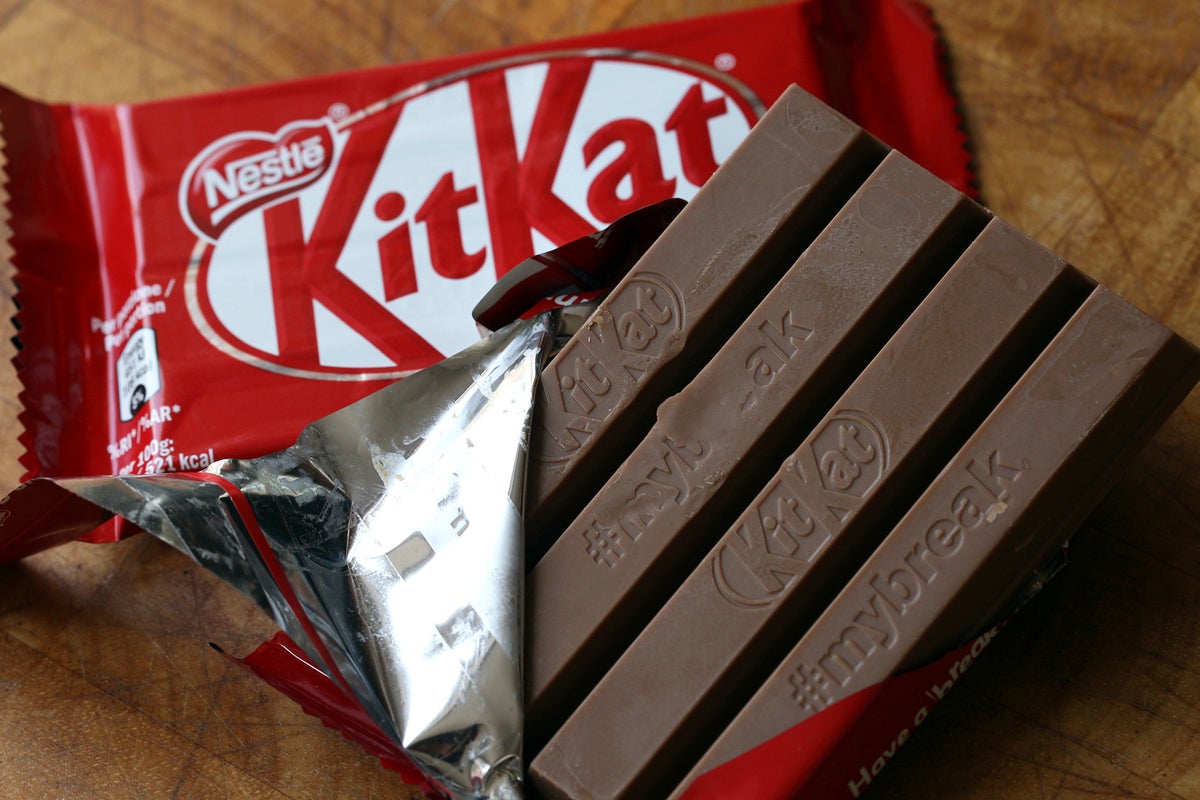
About 12 tonnes (413,793 bars) of Nestle's new KitKat range were stolen in transit from a central Italy factory to Poland; the truck and goods remain unaccounted for. Nestle says the bars are traceable by batch code, is working with local authorities, and reports no customer-safety issues and that supply is not affected. The incident is operationally notable but Nestle indicates limited commercial impact; monitor updates on recovered inventory or insurance/claim disclosures.
This theft is functionally idiosyncratic for headline risk but exposes predictable second-order economics: traceability and the public drama materially increase earned marketing at near-zero incremental cost, effectively turning a logistics loss into a short-lived product-awareness campaign. For a global confectioner, a 0.1–0.3 percentage-point uplift in EU trial over 3 months equates to tens of millions of CHF in incremental revenue and disproportionately high gross-margin contribution because incremental marketing here displaces paid media spend.
Operationally, the incident accelerates two opposite but concurrent reactions in European CPG distribution: (1) short-term insurance and security premium repricing (cargo and route-security costs re-negotiated within 1–3 quarters) and (2) medium-term reshoring/regionalization and automation decisions that take 6–24 months to flow through capex. The net effect is a modest lift to suppliers of automation, telematics and industrial security (margin-accretive vendors) and a likely temporary margin squeeze for smaller, cross-border-focused distributors that cannot rapidly reprice contracts.
Catalysts to watch: (i) recovery or seizure of the goods (days–weeks) which would remove any supply-side shock and mute the PR benefit, (ii) cargo-insurer quarterly filings and pricing language over the next two renewals (3–9 months) that will reveal rate hardening, and (iii) announcements of accelerated local capacity or automation investments by large CPG names (6–24 months). Tail risk: a cluster of similar thefts on the Italy–Central/Eastern Europe corridor could force a structural rerouting that raises unit logistics costs by a few percent and compresses low-margin SKUs across the shelf in 12–18 months.
AI-powered research, real-time alerts, and portfolio analytics for institutional investors.
Request DemoOverall Sentiment
neutral
Sentiment Score
0.00
