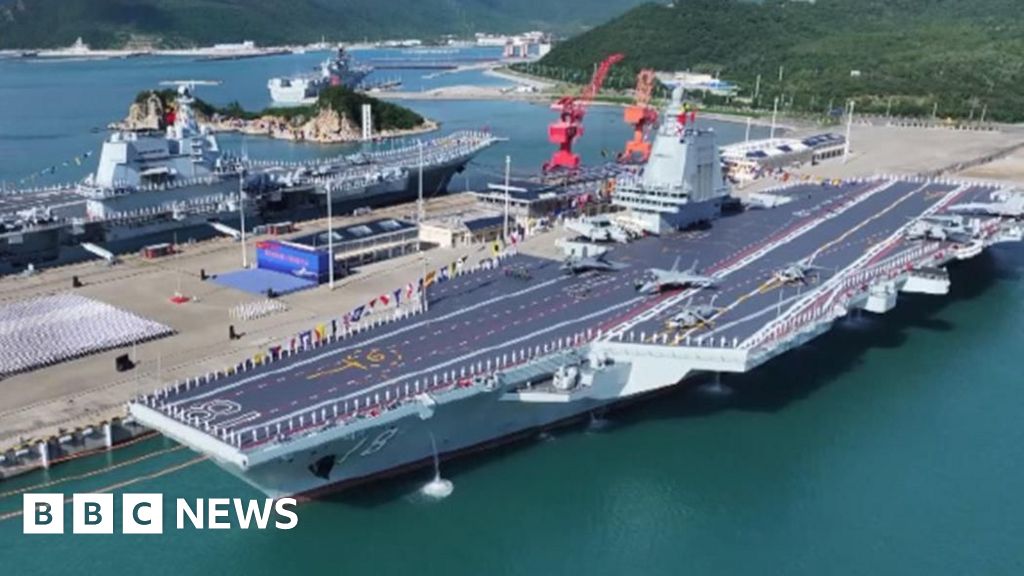
China has commissioned its most advanced aircraft carrier, the Fujian, equipped with electromagnetic catapults, signaling a significant escalation in its naval expansion and a direct challenge to US military dominance. This domestically-built vessel, now China's third carrier, enhances its power projection capabilities and intensifies the geopolitical naval race, potentially impacting defense sector investments and regional stability. The Fujian's advanced technology places it on par with the U.S. in carrier capabilities, underscoring Beijing's rapid military modernization.
China's commissioning of the Fujian, its third and most advanced aircraft carrier, represents a significant escalation in its naval modernization efforts. Equipped with electromagnetic catapults, a technology previously exclusive to the U.S., this domestically-built vessel enhances China's power projection capabilities and strategic reach. This development underscores Beijing's rapid military expansion, aiming for the world's largest navy by ship count.
The Fujian's advanced capabilities, allowing for heavier aircraft loads and greater strike distances, intensify the naval race with the United States and its allies. This technological parity in carrier systems signals a direct challenge to existing military balances and could prompt increased defense spending globally. The event highlights growing geopolitical tensions and the strategic importance of naval superiority.
While no specific corporate entities are directly named, this development has broad implications for the global defense sector and related industries. Increased military competition typically drives demand for advanced defense technologies, naval shipbuilding, and associated infrastructure. Investors should consider the potential for sustained growth in defense budgets and innovation within military-industrial complexes.
AI-powered research, real-time alerts, and portfolio analytics for institutional investors.
Request DemoOverall Sentiment
neutral
Sentiment Score
0.00
