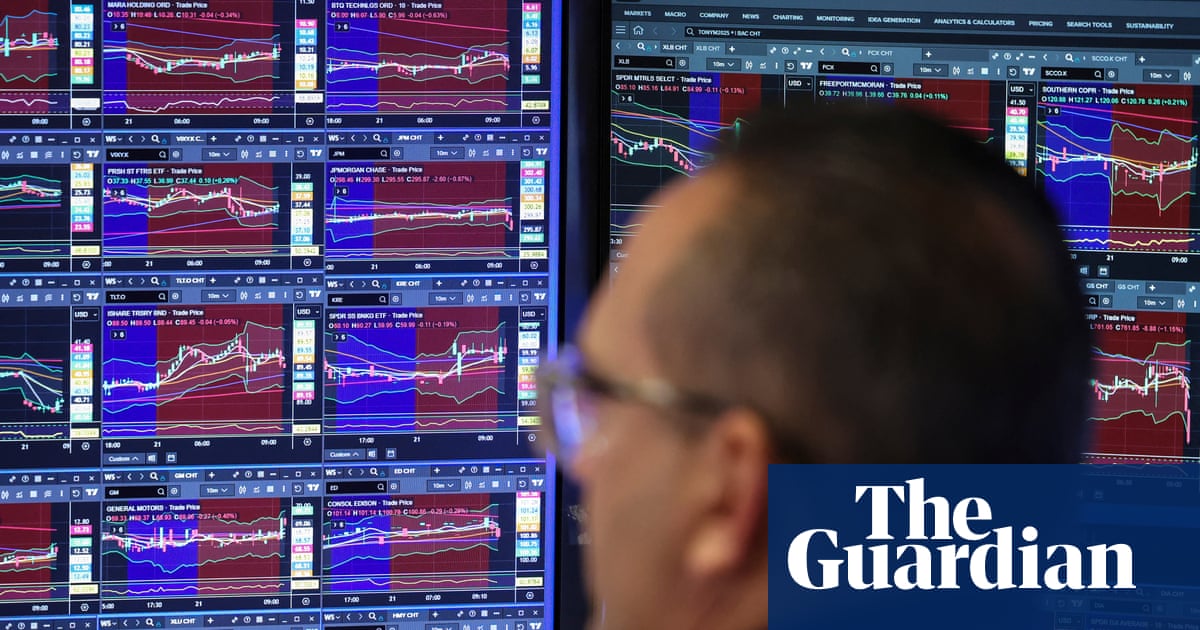
Seven mega-cap tech names (Alphabet, Amazon, Apple, Meta, Microsoft, Nvidia and Tesla) now comprise roughly one-third of the S&P 500 by market value and are heavily invested in AI. Despite trillions poured into AI, the technology has not demonstrated a clear path to sustainable profits, raising concentrated-exposure and sentiment risks; a loss of investor faith or a pullback in funding could materially depress these stocks and wider market indices.
Market structure: The MAG7 concentration (~33% of S&P by market cap) creates a single-technology systemic exposure — winners in the near term are cloud/AI infra owners (MSFT, GOOGL, AMZN) and software vendors with recurring revenue; losers are cyclical capex suppliers and highly valued hardware/IP plays if sentiment reverses (NVDA, TSLA). Pricing power will bifurcate: software/cloud can sustain ASPs and margins, while GPU pricing is fragile if enterprise demand slows or second-hand markets appear; expect 10–30% realisable downside in the most stretched GPU/AI hardware valuations under a funding pullback.
Risk assessment: Tail risks include regulatory throttling of data access, an AI-capex credit shock, or a sudden re-rating following an earnings miss (probability 10–20% in 6–12 months, high impact). Immediate (days) risk: volatility spikes and option skew repricing; short-term (weeks–months): fund-flow reversals and liquidity-driven price gaps; long-term (quarters–years): revenue mix shift to services or commoditisation of models. Hidden dependencies: startup funding, hyperscaler margin support, and third-party silicon supply chains; catalysts include quarterly guidance cuts, major AI product failures, or geopolitical export controls.
Trade implications: Prefer selective longs in durable cash-flow leaders (MSFT, GOOGL) and tactical shorts/option hedges on momentum hardware names (NVDA, TSLA) sized to 1–3% portfolio risk. Use pair trades to isolate structural winners (long AMZN cloud exposure vs short NVDA hardware) and employ time-limited option structures (3–6 month puts or put spreads) to control theta. Rotate into cyclicals/financials on a 5–10% tech drawdown and scale hedges if implied vol rises >40% on NVDA or S&P.
Contrarian angles: Consensus assumes AI profits will instantly materialise into broad corporate margins — that may be overstated; durable value accrues to owners of scale and recurring revenue, not necessarily to current hardware market leaders. Historical parallel: 2000 tech concentration blow-ups show rapid leadership turnover; a 25–40% derating across the top AI-exposed names is plausible, creating selective buying opportunities for cloud incumbents and software SaaS leaders that compound cash flow over 2–4 years.
AI-powered research, real-time alerts, and portfolio analytics for institutional investors.
Request DemoOverall Sentiment
strongly negative
Sentiment Score
-0.65
Ticker Sentiment
