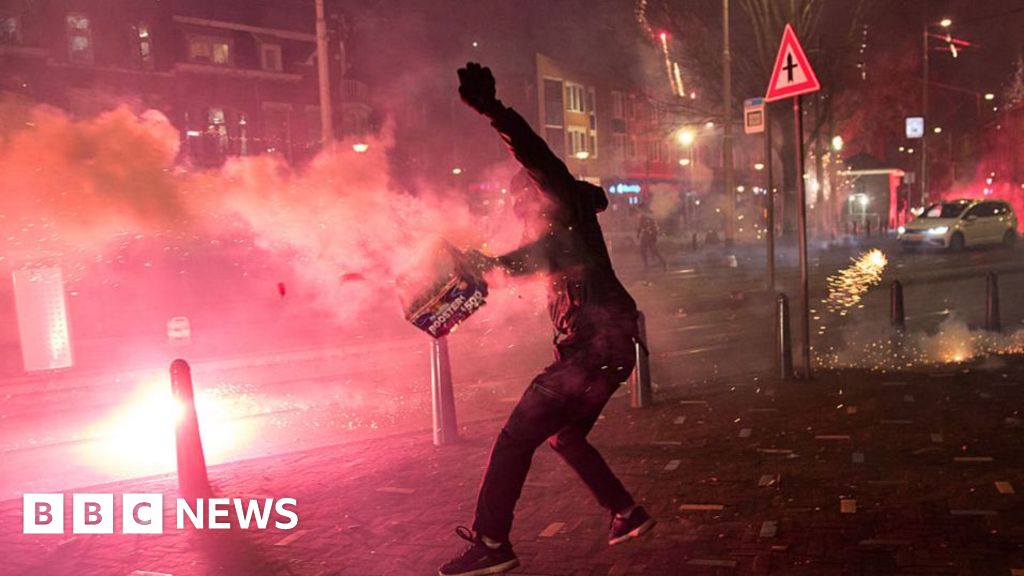
Widespread New Year’s Eve violence across the Netherlands saw police pelted with fireworks and explosives, petrol bombs thrown, two fatalities in fireworks incidents (a 17-year-old and a 38-year-old), and multiple injuries including 14 eye patients (10 minors, two requiring surgery); Amsterdam’s 19th-century Vondelkerk suffered major roof damage and the collapse of its 50-metre tower. With consumers spending a record €129m on fireworks this year and a ban on unofficial fireworks due in 2026, authorities face regulatory pressure that could affect pyrotechnics retailers, insurers and local tourism/heritage exposure.
Market structure: The immediate winners are security/public-safety vendors and professional event/display companies that can capture municipal contracts for licensed shows; losers are small retail pyrotechnics sellers and seasonal consumer discretionary receipts in the Netherlands (record €129m spent this year, full ban pencilled for 2026). Pricing power shifts toward licensed-display firms and insurers/repair contractors as municipal procurement and claims replace retail demand. Cross-asset: modest euro downside risk and a small pickup in Dutch sovereign credit spreads if municipal budgets rise; limited commodity impact but regional insurance/reinsurance spreads and equity vol for EU leisure names should tick up.
Risk assessment: Tail risks include large insured-loss aggregation (>€200–300m across claims) or escalation to multi-city unrest leading to tourism declines >5% YoY. Immediate (days) risk is reputational and operational for local retail; short-term (weeks–months) expect elevated insurance claim filings and municipal security tendering; long-term (to 2026 and beyond) structural revenue decline for consumer fireworks. Hidden dependencies: correlation with broader social unrest and winter tourism season; catalysts are government confirmation of bans, aggregate loss reports, and municipal procurement notices.
Trade implications: Tactical long exposure to public-safety/security tech and large diversified reinsurers; tactical short/hedge of Netherlands consumer exposure. Use options to express asymmetric risk: buy puts on Netherlands-focused ETFs and call spreads on security tech names to exploit rising procurement budgets and vol. Time entries within 2 weeks while avoiding knee-jerk leverage; re-evaluate after 30–90 days or on a regulatory announcement.
Contrarian angles: The market may overreact—€129m is ~0.02% of Dutch GDP and insurers are diversified; a ban can concentrate demand into licensed displays, creating oligopolistic pricing opportunities for professional firms. Historical parallels (localized unrest) show tourism and equities often mean-revert within 3–6 months; therefore size positions small (1–3%) and avoid large structural shorts on NL equities absent clearer fiscal strain.
AI-powered research, real-time alerts, and portfolio analytics for institutional investors.
Request DemoOverall Sentiment
moderately negative
Sentiment Score
-0.50
