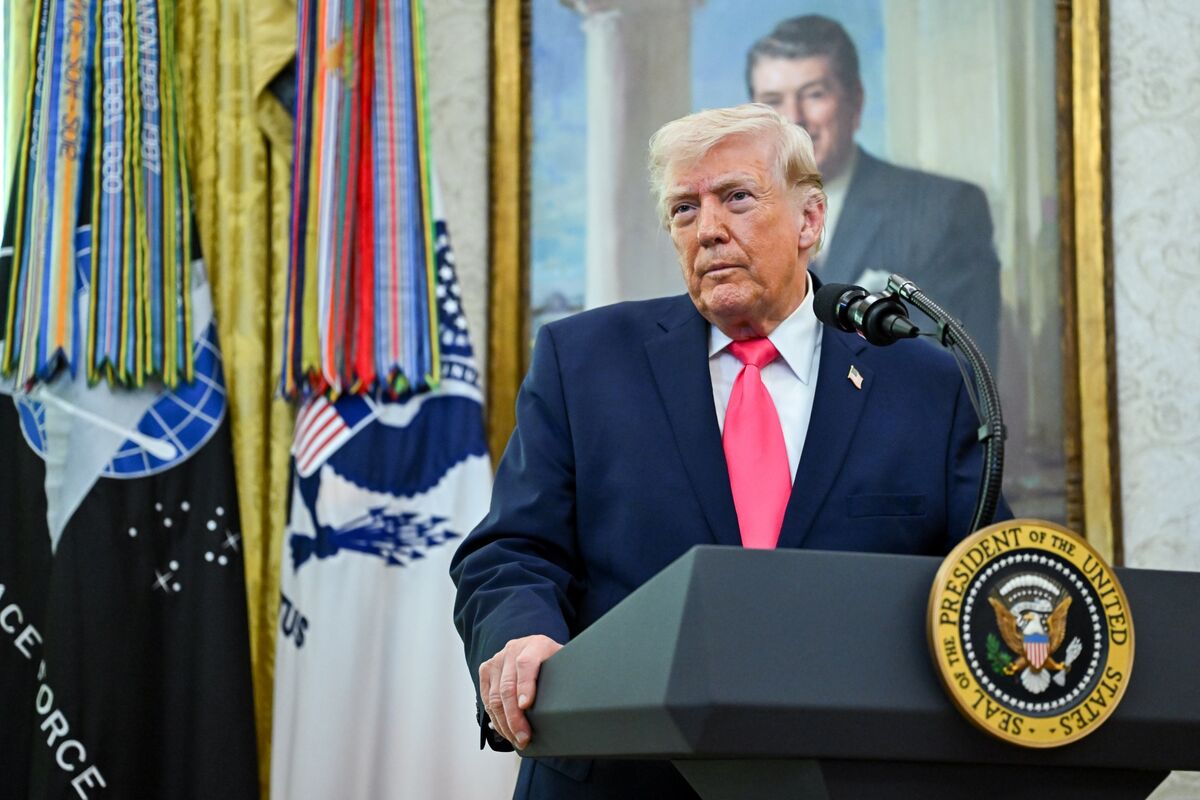
Former President Donald Trump will headline a three-day Saudi conference in Miami Beach this week, an annual event showcasing Saudi Arabia’s wealth and drawing top finance and political figures. The ongoing war in Iran hangs over the gathering, creating elevated geopolitical risk that could affect investor sentiment and, if the conflict escalates, energy markets and capital flows.
This event serves as a concentrated catalyst for two flows: near-term political signaling (weeks–months) and slower sovereign capital allocation (quarters–years). Near-term, defense primes and energy producers benefit from increased perceived willingness to underwrite regional security — a persistent risk premium can lift defense contractor equities by 10–20% on sentiment alone even before budget votes. Over the medium term, if Saudi capital shifts incrementally into US private markets and real estate, expect outsized demand for yield-bearing assets (commercial RE, private infrastructure) that compresses spreads for banks and asset managers tied to PE placement fees.
Second-order losers are industries tied to open commerce and tourism: airlines, cruise lines and Miami hospitality face asymmetric downside from a regional escalation that raises fuel costs and deters travel — a two-week closure in a key chokepoint historically shaves 3–5% off global air volumes and can widen jet fuel crack spreads. Financial intermediaries facilitating opaque sovereign investments (boutique placement agents, certain wealth managers) face regulatory and reputational tail-risk if political optics sour, creating event-driven legal/regulatory drawdowns over 6–18 months. Finally, watch FX/carry trades: an oil spike and risk-off would likely tighten US rates relative to EM, squeezing carry trades and EM credit spreads within days.
Key catalysts to monitor are (1) any credible disruption to Strait of Hormuz (days–weeks), (2) concrete capital allocation announcements or MOUs at the conference (30–180 days), and (3) US election polling shifts tied to perceived foreign influence (3–9 months). A reversal can come quickly if the US political backlash leads to new foreign investment screening or if conflict expands — both would unwind optimism and reprice the winners. Position size should reflect these binary outcomes and short-duration option hedges are efficient for the most event-sensitive exposures.
AI-powered research, real-time alerts, and portfolio analytics for institutional investors.
Request DemoOverall Sentiment
neutral
Sentiment Score
0.00
