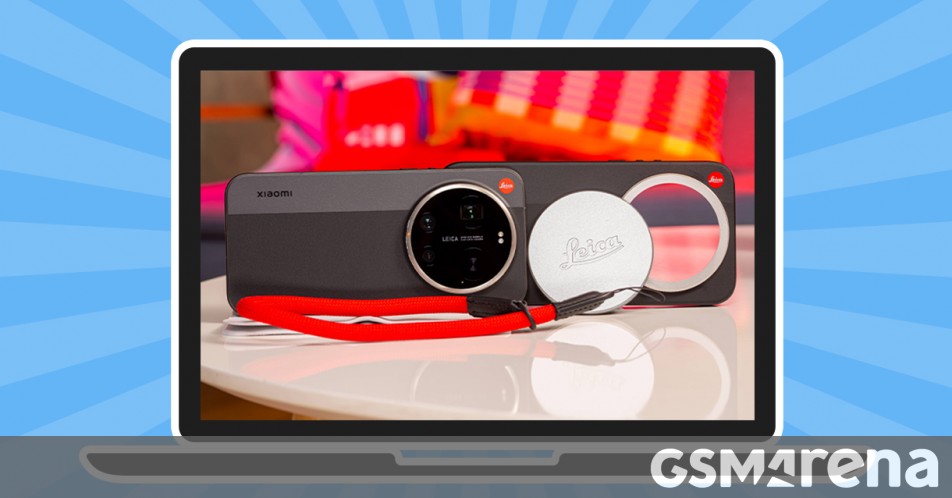
Several flagship smartphone developments and leaks highlight a heavy industry focus on Qualcomm’s Snapdragon 8 Elite Gen 5 across vendors: Xiaomi launched a Leica-collaboration 17 Ultra with premium packaging and a mechanical Control Ring, while Samsung’s Galaxy S26 and S26 Ultra appeared on Geekbench with differing clock configurations (S26 Ultra: two cores at 4.19GHz and six at 3.63GHz; S26: two cores at 4.74GHz and six at 3.63GHz). Additional product news includes a canceled Xiaomi 17 Air concept, a rumored 200MP ISOCELL S5KHP6 for the Galaxy S27 Ultra, vivo’s V70 series planned for India, the Nothing Phone (4a) moving to UFS 3.1, and Xiaomi’s expected 17 Max with an 8,000 mAh battery—developments that matter for component suppliers, handset pricing and product positioning but are unlikely to be market-moving on their own.
Market structure: Qualcomm (QCOM) is a clear near-term beneficiary as multiple flagship Android OEMs (Samsung S26 family, Xiaomi 17 line, vivo/RedMagic) are using the Snapdragon 8 Elite Gen 5 — this lifts ASP and royalty leverage for QCOM over the next 3–9 months. Image-sensor and camera-module suppliers (Sony, Samsung ISOCELL partners) also gain modest pricing power for premium models, while lower-tier SoC vendors (MediaTek) face margin pressure in the flagship segment. Across assets, stronger semis demand supports equities and sector credit spreads; modest upward pressure on TSMC/TSMC-supplier capex expectations could tighten high-grade tech equipment supply and lift LRCX/AMAT; FX moves likely favor CNY on export hardware strength in coming quarters.
Risk assessment: Tail risks include new US/EC export controls on advanced mobile SoCs to China or a surprise Qualcomm licensing/antitrust ruling — low probability but >1x earnings shock if enacted within 6–12 months. Immediate risks (days–weeks) are event-driven: Feb 25 Samsung launch, MWC announcements, and QCOM earnings; medium-term risks (3–9 months) are foundry capacity constraints or yield/thermal issues reducing usable chip bins. Hidden dependency: TSMC capacity and packaging partners (e.g., ASE) determine revenue realization; watch foundry utilization and ASP moves as catalysts.
Trade implications: Tactical bias is pro-QCOM and pro-semiconductor-equipment for 3–9 months: buy QCOM equity and skew options toward upside around Feb 25; overweight LRCX/AMAT on a 3–12 month horizon tied to TSMC capex cadence. Pair trade: long QCOM vs short MediaTek (2454.TW) to express flagship share shift; size positions conservatively (1–3% portfolio), with defined stop-losses tied to earnings beats/misses. Expect realized vol to rise into launches — favor call spreads or calendar spreads to control premium.
Contrarian angles: Markets underappreciate that differentiated mechanical and camera UX (Leica co-branding, Control Ring) lifts device ASPs by 3–6% rather than volume — this benefits chipset vendors through higher royalty baselines. Conversely, consensus may overestimate immediate volume uplift from every flagship; historically (e.g., 2020–2022 cycles) premium features shifted mix, not unit growth. Unintended consequence: rising premium features increase BOM costs, pressuring mid-tier margins and concentrating profit pools among chip/ISV suppliers rather than OEMs; that favors QCOM and equipment suppliers over broader handset OEM baskets.
AI-powered research, real-time alerts, and portfolio analytics for institutional investors.
Request DemoOverall Sentiment
neutral
Sentiment Score
0.05
Ticker Sentiment
