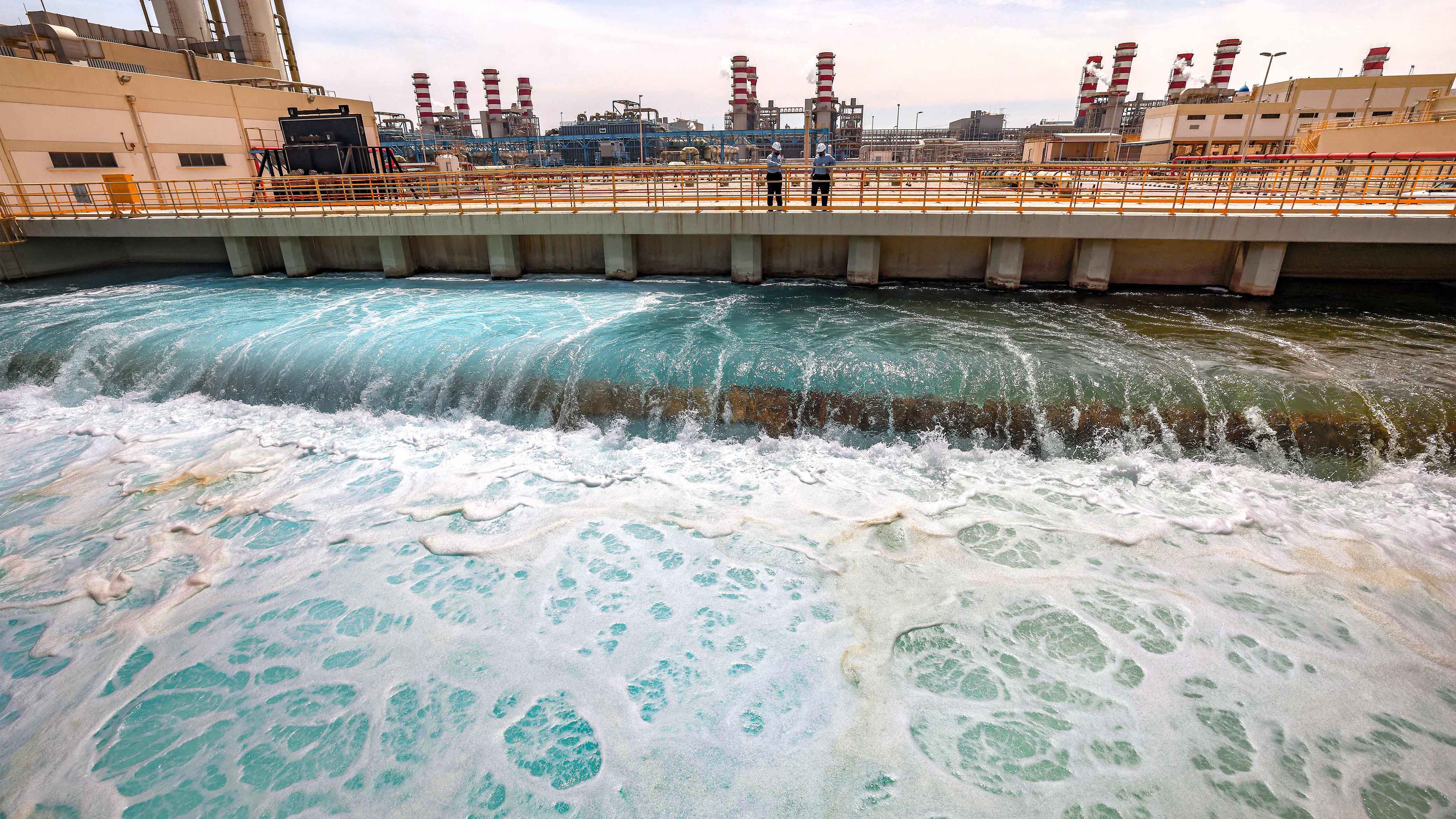
22.67 million m3/day of desalinated water capacity across 3,401 GCC plants (19% of global facilities) is exposed to Iranian missile, drone, oil spill and cyber threats, with several facilities already suffering indirect damage. Desalination supplies a large share of national water demand (e.g., 77.3% in Qatar, 67.5% in Bahrain, 52.1% in the UAE, 18.1% in Saudi Arabia) and key drinking-water dependencies (Qatar 99%, Bahrain >90%), while strategic storage is limited (UAE storage covers ~2 days of normal demand). Expect sector-level risks for GCC utilities, energy producers, insurers, shipping/logistics and regional markets if attacks escalate, with potential for meaningful disruption to cities and industrial hubs.
GCC desalination is a concentrated-critical-infrastructure problem dressed as distributed capacity: a handful of mega-complexes and integrated power–water plants create single points of failure that can cascade into urban, industrial, and financial stress within days. Expect tactical strikes or sabotage to produce outsized market signals (insurance repricing, shipping reroutes, sovereign liquidity draws) well before physical water scarcity forces rationing; these signals can compress risk assets tied to Gulf stability in weeks even if physical outages last only days.
Second-order supply‑chain impacts will hit equipment/membrane suppliers, power-generator OEMs, and pipeline contractors unevenly — providers of modular, quickly deployable SWRO units, emergency pumps, and microgrid generators gain order flow within 1–6 months, while suppliers of bespoke mega‑plant thermal hardware see contract delays and replacement demand push multi‑year capex cycles. Cyber and oil‑spill vectors imply asymmetric timelines: cyberattacks can disrupt controls within hours but remediation and trust restoration for ICS/OT systems is measured in months; a major oil fouling event would force months‑long intake remediation and shift demand to tanker-delivered potable water, stressing shipping and short‑term logistics.
Market psychology is the immediate weapon: insurance cancellations, investment pauses, and credit spread moves can amplify economic pain without physical damage. Credible escalation that threatens city water supplies would force sovereign and corporate actors to prioritize liquidity and defensive capex (storage, redundancy), which benefits engineering contractors and specialty equipment makers but depresses regional growth and real estate risk premia for at least 6–18 months.
The reversible scenarios are clear: a de‑escalation or rapid hardening program (portable SWRO stockpiles, hardened intakes, redundant power feeds) would reprice risk downward within 3–9 months. Conversely, a coordinated multi‑vector attack (kinetic + oil fouling + cyber) is low probability but would create a multi‑quarter shock to regional operations, underwriting, and energy markets that is under‑priced in current risk premia.
AI-powered research, real-time alerts, and portfolio analytics for institutional investors.
Request DemoOverall Sentiment
strongly negative
Sentiment Score
-0.60
