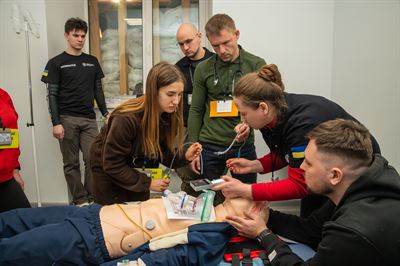
WHO launched its Humanitarian Appeal for Ukraine 2026 requesting US$42 million to protect access to health care for 700,000 people, prioritizing trauma and emergency medical services, primary care in frontline (0–20 km) areas, medical evacuation capacity and coordination across more than 200 partners. The appeal cites 2,841 verified attacks on health care since 2022, 3.6 million internally displaced people and widespread declines in physical and mental health, warning that reduced humanitarian funding risks further deterioration. In 2025 WHO reached 1.9 million people, delivered 319 metric tonnes of medical supplies to 954 facilities, installed 28 modular units, and supported 1,231 medical evacuations (788 via the EU Civil Protection Mechanism). The announcement underscores ongoing operational stress on Ukraine’s health system but is unlikely to have direct, material market implications.
Market structure: Continued high-intensity conflict in Ukraine sustains demand for trauma care, modular medical infrastructure, energy-resilience equipment and specialized logistics. Beneficiaries are defense primes and medical-supply manufacturers; losers are regional utilities, insurers writing war-exposed risk, and Ukrainian domestic credit — expect persistent bid for helicopters/air-ambulance, generators and field-hospital suppliers over 6–24 months.
Risk assessment: Tail risks include rapid escalation (NATO kinetic involvement) or major strikes on EU energy nodes that would spike gas/oil prices >20% within days and trigger sanctions-led supply shocks; conversely sudden ceasefire or large-scale funding shortfall (WHO appeal unfunded) could collapse humanitarian logistics demand. Immediate horizon (days): price jumps in gas/oil and FX volatility; short-term (weeks–months): defense order announcements and EU aid packages; long-term (quarters–years): structural rebuilding contracts and recurring procurement cycles.
Trade implications: Tactical trades should favor U.S. defense primes, select medical-equipment makers, and energy-infrastructure names while hedging European cyclical exposure and FX. Expect modest upward pressure on oil/gas and EM/CEE sovereign spreads; bonds: wideners for Ukraine/Poland if flows reverse, tighter for U.S. Treasuries on risk-off rallies. Options: use calendar and directional structures to buy crisis-driven volatility in energy and defense sectors.
Contrarian angle: The market underprices protracted humanitarian/logistics revenue — small-cap specialised medtech and private air-evac operators (non-public exposure via private funds) can outperform when funding is steady. The conventional trade (long large defense primes) may be crowded; asymmetric returns likely in niche suppliers (generators, modular-builders) and long-dated commodity optionality if energy infrastructure attacks recur.
AI-powered research, real-time alerts, and portfolio analytics for institutional investors.
Request DemoOverall Sentiment
moderately negative
Sentiment Score
-0.30
