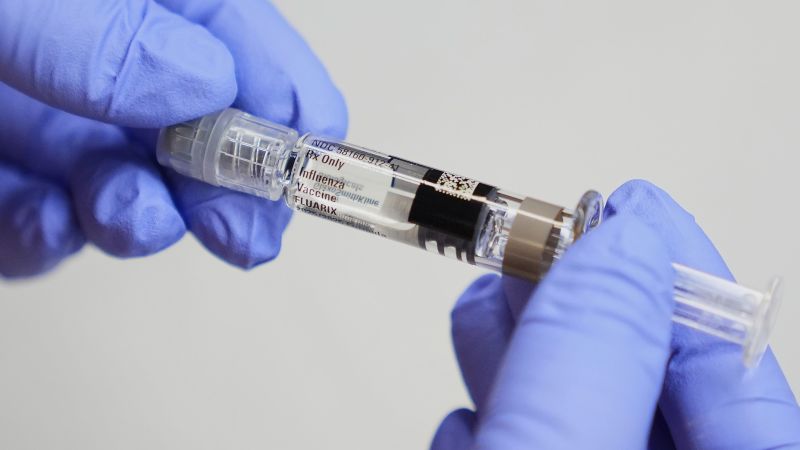
The U.S. risks a second severe flu season driven by a mutated H3N2 subclade K that has fueled early surges in the U.K., Canada and Japan and mirrored a bad Southern Hemisphere season; last winter saw the highest U.S. flu hospitalization rates in nearly 15 years and 280 pediatric deaths. Vaccination rates are down—IQVIA reports roughly 26.5 million retail pharmacy shots from August through October, more than 2 million fewer than the prior year—but early UKHSA analysis suggests current shots still offer meaningful protection against hospitalization (about 75% in children and roughly 30–40% in adults) despite a partial strain mismatch. Rising signals from CDC FluView, BioMerieux test positivity (from <1% to 2.4%) and wastewater monitoring (positive sites up from 18% to 40%) ahead of holiday travel increase the risk of higher case counts and hospital strain, prompting experts to urge vaccination.
The U.S. faces the prospect of a second severe flu season led by an H3N2 subclade K variant that drove early surges in the U.K., Canada and Japan and produced a severe Southern Hemisphere season (Australia recorded >443,000 cases). Last winter the U.S. saw its highest flu hospitalization rates in nearly 15 years and at least 280 pediatric deaths, so the emergence of a variant that was not a major component of vaccine strain selection materially raises epidemiological risk.
Vaccination uptake is down: IQVIA reports roughly 26.5 million retail pharmacy flu shots from August through October, about 2.2 million fewer than the comparable prior-year period, and 64% of vaccinations occur at retail pharmacies. Early UKHSA preprint data show the current vaccines still cut the odds of ER visits or hospitalization by ~75% in children and ~30–40% in adults despite a partial strain mismatch, but these results are early-season and subject to waning and peer review.
Real-time signals are pointing upward: CDC FluView shows rising activity, BioMerieux test positivity rose from <1% to 2.4%, and WastewaterSCAN positives increased from 18% to 40% from October to November. With holiday travel and lower vaccine uptake, these indicators imply higher case volumes and potential downstream pressure on hospitals and insurers, although uncertainty remains around severity per infection and the durability of vaccine protection.
AI-powered research, real-time alerts, and portfolio analytics for institutional investors.
Request DemoOverall Sentiment
moderately negative
Sentiment Score
-0.45
Ticker Sentiment
