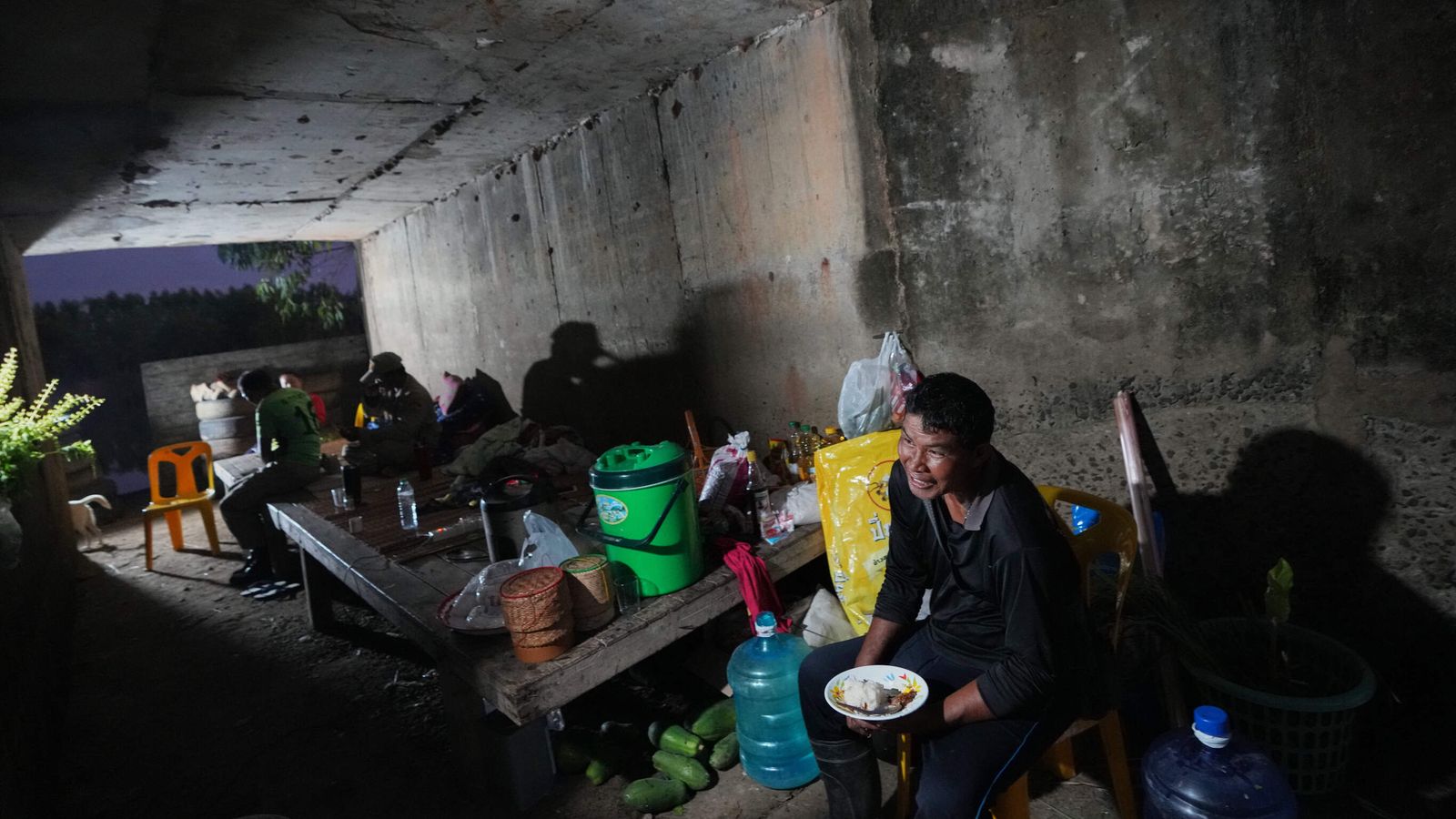
Fighting along the Thailand‑Cambodia border has resumed despite US President Donald Trump’s public claim of a ceasefire, with around two dozen people reported killed and hundreds of thousands displaced; Thai jets carried out airstrikes on Saturday and Thai authorities said they would continue military action while Cambodia’s prime minister made no mention of a truce. The clashes follow a July ceasefire brokered by Malaysia and formalized in October — agreements that did not settle the underlying territorial dispute rooted in a disputed 1907 colonial map and a 1962 ICJ ruling — and their collapse underscores both the fragile nature of the deal Trump promoted and broader risks to regional stability and humanitarian conditions, amid similar strains on other high‑profile accords he has touted.
Fighting along the Thailand–Cambodia border has resumed despite US President Donald Trump’s public claim of a ceasefire, with official reports citing around two dozen fatalities and “hundreds of thousands” displaced; Thai jets carried out airstrikes on Saturday morning and Thailand’s leader Anutin Charnvirakul stated military action would continue until threats subside, while Cambodia’s Prime Minister Hun Manet declined to acknowledge a truce. The immediate spark was a skirmish last Sunday that wounded two Thai soldiers and derailed a prior ceasefire that had been brokered in July by Malaysia and formalized in October after pressure from Mr. Trump.
The underlying dispute traces to a contested 1907 colonial-era map and a 1962 International Court of Justice ruling, and the October agreement explicitly left territorial status unresolved, rendering the ceasefire fragile. Mr. Trump’s public assertions — including threats to withhold trade privileges to secure agreements and a cessation announced on Truth Social — contrast with on-the-ground developments and other recent collapses of deals he promoted, such as the DRC–Rwanda accord and the still-unfinalized Gaza plan.
From a market perspective the piece flags moderately negative sentiment and a modest market-impact signal (0.3), implying heightened political risk and potential short-term volatility in regional trade, tourism and defense-related exposures until an authoritative, bilateral ceasefire is confirmed.
AI-powered research, real-time alerts, and portfolio analytics for institutional investors.
Request DemoOverall Sentiment
moderately negative
Sentiment Score
-0.50
