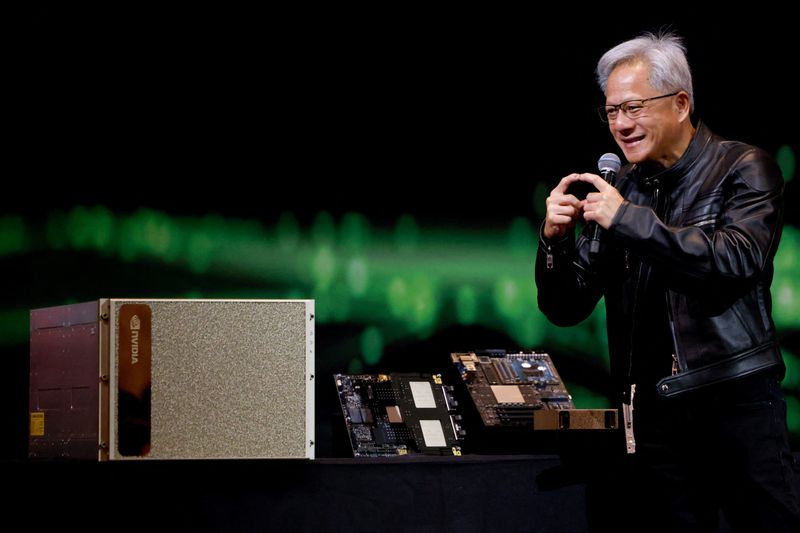
Nvidia CEO Jensen Huang is scheduled to visit Beijing next week to introduce a new AI chip, a modified Blackwell RTX Pro 6000, specifically designed to comply with tightened U.S. export controls by omitting advanced features. This strategic initiative aims to secure Nvidia's access to the crucial Chinese market, which accounted for $17.1 billion in revenue last year, capitalizing on Chinese firms' strong interest and reliance on Nvidia's CUDA software despite the chip's reduced capabilities. However, sales are contingent on receiving assurances from Washington that the chip will not be subject to further export bans, underscoring the ongoing regulatory complexities for U.S. tech firms in China.
Nvidia is proactively navigating complex U.S. export controls by developing a modified AI chip, a variant of its Blackwell RTX Pro 6000, specifically for the Chinese market. This strategic move aims to preserve its significant revenue stream from China, which totaled $17.1 billion last year. The new chip is designed for compliance by excluding advanced features like high-bandwidth memory and NVLink interconnects. Despite these hardware limitations, strong interest from Chinese firms is anticipated, underscoring the formidable competitive moat created by Nvidia's CUDA software ecosystem, which presents high switching costs for customers. However, the entire initiative is contingent upon receiving assurances from Washington that the chip will not be subject to future export bans, introducing a critical layer of regulatory risk. The planned visit by CEO Jensen Huang to Beijing to meet with senior officials highlights the high stakes and the diplomatic effort required to secure this vital market segment.
AI-powered research, real-time alerts, and portfolio analytics for institutional investors.
Overall Sentiment
moderately positive
Sentiment Score
0.40
Ticker Sentiment
