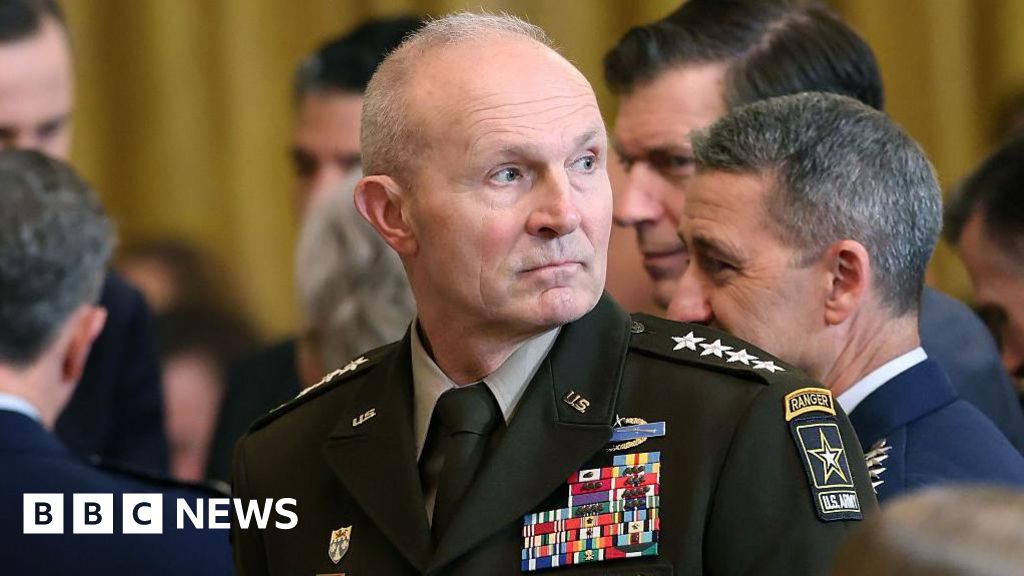
US Defense Secretary Pete Hegseth has asked Army Chief of Staff Gen. Randy George to step down effective immediately; George, the 41st Chief of Staff, will retire and be replaced in an acting capacity by Vice Chief Gen. Christopher LaNeve. The personnel change is part of broader turnover since Hegseth entered the Pentagon (over a dozen senior officers fired) and comes amid heightened geopolitical tensions related to US‑Israel/Iran conflict, creating short‑term uncertainty around defense leadership and potential policy continuity.
A sudden round of senior leadership turnover at the Pentagon elevates policy and execution risk across the defense procurement chain. Expect near-term program reviews, hiring freezes and re-prioritizations that commonly produce 3–9 month delays in contract awards and milestone payments; for large primes that translates into 1–3% revenue deferral but for smaller subcontractors can be 5–15% of near-term revenue.
Market mechanics: headlines drive 1–3 trading-day knee-jerk moves (3–7% swings) followed by a 1–6 month reassessment as program managers rebaseline schedules; actual budget reallocation or new procurement directives take 6–24 months to flow into P&L. Supply-chain secondaries include temporary supplier idling, inventory build-downs and pressured working capital for tier-2/3 vendors — expect DSO/DSO-like metrics to slip and trade receivable financing to widen by 50–150bps for smaller firms.
Winners will be firms with multi-year, government-guaranteed backlog and long lead-times (defense primes, FMS-heavy platforms) because they can absorb short payment timing swings; losers are niche integrators and specialist subcontractors reliant on single-program cadence and near-term award runway. Key catalysts to watch that will reverse the trend are: explicit congressional funding letters or emergency supplemental budgets (30–90 days lead for market reaction), a formal procurement memo that stabilizes program baselines (3–9 months), or a public reconciliation by the administration that reduces governance turnover (days–weeks).
Consensus is tilting to “sell the sector” due to governance noise; that’s likely overdone for large-cap primes but underestimates concentrated downside for small-cap suppliers whose valuations assume steady award cadence. Position sizing should reflect asymmetric operational insulation across market cap.
AI-powered research, real-time alerts, and portfolio analytics for institutional investors.
Request DemoOverall Sentiment
mildly negative
Sentiment Score
-0.20
