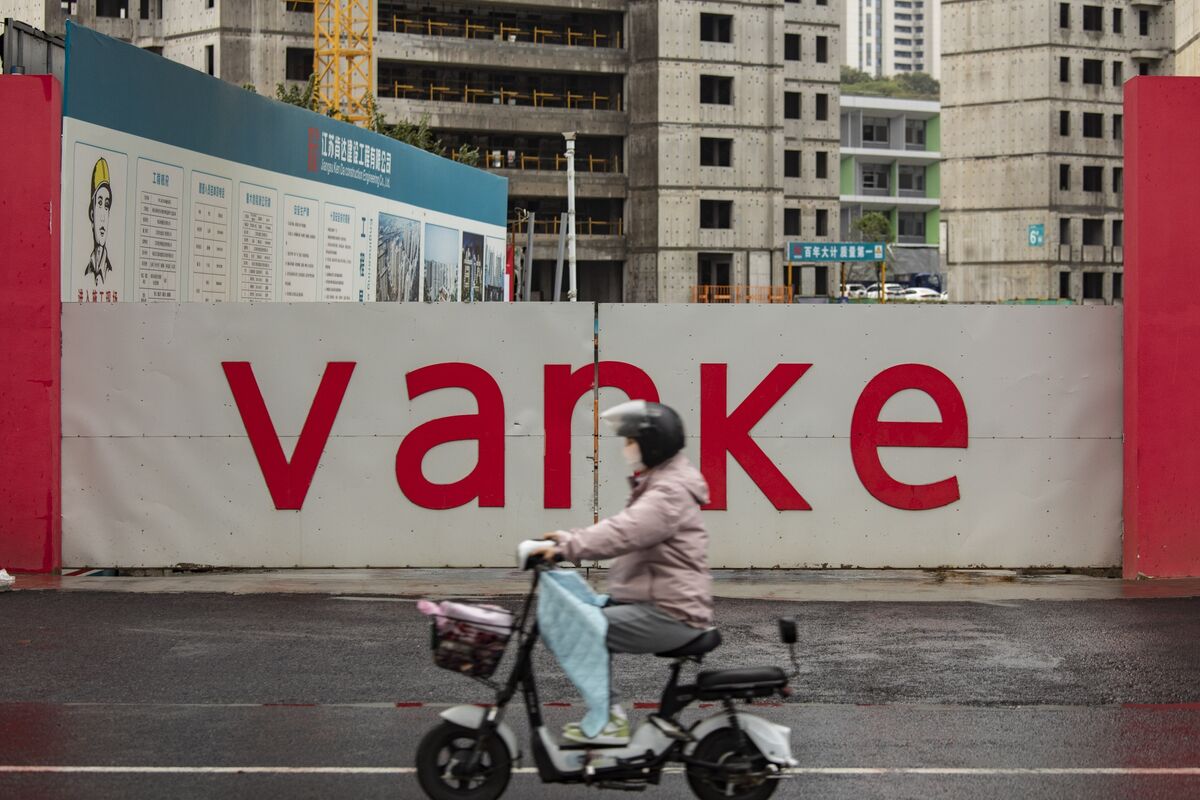
China Vanke Co.'s dollar- and yuan-denominated bonds plunged as investor concern mounted over the developer's ability to repay debt; its 3.975% dollar bond due 2027 recorded its largest one-day drop, falling as much as 14 cents to trade around 41 cents. The sharp move highlights acute credit stress in a distressed Chinese property name and could widen spreads and pressure holders of Chinese real-estate debt and dollar bonds.
Market structure: Forced selling in a large offshore developer will widen secondary spreads and drain USD liquidity for other China HY issuers; expect 200–600bp spread widening in the weakest cohort over 2–8 weeks, benefiting short-duration USTs, USD funding providers and FX hedgers. Systemic winners are cash-rich domestic developers and state-backed bond purchasers that can buy distressed paper at deep discounts; banks with large mortgage or trust exposure and holders of offshore short-dated dollar paper are principal losers.
Risk assessment: Tail risks include a coordinated offshore default wave causing cross-defaults and a >5% CNH depreciation in 30 days if capital flight accelerates, or a state-led blanket support that compresses spreads rapidly. Near term (days) volatility and liquidity stress dominate; medium term (weeks–months) restructuring outcomes and policy support determine recoveries; long term (quarters–years) is a credit-quality reset for Chinese property collateral values and bank asset quality.
Trade implications: Short-duration USD Treasuries and buy UST bills (1–3 months) and prefer SHY over HYG for 1–3 month risk-off; hedge CNH with 3–6 month USD/CNH forwards and size add-on if CNH>7.30. Opportunistic distressed long positions merit strict entry: buy specific offshore developer bonds only below intrinsic recovery-based thresholds (e.g., price <45c) with bond-by-bond legal/recovery analysis and 6–12 month time horizon.
Contrarian angles: Consensus presumes no state support — that may be overstated; partial onshore recapitalizations or asset injections have historically cut recoveries’ tail risk (see 2014–2015 China property interventions) and can produce sharp snapbacks. Reaction is likely overdone in highest-quality names with liquid assets onshore; identify bonds of developers with confirmed onshore cash or saleable land where market price implies >70% haircut versus modeled recoveries.
AI-powered research, real-time alerts, and portfolio analytics for institutional investors.
Request DemoOverall Sentiment
strongly negative
Sentiment Score
-0.62
