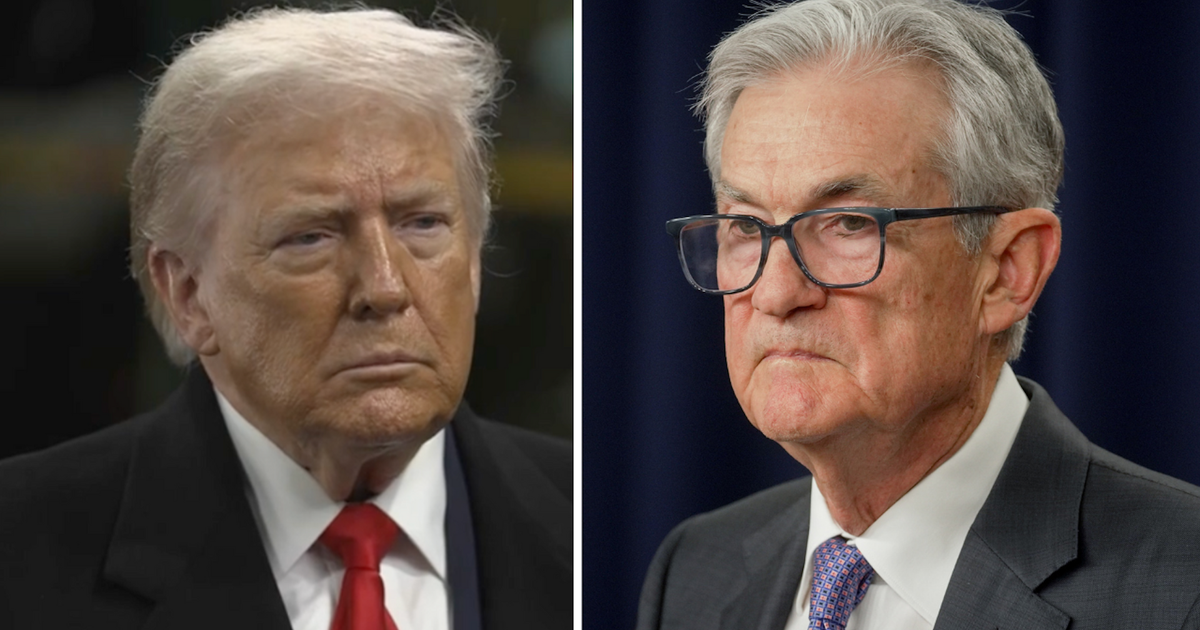
President Trump, speaking at a Ford plant, warned Iran he would take "very strong action" if the government hangs protesters and framed foreign interventions as part of an "endgame" to win, while touting a 2.7% December CPI and strong auto production as evidence of a healthy U.S. economy. He publicly attacked Fed Chair Jerome Powell as "either corrupt or incompetent" amid DOJ subpoenas over a Fed renovation, commented on robotics' role in auto manufacturing, and weighed in on an ICE shooting—comments that elevate political and geopolitical risk but are unlikely to produce immediate, large market moves.
Market structure: The interview reinforces a bifurcated winners/losers setup — large, capital-rich auto OEMs (F, GM) and industrial-robotics suppliers gain from accelerated on-shoring and plant expansion, while smaller tier suppliers and labor-intensive assemblers face margin pressure. Geopolitical hawkishness on Iran increases short-term tail risk for oil (+$10–30/bbl shock scenario) and defense names, while CPI at ~2.7% keeps rate cut expectations muted so long as prints stay >2.0%.
Risk assessment: Tail risks include a limited military strike on Iran (days) causing immediate oil shock and equity drawdowns (-5% to -15% regionally) and a DOJ-Fed escalation that could reprice front-end rates by 25–100bps within weeks. Hidden dependencies: auto margin improvements depend on semiconductor and metals supply normalizing over 3–9 months; robotics CAPEX benefits are contingent on tax/credit policy and labor regulation.
Trade implications: Tactical: favor scale players (F, GM) and hedge geopolitics via commodity convexity rather than pure equity hedges; use short-dated oil call spreads (1–3 months) and buy low-cost SPX tail puts (1–3 months) for portfolio protection. Interest-rate political risk argues for reducing duration and holding floaters or short-duration IG for 1–6 months until Fed credibility noise abates.
Contrarian angles: Markets underprice asymmetric upside from productivity gains — multiple expansion from sustained margin improvement could add 10–20% to select OEMs over 6–12 months, particularly F which shows better execution sentiment. Conversely, robotics adoption could accelerate aftermarket/service margin erosion — avoid high-beta, low-scale suppliers where revenue is replacement-lifecycle sensitive.
AI-powered research, real-time alerts, and portfolio analytics for institutional investors.
Request DemoOverall Sentiment
mixed
Sentiment Score
0.00
Ticker Sentiment
