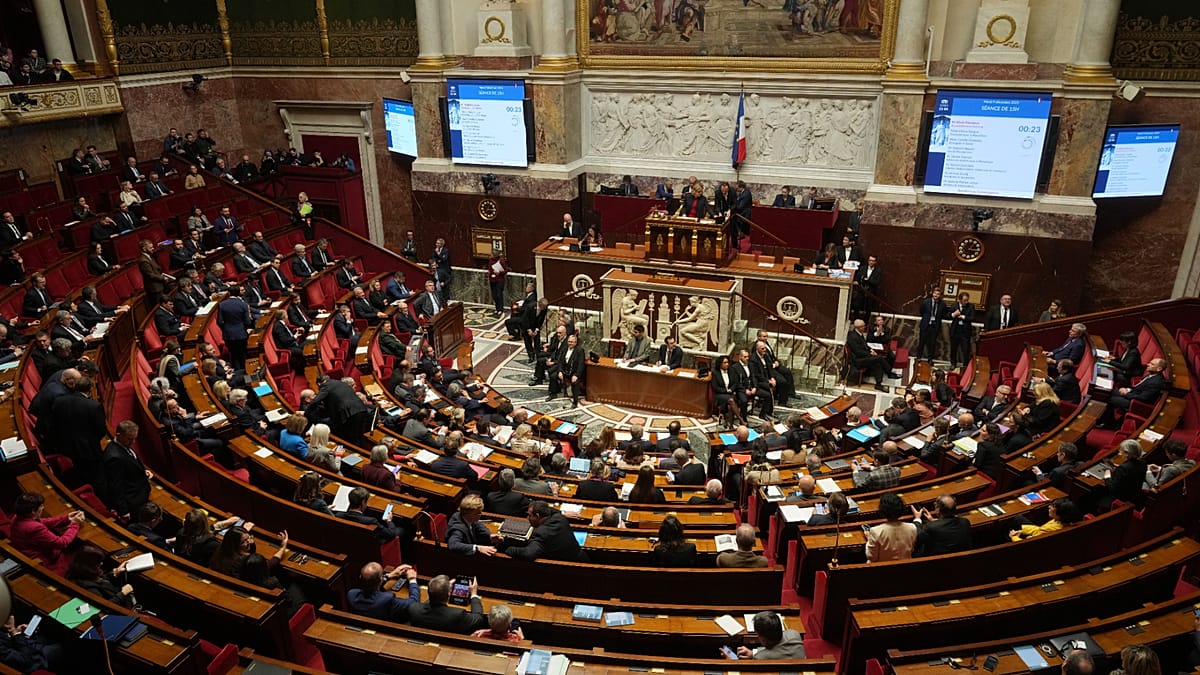
French lawmakers failed to agree a 2026 state budget, forcing the government to pursue emergency legislation to temporarily roll over the 2025 budget into 2026; the impasse follows a collapsed joint committee and deep political divisions after snap elections left a hung parliament. Key fiscal figures: France's deficit is running at 5.4% of GDP this year (the highest in the eurozone), the government had targeted sub-5% for 2026, the Senate proposal reached 5.3% with €9bn above the target, and public debt stood at 117.4% of GDP in Q3 2025. Banque de France governor François Villeroy de Galhau warned a rollover law is only short-term, would raise the deficit further and push bond yields closer to Italy's, materially increasing borrowing costs and rating/sovereign risk.
Market structure: The immediate winners are core sovereigns (Germany) and safe-haven FX/assets; losers are French sovereign paper, French banks, and domestically levered corporates. Expect a flight-to-quality push that widens France–Germany 10y spreads; a 20–50bp move in 1–3 months is plausible given current 5.4% deficit and 117%+ debt/GDP. Equity pressure will concentrate on banks, insurers and domestic cyclicals that rely on French fiscal support.
Risk assessment: Tail risks include a ratings downgrade or a >100bp sovereign selloff if deficit expectations ratchet above 5.5% and yields reprice to Italian-like levels; probability medium but impact systemic for French banks and ECB collateral valuations. Immediate (days) risk is spread volatility and FX weakness; short-term (weeks–months) risk is funding-cost repricing; long-term (quarters) is structural higher borrowing costs and austerity-driven GDP drag. Key hidden dependency: ECB collateral/VRR tolerance and European funding backstops — a policy intervention would cap the move.
Trade implications: Bonds/credit and FX are primary arenas: expect profitable short-OAT/long-Bund and EUR downside trades, with CDS hedges on French sovereign and big banks. Options skew will steepen — use puts and payer swaptions to hedge convex risk; size trades to tolerate a 15–25bp intra-trade stop. Monitor France–Germany 10y spread, BNP/SG CDS moves and any special-law text within 14 days as catalysts.
Contrarian angles: Consensus may overprice permanent fiscal collapse; special-law rollover is likely to cap immediate sovereign supply shock, creating a two-stage opportunity (short-volatility spike then mean reversion). Historical parallels: peripheral spikes (2011–12) faded after ECB/EMU reassurance; if ECB signals backstop or conditional aid, peripheral spreads can compress 30–60% from peak. A disciplined entry on spread overshoot can capture this mean reversion.
AI-powered research, real-time alerts, and portfolio analytics for institutional investors.
Request DemoOverall Sentiment
moderately negative
Sentiment Score
-0.62
