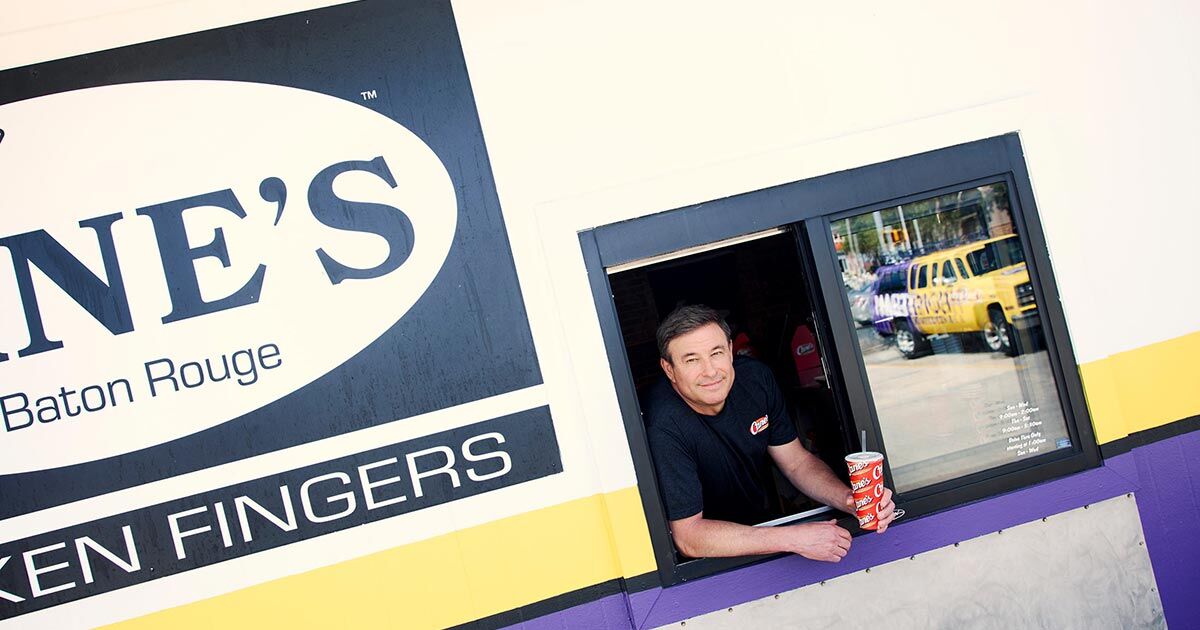
Raising Cane’s has grown from a rejected college business idea into the third-largest chicken chain in the US by sales and is now expanding rapidly. The article highlights the company’s successful single-item concept and long-term execution rather than any immediate financial release. The tone is positive for the brand and its growth story, though the piece is largely retrospective and unlikely to move shares materially.
The more important signal here is not simply that a single-item concept worked, but that it created a durable operating advantage: extreme menu simplification lowers training complexity, labor variance, food waste, and throughput friction at the drive-thru. That matters because in a wage inflation environment, concepts that can absorb higher hourly pay without sacrificing speed will keep taking share from broader-menu QSR peers. The second-order winner is the supply chain: a narrow SKU set increases bargaining power with poultry and packaging vendors and reduces inventory obsolescence, which should support margin resilience if traffic moderates.
The competitive read-through is mixed for incumbents. Broad-menu chicken and burger chains will likely continue adding limited-time items to defend traffic, but that often worsens execution and compresses margins just as consumer budgets remain tight. If this format keeps outperforming, the real loser is not just other chicken concepts; it is the entire "value-through-choice" strategy that many chains rely on to justify premium pricing. Over the next 6-18 months, the key test is whether same-store sales growth persists once new unit growth normalizes and consumers get more promotional alternatives.
The main risk is valuation discipline, not concept risk: markets tend to extrapolate clean operating stories too far, especially when unit growth and brand affinity align. Any slowdown in traffic, labor cost spike, or signs that the concept is saturating in lower-density markets would likely hit sentiment quickly because the multiple is built on perceived scarcity and white-space runway. A second-order downside catalyst would be a broader chicken supply shock or food inflation spike that compresses the cost advantage of a simplified menu faster than peers can respond.
The contrarian point is that the model may be less about product genius than about timing: consumer demand for indulgent, highly consistent value meals has been structurally improving as households trade down. If that macro backdrop weakens, the brand still likely outperforms, but the pace of share gains could decelerate sharply. The market may be underpricing how sensitive this growth story is to new store productivity versus pure brand heat.
AI-powered research, real-time alerts, and portfolio analytics for institutional investors.
Request DemoOverall Sentiment
moderately positive
Sentiment Score
0.35
