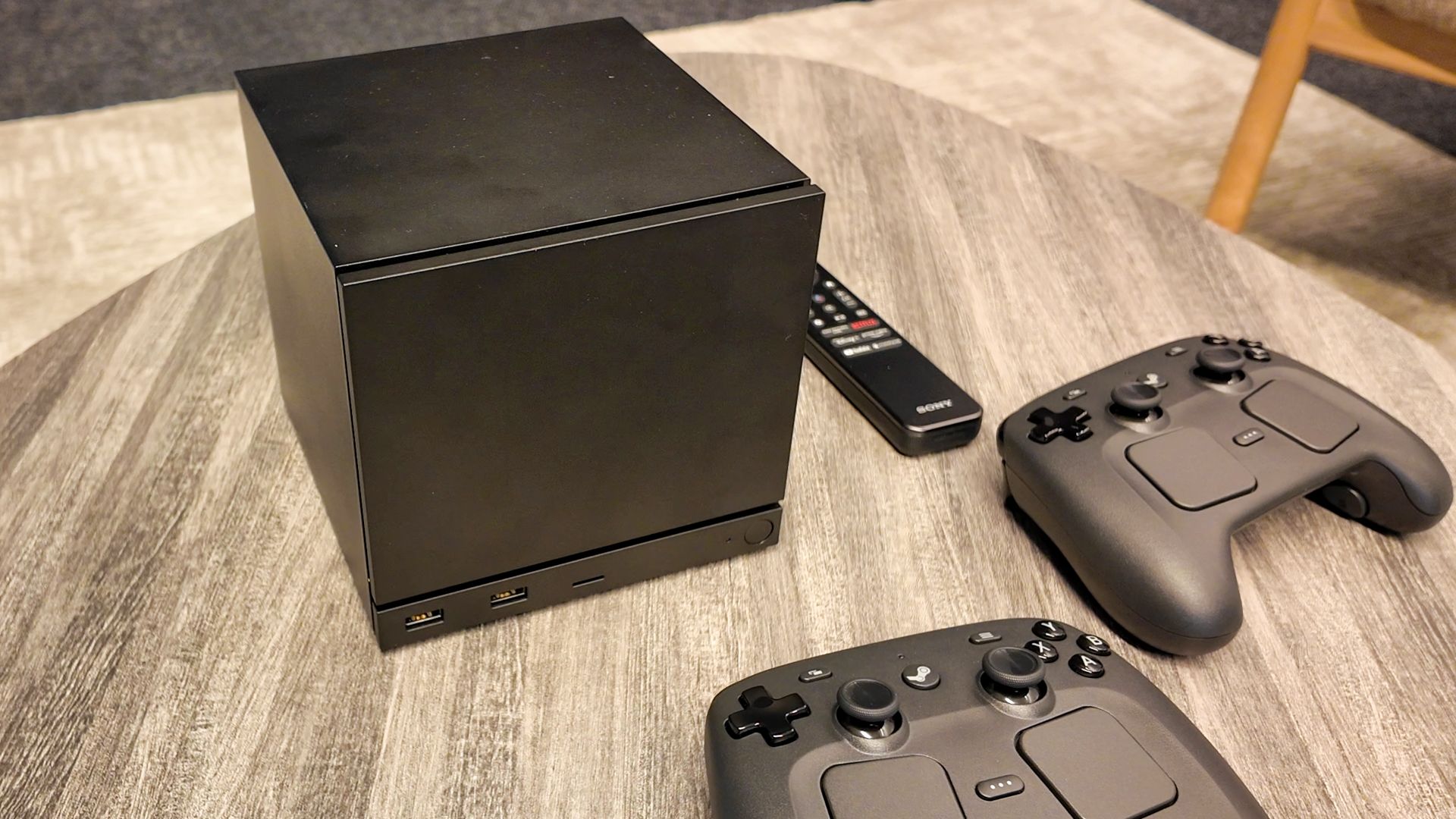
Valve has confirmed it will not subsidize pricing for its Steam Machine, opting to price the device more like a PC rather than absorbing roughly a $200 loss per unit. Larian Studios' publishing director argued that subsidizing hardware could drive incremental Steam storefront spending that offsets hardware losses, but concerns over users installing alternate OSes, potential business procurement, and Valve's apparent tolerance for a niche hardware scale reduce the likelihood that a subsidy strategy will be adopted; the decision therefore has limited near-term financial implications for Valve's platform monetization and competitive positioning versus console manufacturers.
Market structure: Valve's choice to price Steam Machines like PCs preserves the status quo—consoles (SONY, MSFT) retain pricing power and scale advantages while PC OEMs/GPUs keep existing ASPs. If Valve remains niche, storefront monetization growth slows versus a subsidised ramp; a $150–$250 subsidy would need millions of units to pay back via Steam wallet spend (break-even estimate: ~3–5M units assuming $50/year incremental spend and 30% Steam cut over 3 years). Cross-asset effects are small but meaningful for equity dispersion within gaming: higher implied vols for small-cap PC hardware, muted for GTA-era publishers.
Risk assessment: Tail risks include a late strategic reversal by Valve to subsidise (15% probability), triggering rapid user acquisition and pressure on console margins, or regulatory scrutiny of Steam’s platform power (10% probability). Immediate reaction is negligible (days); watch for measurable retail pricing signals over 4–12 weeks and software revenue trends over 12–36 months. Hidden dependencies: Valve’s ability to enforce OS/DRM limits adoption of alternative OS installs; developer/store exclusives would materially change monetization assumptions.
Trade implications: Favor exposure to console/native earners and selective publishers while trimming volatile PC hardware exposure. Tactical: overweight SONY (6–12 month horizon) and use defined-risk call spreads on MSFT to capture cloud/Xbox optionality; consider reducing HPQ/DELL exposure by a small percentage to rotate into gaming IP owners (TTWO, 6–12 month view). Entry: size within 1–3% of portfolio, confirm with 4–8 week retail price signals; exit or flip within 7 trading days if Valve announces subsidy >$100/unit.
Contrarian angles: Consensus downplays Valve’s latent leverage — if Valve pivots to subsidisation or enforces store lock-in, Steam could re-monetize ~+$30–$70/annual spend per user quickly, re-rating publishers and store-reliant mid-caps. Market may be underpricing this optionality; conversely, assuming Valve wants scale could be overdone—physical PC flexibility keeps downside limited. Historical parallels: Xbox subsidisation created durable ecosystem effects in 2000s; repeat could compress hardware OEM margins if it happens again.
AI-powered research, real-time alerts, and portfolio analytics for institutional investors.
Request DemoOverall Sentiment
neutral
Sentiment Score
-0.10
Ticker Sentiment
