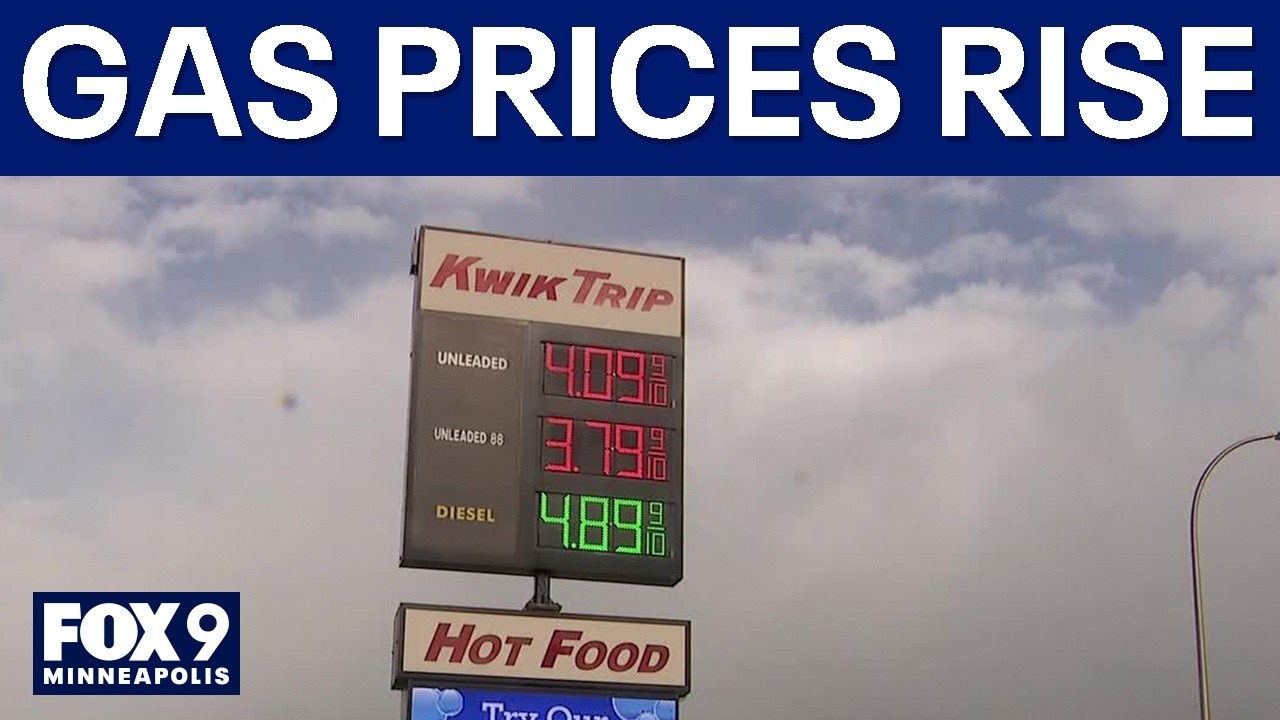
Minnesota's average gasoline price has risen to $4.00 per gallon, with Wisconsin at $4.29 and some stations charging above $4.09, while GasBuddy sees the national average potentially reaching $4.50 next week. The spike is being driven by global tensions involving Iran and refinery issues, with diesel prices also rising and threatening higher shipping and consumer goods costs. The article signals a near-term inflationary pressure for consumers and transportation-heavy businesses.
The immediate market impact is not the headline gasoline print itself, but the distributional squeeze it creates. Households with longer commute distances and lower disposable income will cut non-essential spend first, which is a near-term negative for discretionary retail, restaurants, and regional travel demand in the Upper Midwest; the second-order effect is that fuel inflation acts like a regressive tax, so the hit to volume can be larger than the nominal rise in pump prices suggests. That tends to show up within 1-3 weeks in card data before it is visible in company earnings. The bigger macro transmission is diesel, not gasoline. If freight costs reprice higher for even a few weeks, margin pressure will cascade through wholesalers, grocers, parcel delivery, and industrial distributors, with the most exposed names seeing a lagged squeeze over 1-2 quarters because many input contracts reset slowly while transport costs reprice immediately. This also raises the probability of a broad CPI sticky-up in the next print or two, which can keep real yields firm and delay any relief rally in rate-sensitive consumer sectors. The contrarian view is that this may be more of a sentiment shock than a durable inflation regime shift unless crude and refinery outages remain tight into summer driving season. Gasoline prices can mean-revert quickly once refinery utilization normalizes, so the tradeable edge is in short-duration positioning rather than structural bearishness on consumers. The key catalyst to watch is whether diesel remains elevated after the initial gasoline spike fades; if diesel rolls over, the broader consumer and transport damage likely proves temporary. For portfolios, the asymmetry is better in relative-value than outright short consumer beta. The most attractive setup is a short-duration short in transportation and discretionary names versus long energy infrastructure or refiners if crack spreads stay wide; if they compress, the pair should mean-revert quickly. In other words, this is a tactical inflation shock with a 2-8 week horizon, not necessarily a multi-quarter demand collapse.
AI-powered research, real-time alerts, and portfolio analytics for institutional investors.
Request DemoOverall Sentiment
mildly negative
Sentiment Score
-0.35
