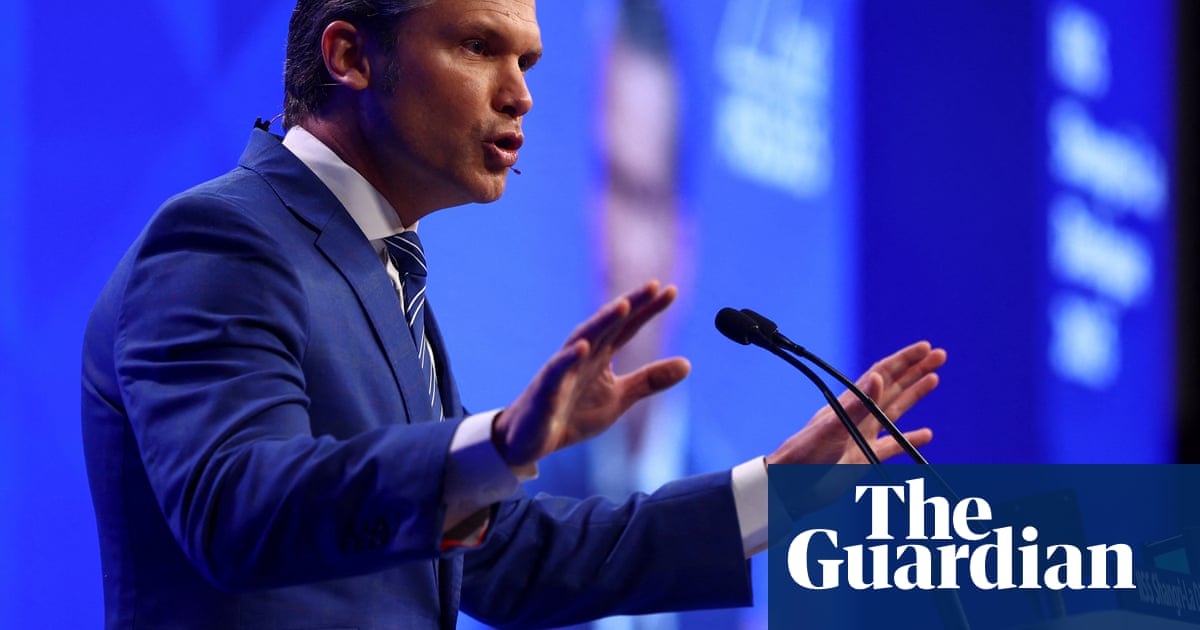
U.S. Secretary of Defense Pete Hegseth urged Asian nations to increase military spending to deter China, citing Beijing's preparations to potentially use military force in the Indo-Pacific and pointing to Europe's increased defense spending as an example; he outlined plans for increased U.S. military presence and joint projects in the region, including expanded repair capabilities in Australia. Hegseth criticized the absence of Chinese delegates at the Shangri-la Dialogue and emphasized that the U.S. does not seek conflict with China but will defend its interests in the region, though his remarks were criticized by U.S. Senator Tammy Duckworth as patronizing.
The US Secretary of Defence, Pete Hegseth, at the Shangri-la Dialogue, urged Asian nations to substantially increase military spending to deter China, which he stated was 'rehearsing for the real deal' regarding Taiwan and 'credibly preparing to potentially use military force.' This call is supported by US plans to enhance its Indo-Pacific military presence through new joint projects, including expanded military repair capabilities in Australia and upcoming live-fire tests of its mid-range capability system. This aligns with an International Institute for Strategic Studies finding that Asian defense spending is already spiking above its consistent annual average of 1.5% of GDP. Hegseth drew parallels to the Trump administration's push for European allies to increase defense spending, now citing Europe as an 'example' for Asia, enabling a US strategic pivot to the Indo-Pacific as its 'priority theatre.' The US itself, under a Trump administration, reportedly plans a $1 trillion defense budget for the next year, a 13% increase, further highlighting a focus on military preparedness. While emphasizing no desire for conflict with China, Hegseth's remarks, including criticism of China's absence at the dialogue and a reference to alliances needing to be balanced, alongside US Democratic Senator Tammy Duckworth's characterization of his comments as 'patronizing,' underscore the complex diplomatic landscape and potential for friction. The situation is marked by a 'hawkish' tone and 'mildly negative' sentiment, carrying a significant 'market_impact_score' of 0.7, indicating substantial investor attention towards escalating geopolitical risks and increased global defense sector activity.
AI-powered research, real-time alerts, and portfolio analytics for institutional investors.
Request DemoOverall Sentiment
mildly negative
Sentiment Score
-0.30
